
Coffee is composed of 98 percent water. Therefore, the extraction quality of your morning beverage relies almost entirely on the chemical purity of your water reservoir. As industrial filter manufacturing experts, we observe that many consumers invest heavily in premium coffee pods but neglect the fundamental filtration hardware inside their brewing systems. Over time, activated carbon degrades, capturing municipal chlorine, heavy metals, and particulate matter until its microscopic pores become entirely saturated. Knowing when and how to change Keurig water filter cartridges is not just a matter of machine maintenance; it is a critical requirement for food safety and flavor preservation.
From our experience engineering advanced filtration production lines at HENGTENG Machine, a saturated filter transitions from being a purification device to a bacterial breeding ground. As water flows through a compromised carbon block, it can channel around the exhausted media, carrying concentrated impurities directly into the heating element of your brewer. This leads to severe calcium scaling, reduced water flow, and a distinctly bitter taste in your coffee. In this comprehensive, authoritative guide, we will detail the exact process to change Keurig water filter cartridges, the science behind the filtration media, and how industrial manufacturing standards dictate the quality of your daily brew.
Table of Contents
- Summary Table: Filtration Maintenance Overview
- The Science Behind Carbon Block Filtration
- Step-by-Step Guide: How to Change Keurig Water Filter Cartridges
- How Industrial Manufacturing Dictates Filter Quality
- Expert Maintenance Tips for Optimal Brewing
- Frequently Asked Questions (FAQs)
- Industry References
Summary Table: Filtration Maintenance Overview
Before initiating the physical replacement, it is crucial to understand the timeline and requirements. The following table provides a professional overview of the metrics associated when you change Keurig water filter cartridges.
| Maintenance Parameter | Expert Recommendation | Scientific Rationale |
|---|---|---|
| Replacement Frequency | Every 2 Months or 60 Tank Refills | Activated carbon reaches maximum adsorption capacity, leading to contaminant bypass. |
| Pre-Soak Requirement | 5 Minutes in Cold Fresh Water | Expels trapped air from micro-pores and primes the carbon matrix for fluid dynamics. |
| Rinse Requirement | 60 Seconds Under Cold Running Water | Flushes loose, harmless carbon dust resulting from the manufacturing and shipping process. |
| Primary Filtration Media | Activated Carbon (CTO) | Highly porous surface area chemically adsorbs chlorine, volatile organic compounds (VOCs), and odors. |
The Science Behind Carbon Block Filtration
To truly appreciate the necessity to change Keurig water filter cartridges, one must understand what happens inside the cartridge. These small filters typically contain granular activated carbon or extruded carbon blocks. Activated carbon is treated with oxygen to open up millions of microscopic pores between the carbon atoms. This process exponentially increases the surface area; a single gram of activated carbon can have a surface area in excess of 3,000 square meters.
When municipal tap water passes through this matrix, a process called adsorption occurs. Contaminants such as chlorine, chloramines, and certain heavy metals chemically bind to the surface of the carbon. However, this surface area is finite. Once every microscopic pore is filled with impurities, the filter is officially exhausted. If you fail to change Keurig water filter cartridges at this critical juncture, the incoming water pressure can actually dislodge previously trapped contaminants, flushing a concentrated dose of impurities into your coffee.
At Hengteng Environmental Technology Co., Ltd., we manufacture the specialized equipment that produces these exact types of filters. Our CTO Carbon Block Filter Making Machine uses precision thermal extrusion to bind carbon powder into a solid, uniform cylinder. This uniform density is what prevents water channeling and ensures absolute filtration efficiency. When you purchase high-quality replacement cartridges, you are relying on the precision engineering that starts on our factory floors.
Step-by-Step Guide: How to Change Keurig Water Filter Cartridges
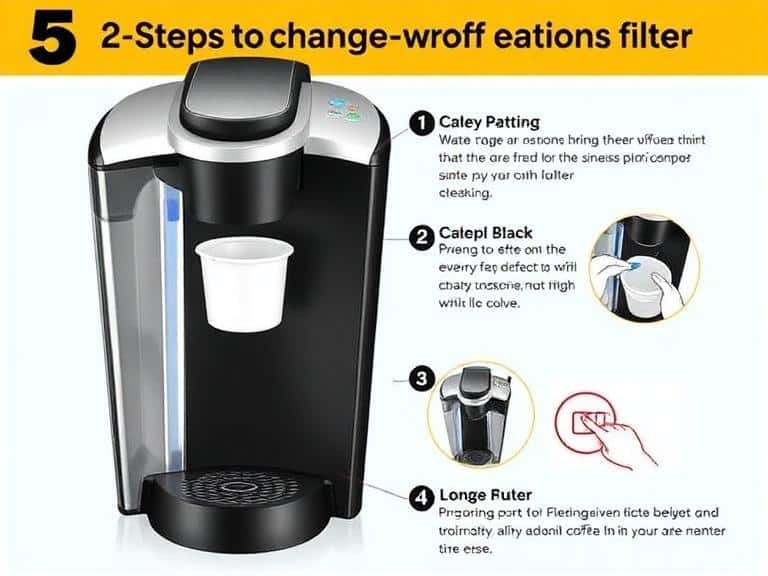
Proper installation is paramount to achieving the desired flow rate and purification levels. Attempting to bypass the soaking or rinsing phases will result in blocked water lines and an immediate “Water Under Pressure” error on modern brewing systems. We recommend following this strict industrial protocol to successfully change Keurig water filter cartridges.
Step 1: Preparation and Filter Soaking
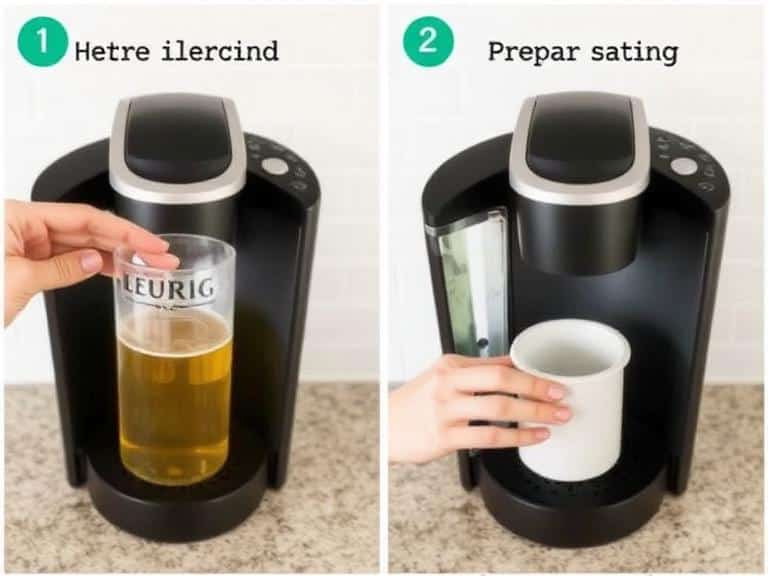
Begin by removing the new replacement cartridge from its sealed packaging. Fill a clean bowl or cup with cold, fresh tap water. Submerge the new filter entirely into the water and let it soak for exactly five minutes. You will notice small air bubbles escaping from the mesh housing. This is a critical step; it forces trapped air out of the microscopic carbon pores, allowing water to flow freely through the media once installed.
Step 2: Cartridge Rinsing
After the five-minute soak, remove the filter from the bowl. Hold the cartridge under a cold running faucet for 60 seconds. During this step, you may see a slight gray tint in the runoff water. This is simply loose carbon dust generated during the manufacturing process. It is entirely harmless, but rinsing prevents this dust from entering your brewing mechanism and leaving a fine, dark residue in your coffee cup.
Step 3: Removing the Old Filter Assembly
Remove the water reservoir from your coffee maker and detach the lid. Reach into the reservoir and firmly grasp the plastic filter holder handle. Pull upward with a steady motion to release the assembly from the locking mechanism at the base of the tank. Pinch the tabs at the base of the plastic housing to separate the upper and lower halves. Discard the exhausted cartridge immediately. Do not attempt to wash and reuse it, as the internal carbon matrix cannot be regenerated outside of an industrial thermal facility.
Step 4: Inserting the New Filter
Wash the plastic upper and lower filter housing components with warm, soapy water and rinse thoroughly. Insert your newly soaked and rinsed cartridge into the lower filter holder. Snap the upper holder back into place, ensuring you hear an audible click, which confirms the assembly is locked. From our experience, an improperly seated filter will float inside the reservoir, rendering it useless.
Step 5: Resetting the Keurig System
Align the bottom of the filter assembly with the circular indentation at the base of the water reservoir. Push down firmly until it locks into place. Refill the reservoir with fresh water and return it to the brewer. Finally, it is highly recommended to run one or two cleansing brews (running the machine with water only, without a coffee pod). This purges the internal heating lines and primes the pump with freshly filtered water. You have now successfully completed the process to change Keurig water filter cartridges.
How Industrial Manufacturing Dictates Filter Quality

While the process to change Keurig water filter cartridges is straightforward, the performance of the filter is entirely dependent on how it was manufactured. At HENGTENG Machine, we are at the forefront of global filtration technology. We understand that whether a filter is purifying millions of gallons in a municipal water plant or a few cups in a residential kitchen, the structural integrity of the filter media cannot be compromised.
Alongside our CTO Carbon Block Filter Making Machine, we produce advanced polymer filtration systems, including the 3E3M PP Melt Blown Filter Making Machine and the 2e2mPP Melt-blown Filter Cartridge Machine. These high-efficiency, smart control systems utilize molten polypropylene spun into a complex, gradient-density web. While melt-blown PP is typically used for sediment filtration prior to carbon adsorption, the precision required to extrude these fibers at exact micron ratings is the same precision required to create high-quality residential carbon filters. We supply these complete filter production line solutions to global clients in more than 60 countries, ensuring that the cartridges you buy meet rigorous ISO Certified standards.
Expert Maintenance Tips for Optimal Brewing
To maximize the lifespan of your brewer after you change Keurig water filter cartridges, we recommend adopting a comprehensive maintenance schedule:
- Descaling Protocol: Changing the filter removes chlorine, but it does not completely eliminate dissolved calcium and magnesium (hard water minerals). You must chemically descale the internal boiler of your machine every three to six months using a dedicated citric acid descaling solution.
- Avoid Hot Water in the Reservoir: Never fill your water tank with hot tap water. Hot water degrades the activated carbon matrix rapidly and encourages bacterial growth within the unheated sections of the water lines.
- Maintain a Replacement Log: Because the visual appearance of a filter does not change as it becomes exhausted, it is impossible to judge its efficacy by eye. Write the date of installation on your calendar or use the dial indicator on the top of your plastic filter housing to ensure you change Keurig water filter cartridges precisely every two months.
Frequently Asked Questions (FAQs)
What happens if I forget to change Keurig water filter cartridges?
If you fail to change Keurig water filter cartridges, the carbon media becomes completely saturated. It will no longer remove chlorine, resulting in poor-tasting coffee. More critically, a blocked filter restricts water flow to the internal pump, forcing the motor to work harder, which can lead to premature mechanical failure of the entire brewing system.
Can I use bottled or distilled water instead of a filter?
We recommend using filtered tap water or bottled spring water. You should never use pure distilled water in a modern coffee brewer. Distilled water lacks the necessary mineral ions (like calcium and magnesium) that coffee grounds require for proper flavor extraction. Furthermore, some brewer sensors use water conductivity to detect the water level; distilled water is highly non-conductive and can cause the machine to register a false “Add Water” error.
Why did my new filter turn the water slightly gray during the rinse?
This is a perfectly normal occurrence. The gray tint is microscopic carbon dust that breaks loose from the carbon block during transit. By adhering to the mandatory 60-second cold water rinse step when you change Keurig water filter cartridges, you effectively flush this harmless dust away before it enters your beverage.