
In the rapidly evolving landscape of industrial filtration and water treatment, the demand for high-quality Polypropylene (PP) filter cartridges has never been higher. As we move into 2026, the technology behind PP making machines has shifted focus towards energy efficiency, automation, and precision engineering. Whether you are establishing a new production line or upgrading an existing facility, selecting the right machinery is the cornerstone of profitability.
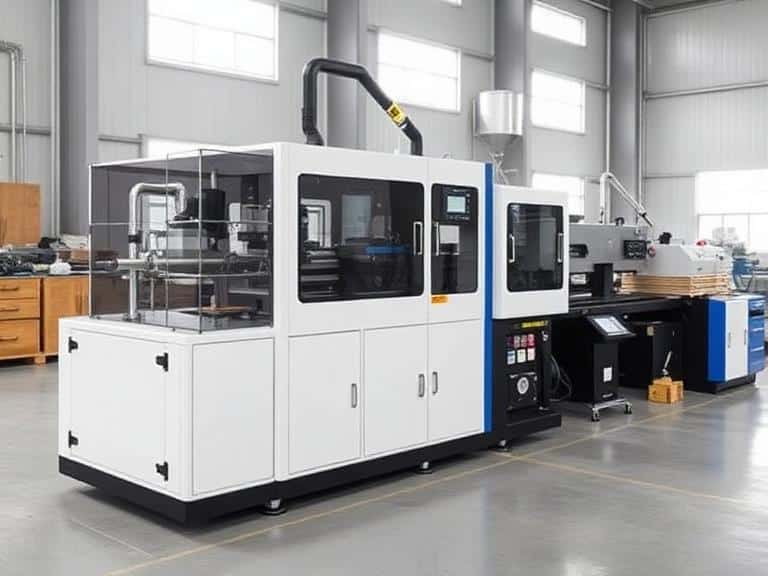
Modern PP melt-blown filter cartridge machines are no longer simple extruders; they are sophisticated systems capable of producing multi-layer gradient filters with micron-level precision. This guide reviews the top 8 machines available this year, focusing on output capacity, power consumption, and control systems to help you make an informed investment.
- Buying Guide: How to Choose a PP Making Machine
- 1. 2e2mPP Melt-blown Filter Cartridge Machine
- 2. 3E3M PP Melt Blown Filter Making Machine
- 3. Wuxi Hongteng 3E&3M High-Capacity Line
- 4. ANGE Automatic PP Spun Filter Machine
- 5. Raj Filter Systems Heavy Duty Extruder
- 6. Hokon Medical-Grade Melt Blown Line
- 7. Filterteknik Precision Series
- 8. Energycle High-Efficiency Recycling Line
- Summary Comparison Table
- Frequently Asked Questions
Buying Guide: How to Choose the Best PP Making Machine
Before diving into the specific models, it is crucial to understand the key metrics that define a high-performance PP making machine in 2026.
1. Power Consumption vs. Output
Energy costs are often the largest operational expense in melt-blown production. Look for machines that utilize advanced air heating systems and frequency converters (inverters). A standard efficient machine should consume between 30kW to 40kW per hour while delivering at least 3,500 pieces per day.
2. Automation Levels
The best machines feature fully automatic control systems powered by PLCs (Programmable Logic Controllers). This allows for “set and forget” operations where temperature, screw speed, and air pressure are automatically adjusted to maintain fiber diameter consistency, reducing the need for skilled manual labor.
3. Multi-Layer Capabilities
Single-layer filters are becoming obsolete for high-end applications. Top-tier machines, such as the 2E2M and 3E3M models, use multiple extruders (2 or 3) to create gradient density filters. This structure—loose on the outside, tight on the inside—drastically improves the dirt-holding capacity and lifespan of the filter.
1. 2e2mPP Melt-blown Filter Cartridge Machine

The 2e2mPP Melt-blown Filter Cartridge Machine represents the gold standard for mid-to-high scale production in 2026. Designed for stability and cost-effectiveness, this machine balances energy usage with a robust output capability, making it ideal for factories looking to scale operations without skyrocketing utility bills.
Key Features & Advantages:
- Fully Automatic Control System: Smart PLC system for seamless, stable operation.
- Energy Efficient: Low power consumption of approximately 30KW/h.
- Wide Filtration Range: From 1μm to 100μm, meeting diverse industrial filtration needs.
- Customizable Dimensions: Inner diameters from 10mm to 150mm, outer diameters from 38mm to 120mm.
- Durable Build: Made with precision engineering and long-lasting materials for extended operation.
- Flexible Voltage Options: Supports AC380V/Hz and DC220V/50Hz (customizable).
- High Productivity: Capable of producing up to 5800 filter cartridges per 24 hours.
Equipment Specifications:
| Parameter | Specification |
|---|---|
| Power Consumption | 30KW/h |
| Filter Precision | 1μm, 5μm, 10μm, 20μm, 30μm, 50μm, … 100μm |
| Inner Diameter Range | 10mm – 150mm (Default 28mm) |
| Outer Diameter Range | 38mm – 120mm (when ID = 28mm) |
| Filter Lengths | 10″, 20″, 30″, 40″ |
| Voltage | AC380V/Hz, DC220V/50Hz (Customizable) |
2. 3E3M PP Melt Blown Filter Making Machine
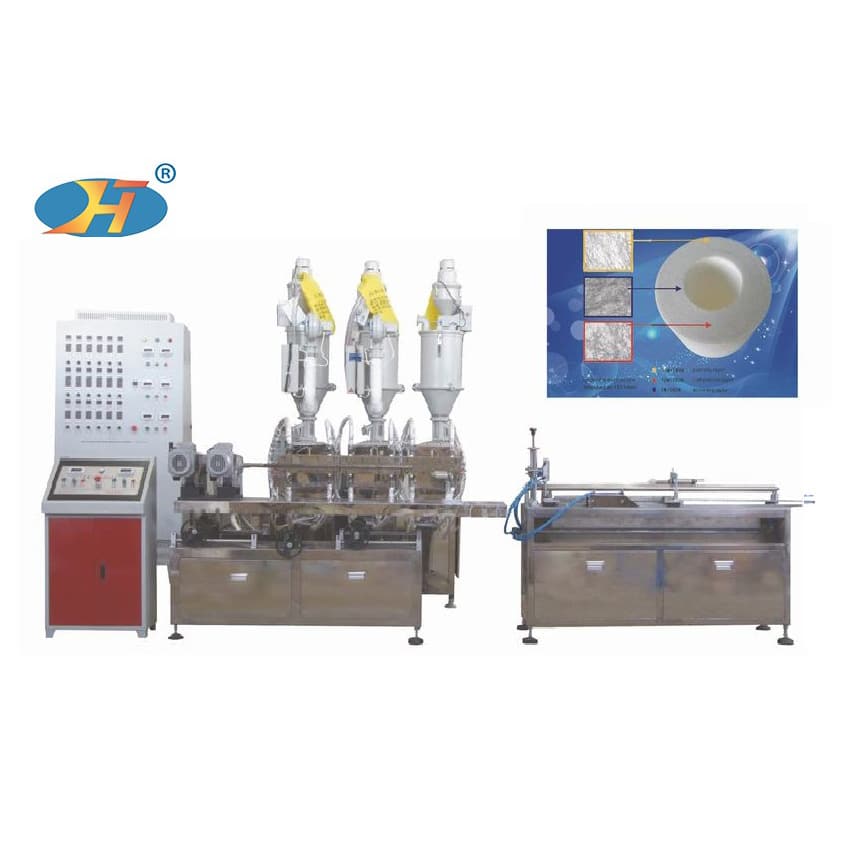
For manufacturers aiming for the premium segment of the market, the 3E3M PP Melt Blown Filter Making Machine is the superior choice. The “3E3M” designation typically refers to three extruders and three molds, allowing for the creation of sophisticated three-layer filter structures that offer superior filtration performance compared to standard cartridges.
Key Features:
- Fully Automatic Control System: Intelligent PLC and touch screen interface for easy operation and stable performance.
- High Output & Efficiency: Advanced extrusion system ensures continuous and uniform fiber distribution.
- Frequency Conversion Speed Control: Adjustable speed according to production demand; reduces energy consumption and ensures consistent product quality.
- Long Service Life: Durable stainless-steel structure, precision components, and reliable heating system extend machine lifespan.
- Stable Filtration Accuracy: Produces PP melt blown filter cartridges with high filtration precision and strong mechanical strength.
Technical Specifications:
| Item | Specification |
|---|---|
| Model | 3E3M PP Melt Blown Filter Machine |
| Production Speed | 0.6 – 0.8 m/min |
| Rated Power | 34 kW/set |
| Control System | Fully Automatic PLC + Frequency Converter |
| Filter Length Range | 10”– 40” (customizable) |
| Material Used | Polypropylene (PP) |
| Operation Mode | Continuous 24-hour operation |
| Cooling Method | Air cooling or water cooling optional |
3. Wuxi Hongteng 3E&3M High-Capacity Line
Wuxi Hongteng is a veteran in the industry, and their 3E&3M model is a powerhouse for large-scale factories. This machine is designed to run 24/7 with minimal downtime.
Why it stands out: It features a specialized receiving car system that can create various surface textures—such as orange peel, grooves, or dotted patterns—directly on the production line without needing secondary processing. This versatility allows manufacturers to offer a diverse product catalog from a single machine.
4. ANGE Automatic PP Spun Filter Machine
ANGE Machinery is renowned for its user-friendly designs. Their latest 2026 model focuses on “One-Key Start” technology, simplifying the complex melt-blown process.
Why it stands out: The machine integrates an auto-feeding system and an advanced root blower that provides stable air pressure. This stability is critical for producing ultra-fine fibers (down to 1 micron) consistently, ensuring the filters meet strict NSF and FDA standards for water purity.
5. Raj Filter Systems Heavy Duty Extruder
For the South Asian and Middle Eastern markets, Raj Filter Systems offers a robust solution built to withstand fluctuating power conditions and harsh industrial environments. Their machines are heavier, reducing vibration and ensuring high precision.
Why it stands out: It is built like a tank. While slightly less energy-efficient than the 2E2M models, its reliability and low maintenance costs make it a favorite for factories in developing regions where durability is paramount.
6. Hokon Medical-Grade Melt Blown Line
Originally designed for mask fabric production, Hokon has adapted their technology for liquid filtration. This machine excels at producing ultra-fine fiber structures.
Why it stands out: Hygiene and precision. The entire extrusion line is enclosed to prevent contamination, making it the best pp making machine for producing filter cartridges destined for the pharmaceutical or food and beverage industries.
7. Filterteknik Precision Series
Filterteknik represents European engineering excellence. Their machines are compact yet highly productive, often utilizing proprietary nozzle designs to prevent clogging.
Why it stands out: The nozzle technology allows for longer continuous runs before maintenance is required. Additionally, their software interface provides real-time data analytics on power usage and polymer consumption, helping managers optimize costs instantly.
8. Energycle High-Efficiency Recycling Line
While technically a recycling machine, Energycle’s line is essential for any modern PP filter factory. In 2026, sustainability is key. This machine takes waste PP scrap from the production line and re-pelletizes it for immediate reuse.
Why it stands out: It allows manufacturers to achieve near-zero waste production. By integrating this line with a standard melt-blown machine, factories can reduce raw material costs by up to 15%, significantly boosting profit margins.
Summary Comparison Table
| Machine Model | Best For | Daily Output (approx.) | Power Consumption |
|---|---|---|---|
| 2e2mPP Melt-blown | Balanced Efficiency & Output | 5,800 pcs | 30 KW/h |
| 3E3M PP Melt Blown | Multi-Layer Premium Filters | High Capacity | 34 KW/set |
| Wuxi Hongteng | Versatile Surface Textures | 5,000+ pcs | High |
| ANGE Automatic | Ease of Use | 4,500 pcs | Moderate |
| Raj Heavy Duty | Durability / Harsh Environments | 3,500 pcs | High |
| Filterteknik Precision | Pharmaceutical Grade | 4,000 pcs | Low |
Frequently Asked Questions
Q: What is the difference between 2E2M and 3E3M machines?
A: “E” stands for Extruder and “M” stands for Mold. A 2E2M machine has two extruders and two molds, allowing for dual-layer filters. A 3E3M machine has three of each, enabling the production of three-layer gradient filters, which generally have higher filtration efficiency and longer service life.
Q: What raw material is used in these machines?
A: These machines are designed to use Polypropylene (PP) granules. For the best results, specifically designed “Melt Blown Grade” PP with a high Melt Flow Index (MFI) is recommended to ensure ultra-fine fiber formation.
Q: Can these machines produce filters with different surfaces?
A: Yes. Most modern machines, including the 2e2mPP model, can produce smooth, orange peel, or grooved surfaces. However, some textures like deep grooves might require an additional carving machine or specific receiving rollers.
Q: How much space is required for installation?
A: A standard production line typically requires a minimum area of 50 to 100 square meters. You also need to account for ceiling height (usually at least 3.5 meters) to accommodate the extruder hoppers and air handling equipment.
References
- Global Filtration Market Report 2025-2030.
- “Advances in Melt Blown Technology for Water Filtration,” Journal of Industrial Textiles, 2025.