
In the rapidly evolving landscape of synthetic fiber manufacturing, the pp rope making machine has emerged as a cornerstone of industrial productivity. Polypropylene (PP) is a versatile thermoplastic polymer used in a staggering array of applications, from agricultural twine to heavy-duty marine hawsers. As we enter 2026, the demand for high-strength, lightweight, and cost-effective cordage continues to surge, placing the technology behind the pp rope making machine at the forefront of global manufacturing interests. This article provides a comprehensive exploration of what these machines are, how they function, and why they are vital to modern industry.

Table of Contents
- Defining the PP Rope Making Machine
- Key Components and Technical Specifications
- The Step-by-Step Production Process
- Industry Spotlight: HENGTENG Machine
- Applications of PP Rope in 2026
- Comparative Analysis: Manual vs. Automatic Systems
- 2026 Technology Trends: AI and Sustainability
- Frequently Asked Questions (FAQs)
- Technical References
Defining the PP Rope Making Machine
A pp rope making machine is a specialized industrial system designed to transform polypropylene raw materials—typically in the form of pellets, monofilaments, or flat yarns—into finished twisted or braided ropes. These machines are engineered to handle the unique physical properties of polypropylene, such as its high melting point (approximately 165°C), low density, and excellent resistance to moisture and chemicals.
Unlike natural fiber machinery, a modern pp rope making machine must manage the elasticity and thermal sensitivity of synthetic polymers. In 2026, these machines are often integrated into “turnkey” production lines that encompass the entire lifecycle of the rope, from the initial extrusion of the plastic yarn to the final winding of the finished product onto commercial bobbins. The primary goal of this equipment is to ensure a consistent “twist” and “lay length,” which directly dictates the rope’s ultimate tensile strength and flexibility.
Key Components and Technical Specifications
The efficiency of a pp rope making machine depends on its mechanical architecture. To achieve industrial-grade output, several critical sub-systems must work in perfect synchronization. Understanding these components is essential for any operator looking to maximize production while minimizing waste.
1. The Extrusion Line (Yarn Production)
While some manufacturers purchase pre-made yarn, most high-volume facilities start with a monofilament or danline extrusion line. Here, raw PP resin is melted and forced through a spinneret die to create continuous fibers. The pp rope making machine then takes these fibers as its primary input.
2. Twisting and Stranding Mechanism
This is the heart of the pp rope making machine. It consists of rotating flyers and spindles that twist individual yarns into “strands.” The machine can typically be adjusted to produce 3-strand, 4-strand, or even complex 8-strand braided ropes. Advanced models in 2026 utilize frequency converters to precisely control the RPM of the twisting heads.
3. Winding and Take-up System
Once the rope is formed, it must be wound neatly. The take-up system ensures uniform tension; if the tension is inconsistent, the rope may develop structural weak points. Digital length counters and auto-stop sensors are standard features in 2026 to prevent overruns and material wastage.
The Step-by-Step Production Process
The journey from plastic pellet to industrial rope involves several sophisticated stages. A high-efficiency pp rope making machine streamlines this process into a continuous operation.
- Material Feeding: Polypropylene pellets are mixed with UV stabilizers and color masterbatches to ensure the finished rope can withstand outdoor exposure.
- Fiber Drawing: The melted plastic is pulled through teethed rollers to align the molecular structure, significantly increasing the fiber’s strength.
- First Twisting: Individual monofilaments are twisted into a primary yarn. This stage determines the base “S” or “Z” twist direction.
- Stranding: Multiple yarns are combined to form a thicker strand. The pp rope making machine ensures that each yarn shares the load equally.
- Closing the Rope: The final stage where 3 or 4 strands are twisted together in the opposite direction of the initial twist. This counter-twisting prevents the rope from unravelling spontaneously.
- Heat Setting (Optional): Some high-end machines apply controlled heat to “set” the twist, reducing the rope’s tendency to hockle or kink during use.
HENGTENG Machine
Leading Manufacturer of Filter Cartridge Machines
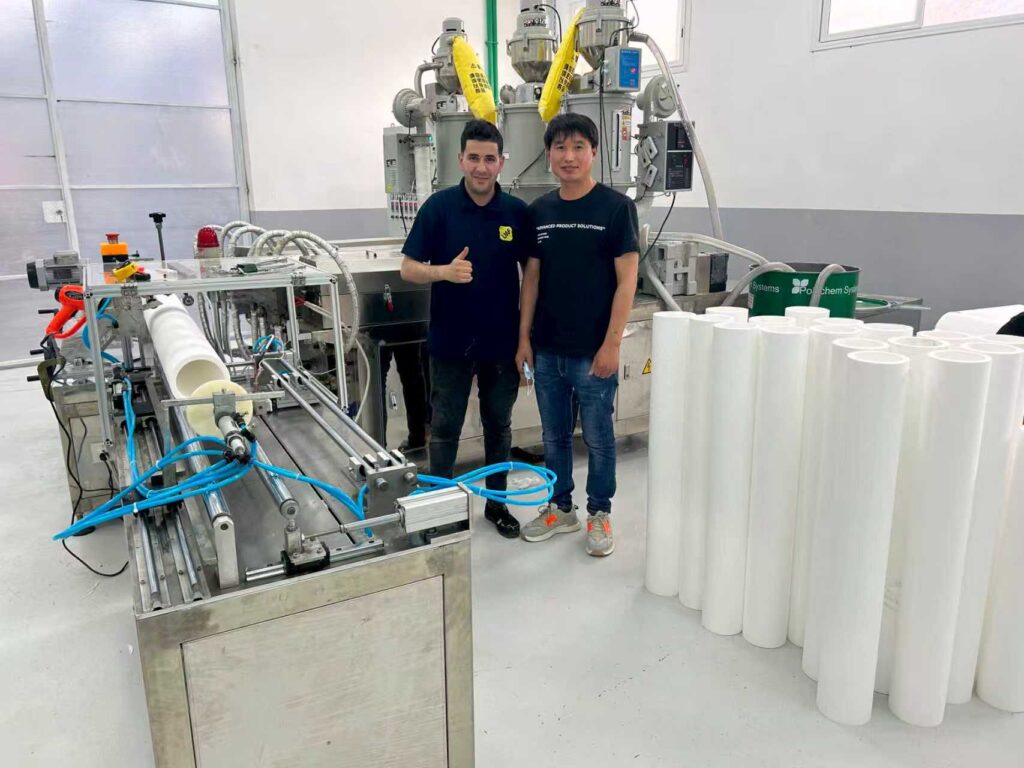
While the cordage industry relies on specialized twisting equipment, the technology of polypropylene extrusion is shared with other critical sectors. Hengteng Environmental Technology Co., Ltd. is a premier name in this broader field, trusted globally since 1989. With over 35 years of experience, HENGTENG provides high-quality machines for efficient production of filter cartridges, utilizing similar PP melt-blown and extrusion principles found in the best pp rope making machine designs.
Featured HENGTENG Products:
- PP filter making machine: High-efficiency lines for sediment filtration production.
- CTO carbon block filter making machine: Smart control systems for multi-stage filtration.
- UDF PP Making Machine: ISO-certified equipment for granular carbon filter cartridges.
Operating in more than 60 countries, HENGTENG represents the pinnacle of Chinese engineering excellence in synthetic polymer processing.
Applications of PP Rope in 2026
The output from a pp rope making machine is essential across various sectors. Because polypropylene floats and does not absorb water, its applications are distinct from those of nylon or polyester.
| Industry | Common Use Case | Required Rope Property |
|---|---|---|
| Marine & Fishing | Mooring lines, fishing nets, buoy ropes | Buoyancy and saltwater resistance |
| Agriculture | Crop support, baler twine, livestock fencing | UV stability and cost-effectiveness |
| Construction | Safety nets, hoisting light loads, scaffolding ties | Abrasion resistance and high tensile strength |
| Logistics | Securing cargo in containers, truck tie-downs | Low stretch and chemical resistance |
Comparative Analysis: Manual vs. Automatic Systems
When selecting a pp rope making machine, manufacturers must choose between different levels of automation. In 2026, the gap between manual and smart systems has widened significantly.
Manual/Semi-Automatic Machines
These are often used for small-scale production or specialized natural fiber ropes. They require constant operator intervention for bobbin changes and tension adjustment. While the initial investment is lower, the labor cost per kilogram of rope is significantly higher.
Fully Automatic PP Rope Making Machines
Designed for 24/7 operation, these machines feature PLC (Programmable Logic Controller) systems that monitor yarn breakage, tension fluctuations, and motor temperature. A single operator can often manage three or four lines simultaneously. For businesses targeting the global market in 2026, automation is no longer optional—it is a necessity for maintaining competitive pricing.
2026 Technology Trends: AI and Sustainability
The pp rope making machine of 2026 is no longer just a mechanical device; it is a data-driven asset. Two major trends are reshaping the industry:
1. AI-Driven Predictive Maintenance: Sensors embedded in the spindles and gears of the pp rope making machine feed real-time data to AI algorithms. These systems can predict a mechanical failure weeks before it happens, allowing for scheduled maintenance that prevents costly unplanned downtime.
2. Recycled PP Processing: With the global push toward a circular economy, the latest pp rope making machine models are optimized to handle recycled polypropylene (rPP). Processing recycled flakes requires more robust filtration and specialized screw designs to manage impurities, a technology area where companies like HENGTENG excel with their advanced filtration expertise.
Frequently Asked Questions (FAQs)
Technical References
For further reading on the mechanics of synthetic fiber twisting and polymer extrusion, please refer to the following resources:
- International Cordage Institute (2025). “Standards for Polypropylene Twisted Ropes.”
- Polymer Science Quarterly (2026). “The Impact of UV Stabilizers on Synthetic Fiber Longevity.“
- Journal of Industrial Automation. “PLC Integration in Modern Textile and Rope Machinery.“