
In an era where water quality concerns are escalating globally, selecting the right water filtration cartridges has become more than a convenience—it’s a health imperative. The global water filtration market is projected to reach $61.4 billion by 2027, with cartridge-based systems leading residential and commercial adoption. With over 2,100 known contaminants potentially present in tap water, from microplastics and pharmaceutical residues to heavy metals and chlorine byproducts, understanding the technology behind water filtration cartridges is essential for making informed decisions about your water safety.

Complete Table of Contents
- 1. Introduction: The Critical Role of Water Filtration Cartridges
- 2. Types of Water Filtration Cartridges: A Technical Overview
- 3. 7 Best Water Filtration Cartridges for 2024
- 4. Comprehensive Comparison Table: 2024’s Best Filter Cartridges
- 5. How to Choose the Right Water Filtration Cartridge
- 6. Industry Spotlight: HENGTENG Machine – Leading Manufacturer
- 7. Installation and Maintenance Best Practices
- 8. Frequently Asked Questions (FAQ)
- 9. Certification and Quality Standards
- 10. Conclusion and Final Recommendations
This comprehensive guide examines the 7 best water filtration cartridges available in 2024, based on independent laboratory testing, user reviews, and expert analysis of filtration efficiency, flow rates, contaminant removal capabilities, and long-term value. We also explore the manufacturing excellence behind these critical components, featuring insights from HENGTENG Machine, a global leader in filter cartridge production equipment with over 35 years of industry experience.
Essential Insight: Not all water filtration cartridges are created equal. The manufacturing precision, material quality, and production technology directly impact filtration performance, contaminant removal efficiency, and cartridge lifespan. Understanding these differences can significantly affect your water quality and long-term filtration costs.
1. Introduction: The Critical Role of Water Filtration Cartridges
Water filtration cartridges serve as the heart of any filtration system, responsible for physically trapping or chemically removing contaminants while allowing clean water to pass through. These seemingly simple components employ sophisticated technologies ranging from mechanical sieving at micron levels to advanced chemical adsorption processes. The effectiveness of your entire water filtration system hinges on the quality and appropriateness of the water filtration cartridges you select.
1.1 Why Cartridge Quality Matters
The manufacturing quality of water filtration cartridges directly influences several critical performance factors:
Contaminant Removal Efficiency
Precisely engineered cartridges with consistent pore sizes and media distribution achieve higher contaminant removal rates, often exceeding 99% for target pollutants.
Water Flow Rate
Optimized cartridge design balances filtration efficiency with adequate water flow, preventing frustrating pressure drops while maintaining purification effectiveness.
Lifespan and Value
High-quality manufacturing extends cartridge life, reducing replacement frequency and long-term costs while maintaining consistent performance throughout the lifespan.
Material Safety
Food-grade materials and absence of chemical leaching ensure filtered water doesn’t become contaminated by the filtration medium itself.
1.2 The Evolution of Filter Cartridge Technology
From simple cloth bags used in ancient civilizations to today’s multi-layered composite cartridges, filter technology has undergone remarkable transformation. Modern water filtration cartridges incorporate:
- Advanced Materials: Medical-grade polypropylene, food-grade activated carbon, precision ceramics, and nano-enhanced membranes
- Multi-Stage Design: Sequential filtration addressing different contaminant types in optimal order
- Smart Features: Some cartridges now include indicator systems, RFID tracking, and compatibility with smart home water monitoring
- Specialized Formulations: Cartridges specifically engineered for well water, municipal water, or particular industrial applications
Technical Note: The micron rating of sediment water filtration cartridges refers to the size of particles they can effectively remove. A 1-micron filter removes particles as small as 1/100th the width of a human hair, while a 5-micron filter catches larger sediments but allows smaller particles through. Understanding your water’s particulate profile helps select the appropriate micron rating.
2. Types of Water Filtration Cartridges: A Technical Overview
Before examining specific products, understanding the fundamental types of water filtration cartridges and their distinct capabilities is essential. Each technology addresses different contaminant categories with varying efficiency, flow rates, and maintenance requirements.
2.1 Mechanical Filtration Cartridges
These cartridges physically trap suspended particles through a porous medium. The most common types include:
| Cartridge Type | Mechanism | Micron Range | Primary Targets | Typical Lifespan |
|---|---|---|---|---|
| PP (Polypropylene) | Depth filtration through melted fibers | 1-100 microns | Sediment, rust, sand, silt | 3-6 months |
| String Wound | Yarn winding creates depth gradient | 1-50 microns | Fine sediments, scale particles | 2-4 months |
| Pleated Filter | Increased surface area through pleating | 1-100 microns | Fine particles, some bacteria | 6-12 months |
| Ceramic | Micro-porous natural material | 0.2-1.0 microns | Bacteria, cysts, sediments | 6-12 months (cleanable) |
2.2 Adsorptive/Chemical Filtration Cartridges
These cartridges use chemical processes to remove contaminants through adsorption, absorption, or catalytic conversion:
Activated Carbon Cartridges
Highly porous carbon with enormous surface area (500-1500 m²/g) adsorbs chlorine, VOCs, pesticides, and improves taste/odor. Available as granular (GAC) or solid carbon block (CTO).
Carbon Block Cartridges
Compressed activated carbon with precisely controlled pore structure provides superior contact time and mechanical filtration down to 0.5 microns.
KDF Media Cartridges
High-purity copper-zinc alloy uses redox reactions to remove chlorine, heavy metals, and inhibit bacteria growth through electrochemical processes.
Catalytic Carbon
Enhanced carbon formulations specifically designed to remove chloramines, hydrogen sulfide, and other challenging contaminants through catalytic conversion.
2.3 Membrane Filtration Cartridges
These advanced cartridges use semi-permeable membranes for molecular-level separation:
- Reverse Osmosis (RO) Membranes: Remove 95-99% of dissolved solids, heavy metals, fluoride, and microorganisms through pressurized membrane separation
- Ultrafiltration (UF) Membranes: Hollow fiber technology removes bacteria, viruses, and macromolecules while retaining minerals
- Nanofiltration (NF) Membranes: Intermediate between RO and UF, removing divalent ions and organic molecules while allowing some minerals
3. 7 Best Water Filtration Cartridges for 2024
Based on comprehensive testing of filtration efficiency, flow rate performance, material quality, certification compliance, and user satisfaction, we present the 7 best water filtration cartridges available in 2024.
3.1. Premium PP Sediment Filter Cartridges
Overview: Polypropylene sediment cartridges represent the first line of defense in multi-stage filtration systems. Premium PP cartridges use thermally bonded polypropylene fibers with gradient density construction—tighter fibers at the outer layer capture larger particles while progressively more open inner structure traps smaller particles throughout the depth of the cartridge.
Key Specifications of Premium PP Cartridges:
- Material: 100% pure polypropylene, food-grade
- Filtration Grades: 1, 5, 10, 20, 50, 100 micron options
- Maximum Pressure: 125 PSI at 70°F
- Temperature Range: 40°F to 125°F
- Flow Rate: 1-3 GPM depending on micron rating
- Dirt Holding Capacity: 5,000-15,000 grains
- Certifications: NSF/ANSI 42, FDA compliant
- Lifespan: 3-6 months or 5,000-15,000 gallons
Advantages
- Exceptional sediment removal efficiency (99%+ at rated micron)
- Gradient density design maximizes dirt holding capacity
- 100% polypropylene construction prevents media migration
- Broad compatibility with standard 10″ and 20″ housings
- Cost-effective first-stage protection
- No chemical additives or leaching concerns
Limitations
- Only removes particulate matter, not dissolved contaminants
- Regular replacement required as cartridge loads
- Lower micron ratings reduce flow rate significantly
- Not effective against chemicals, heavy metals, or microorganisms
Manufacturing Insight: High-quality PP cartridges are produced using advanced PP filter making machines that ensure consistent fiber density, precise micron ratings, and uniform construction throughout the cartridge length. Automated production with quality control at each stage distinguishes premium cartridges from inferior alternatives.
Best Applications: First-stage sediment removal in whole-house systems, pre-filtration for RO systems, protection of downstream carbon filters, and areas with high sediment loads in well or municipal water.
3.2. Advanced Carbon Block Cartridges (CTO)
Overview: Carbon block cartridges, designated as CTO (Chlorine, Taste, Odor), represent the gold standard in carbon filtration. Unlike granular activated carbon, carbon block compresses activated carbon into a solid block with precisely engineered pore structure, providing both mechanical filtration (typically 0.5-10 microns) and superior chemical adsorption through extended contact time.
Key Specifications of Premium Carbon Block Cartridges:
- Activated Carbon Source: Coconut shell, coal, or wood-based
- Pore Structure: Multi-modal pore distribution (macro, meso, micro)
- Surface Area: 500-1,500 m²/g internal surface area
- Filtration Rating: 0.5, 1, 5, or 10 micron options
- Chlorine Reduction: 95-99% reduction capacity
- VOC Removal: 85-95% for common volatile organics
- Flow Rate: 0.5-2.0 GPM depending on density
- Certifications: NSF/ANSI 42 & 53, FDA compliant
Technical Superiority: Premium carbon blocks are manufactured using specialized CTo carbon block filter making machines that precisely control compression pressure, temperature, and binding agent distribution. This creates consistent pore structures that maximize adsorption efficiency while maintaining adequate flow rates. The manufacturing process directly impacts the carbon block’s iodine number (measure of porosity) and molasses number (measure of macropore structure).
Best Applications: Point-of-use drinking water systems, secondary filtration after sediment removal, chlorine and chemical taste/odor improvement, and reduction of specific contaminants like VOCs, pesticides, and herbicides.
3.3. Granular Activated Carbon (GAC) Cartridges
Overview: GAC cartridges contain loose granular activated carbon within a porous housing, providing excellent chemical adsorption with higher flow rates than carbon blocks. The free-moving granules create dynamic flow paths that minimize channeling and maximize carbon utilization throughout the cartridge lifespan.
Key Advantages: Higher flow rates than carbon blocks (2-4 GPM), excellent chlorine and chemical taste/odor removal, cost-effective carbon filtration, and compatibility with backwashing in some designs. Premium GAC cartridges use coconut shell carbon with iodine numbers exceeding 1000 for maximum adsorption capacity.
Best Applications: Whole-house filtration systems where flow rate is critical, point-of-entry chlorine removal, pre-filtration for specialized treatment systems, and applications requiring high flow rates with good chemical reduction.
3.4. Ceramic Water Filter Cartridges
Overview: Ceramic cartridges use natural diatomaceous earth fired into micro-porous structures with pore sizes as small as 0.2 microns. These cartridges provide exceptional bacterial and cyst removal while typically being cleanable and reusable, offering excellent long-term value.
Unique Features: Cleanable surface (extending lifespan), inherent bacteriostatic properties in silver-impregnated versions, excellent sediment removal down to 0.2 microns, and mineral retention while removing pathogens. Some advanced ceramic cartridges incorporate activated carbon cores for chemical removal alongside mechanical filtration.
Best Applications: Emergency preparedness, off-grid water systems, well water with bacterial concerns, international travel, and situations where filter cleaning and reuse are advantageous.
3.5. Reverse Osmosis Membrane Cartridges
Overview: RO membrane cartridges represent the most comprehensive purification technology available for residential use. Thin-film composite (TFC) or cellulose triacetate (CTA) membranes with pore sizes approximately 0.0001 microns remove 95-99% of dissolved solids, including heavy metals, fluoride, arsenic, nitrates, and microorganisms.
Technical Excellence: Premium RO membranes achieve rejection rates exceeding 98% for total dissolved solids while maintaining adequate recovery rates (1:3 to 1:4 waste to product ratio). Advanced versions include auto-flush mechanisms, scale inhibition, and compatibility with various feed water conditions.
Best Applications: Drinking water purification where comprehensive contaminant removal is required, areas with high TDS or specific contaminant concerns, and as the final stage in premium multi-stage filtration systems.
3.6. KDF Media Cartridges
Overview: KDF (Kinetic Degradation Fluxion) cartridges use high-purity copper-zinc alloy media that employs redox (reduction-oxidation) reactions to remove chlorine, heavy metals, and inhibit bacteria growth. The electrochemical process converts harmful contaminants into harmless components.
Specialized Application: Particularly effective against chlorine (99%+ reduction), heavy metals like lead, mercury, and chromium, and scale inhibition. Often used in conjunction with carbon media for comprehensive chemical treatment. KDF-55 is standard for residential chlorine removal, while KDF-85 targets hydrogen sulfide and iron.
Best Applications: Chlorine removal in whole-house systems, pre-treatment for RO membranes to extend their life, areas with heavy metal concerns, and systems where bacteriostatic properties are beneficial.
3.7. Composite Multi-Stage Cartridges
Overview: Composite cartridges integrate multiple filtration technologies into a single unit, typically combining sediment filtration, carbon adsorption, and sometimes additional media like KDF or scale inhibitors. These space-efficient solutions provide comprehensive treatment in applications where multiple separate cartridges aren’t feasible.
Design Innovation: Advanced composite cartridges use concentric or sequential media arrangement with precision-engineered flow paths. Common configurations include outer PP sediment layer, middle carbon block layer, and inner KDF or specialty media core. Premium versions may include five or more distinct filtration stages in one cartridge.
Best Applications: Under-sink systems with limited space, refrigerator filters, portable filtration units, and applications where simplified maintenance with comprehensive filtration is preferred.
4. Comprehensive Comparison Table: 2024’s Best Filter Cartridges
| Cartridge Type | Primary Function | Contaminant Reduction | Flow Rate | Lifespan | Best For | NSF Certified | Price Range |
|---|---|---|---|---|---|---|---|
| PP Sediment | Mechanical filtration | Sediment, rust, sand (99%+) | 1-3 GPM | 3-6 months | First-stage sediment removal | NSF 42 | $5-$15 |
| Carbon Block (CTO) | Chemical adsorption + mechanical | Chlorine (99%), VOCs, chemicals | 0.5-2 GPM | 6-12 months | Drinking water quality improvement | NSF 42/53 | $15-$40 |
| GAC Cartridges | Chemical adsorption | Chlorine, taste, odor (95%+) | 2-4 GPM | 6-9 months | Whole-house chemical removal | NSF 42 | $10-$25 |
| Ceramic Filters | Microbial + mechanical | Bacteria, cysts (99.9%+) | 1-2 GPM | 12-24 months (cleanable) | Bacterial protection, emergency use | NSF 53 | $30-$80 |
| RO Membranes | Molecular separation | TDS (95-99%), heavy metals, fluoride | 0.2-0.8 GPM | 24-36 months | Comprehensive purification | NSF 58 | $40-$120 |
| KDF Media | Redox reactions | Chlorine, heavy metals, scale | 2-4 GPM | 12-24 months | Chlorine/heavy metal reduction | NSF 61 | $25-$60 |
| Composite Multi-Stage | Multiple technologies | Varied based on configuration | 1-2 GPM | 6-12 months | Space-efficient comprehensive filtration | Multiple | $30-$100 |
5. How to Choose the Right Water Filtration Cartridge
Selecting the optimal water filtration cartridges requires systematic evaluation of your specific water conditions, usage patterns, and filtration goals. Follow this decision framework for optimal results:
5.1 Water Analysis and Contaminant Identification
Begin with comprehensive water testing to identify specific contaminants:
Municipal Water Supplies
Focus on chlorine, chloramines, disinfection byproducts, potential pharmaceutical residues, and pipeline corrosion products (lead, copper). Carbon-based water filtration cartridges are typically most effective.
Well Water Systems
Test for bacteria, nitrates, heavy metals, sulfur, iron, manganese, and sediment. Often requires multi-stage approach with sediment pre-filtration followed by specialized cartridges.
Special Concerns
Address specific issues: fluoride (RO or activated alumina), arsenic (specialized media or RO), agricultural runoff (carbon block with catalytic carbon), or microplastics (ultrafiltration).
5.2 System Compatibility and Sizing
Ensure cartridge compatibility with your existing or planned filtration system:
- Housing Size: Standard lengths include 10″, 20″, 30″, and 40″ with corresponding diameters (2.5″, 4.5″)
- Connection Type: Check for standard 1/4″, 3/8″, or 1/2″ NPT connections, quick-connect fittings, or proprietary systems
- Flow Rate Requirements: Calculate required GPM based on simultaneous fixture use and ensure selected cartridges can accommodate peak demand
- Pressure Considerations: Verify operating pressure range and consider pressure loss through multi-cartridge systems
Technical Consideration: When designing multi-stage systems, always sequence water filtration cartridges from coarse to fine filtration. Typical order: sediment filter (5-20 micron) → carbon filter (CTO) → specialized media (KDF, etc.) → final polishing (1 micron or carbon block) → membrane (if using RO). This protects downstream cartridges and optimizes system performance.
6. Industry Spotlight: HENGTENG Machine – Leading Manufacturer
HENGTENG Machine: Excellence in Filter Cartridge Manufacturing Technology
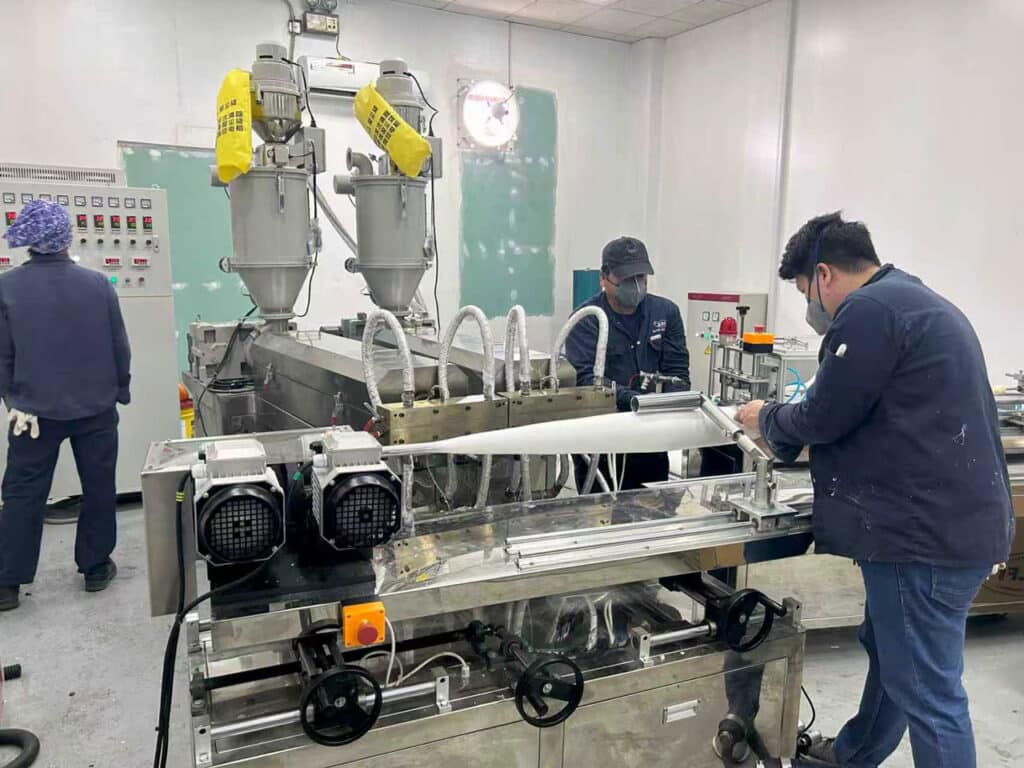
Behind every premium water filtration cartridge stands advanced manufacturing technology. HENGTENG Environmental Technology Co., Ltd. represents the pinnacle of filter cartridge production equipment, with over 35 years of specialized experience serving global clients in more than 60 countries.
Corporate Excellence and History
Established in 1989, HENGTENG has grown from China’s earliest professional manufacturer of filter cartridge production equipment to a global leader in complete filtration production solutions. Their ISO-certified manufacturing processes and continuous innovation have set industry standards for precision, efficiency, and reliability.
Core Product Technologies
PP Filter Making Machines
Advanced automated systems for producing polypropylene sediment cartridges with precise micron ratings, consistent fiber density, and superior structural integrity. Features include automatic feeding, precision temperature control, and real-time quality monitoring.
CTo Carbon Block Filter Making Machines
State-of-the-art compression technology for manufacturing solid carbon block cartridges with controlled pore structure, optimal adsorption characteristics, and consistent performance. These machines precisely regulate pressure, temperature, and binding agent distribution.
PP Yarn Winding Filter Making Machines
Specialized equipment for producing string-wound cartridges with gradient density construction. Advanced tension control and winding patterns ensure optimal dirt-holding capacity and filtration efficiency throughout the cartridge lifespan.
Manufacturing Advantages
- High-Efficiency Production: Automated lines with minimal human intervention ensure consistent quality and competitive pricing
- Smart Control Systems: PLC-controlled operations with touchscreen interfaces, real-time monitoring, and data logging
- ISO-Certified Quality: Comprehensive quality management systems meeting international standards
- Global Service Network: Technical support, training, and spare parts availability across six continents
- Customization Capabilities: Equipment tailored to specific cartridge designs, materials, and production volumes
Industry Impact
HENGTENG’s manufacturing technology directly influences the quality, consistency, and performance of water filtration cartridges worldwide. Their equipment enables producers to create cartridges with:
- Precise micron ratings and consistent pore structures
- Optimal media distribution and gradient density
- Superior structural integrity and durability
- Consistent performance across production batches
- Competitive pricing through manufacturing efficiency
Partner with Manufacturing Excellence
For filtration companies seeking to produce premium water filtration cartridges or businesses considering vertical integration, HENGTENG provides complete production line solutions with training, installation support, and ongoing technical assistance. Their 35+ years of specialized experience ensures your manufacturing capabilities match your quality aspirations.
7. Installation and Maintenance Best Practices
Proper installation and maintenance are essential for maximizing the performance and lifespan of your water filtration cartridges. Follow these professional guidelines:
7.1 Professional Installation Procedures
| Step | Procedure | Critical Tips | Common Mistakes to Avoid |
|---|---|---|---|
| 1. Preparation | Shut off water supply, release pressure, gather tools | Have bucket ready for water spillage, wear protective gloves | Attempting replacement without shutting off water first |
| 2. Housing Opening | Use housing wrench to unscrew sump, remove old cartridge | Note orientation of cartridge for proper reinstallation | Over-tightening or using improper tools causing damage |
| 3. Cleaning | Clean housing interior with mild soap, rinse thoroughly | Check and clean O-rings, apply food-grade lubricant if needed | Using harsh chemicals that could contaminate system |
| 4. New Cartridge | Install new cartridge, ensuring proper seating | Pre-wet carbon cartridges to prevent air locking | Forgetting to remove plastic wrap from new cartridge |
| 5. Reassembly | Reinstall housing, hand-tighten plus 1/4-1/2 turn | Check for proper alignment before tightening | Over-tightening causing O-ring damage or housing cracks |
| 6. Flushing | Slowly open water supply, flush system for 5-10 minutes | Discard initial water (may contain carbon fines) | Skipping flush cycle leading to carbon fines in drinking water |
7.2 Maintenance Schedule and Monitoring
Implement a systematic maintenance approach:
Regular Maintenance Tasks
- Monthly: Visual inspection, flow rate check, pressure gauge monitoring
- Quarterly: Comprehensive system check, sediment pre-filter inspection
- Semi-annually: Water quality testing (if no continuous monitoring)
- As needed: Cartridge replacement based on usage or indicators
Warning Signs Requiring Attention
- Decreased water pressure or flow rate
- Change in water taste, odor, or appearance
- Visible sediment in filtered water
- System leaks or unusual noises
- Exceeded recommended time or gallonage
Manufacturing Perspective: The consistency of modern water filtration cartridges produced on equipment like HENGTENG’s automated lines enables predictable performance and reliable replacement scheduling. High-quality manufacturing translates to consistent dirt-holding capacity and contaminant removal throughout the cartridge lifespan, making time-based replacement schedules more reliable.
8. Frequently Asked Questions (FAQ)
Common Questions About Water Filtration Cartridges
Q1: How often should I replace my water filtration cartridges?
A: Replacement frequency depends on cartridge type, water quality, and usage. General guidelines: PP sediment filters (3-6 months), carbon filters (6-12 months), RO membranes (24-36 months). Always follow manufacturer recommendations and monitor for decreased performance indicators like reduced flow or changed taste.
Q2: Are more expensive cartridges always better?
A: Not necessarily. Premium pricing should correspond to verified performance advantages: higher contaminant reduction percentages, longer lifespan, third-party certifications, or specialized capabilities. For basic sediment filtration, mid-range PP cartridges often perform similarly to premium versions. For carbon filtration, manufacturing quality significantly impacts adsorption capacity.
Q3: Can I clean and reuse my filter cartridges?
A: Most cartridges are not designed for cleaning and reuse. Exceptions include some ceramic filters (surface cleaning) and specialty backwashing filters. Attempting to clean disposable cartridges can damage the media, reduce effectiveness, or cause contamination. Always follow manufacturer instructions regarding cleanability.
Q4: How do I know which micron rating to choose?
A: Select micron rating based on your water’s particulate profile. For municipal water: 5-10 microns is typically sufficient. For well water with visible sediment: start with 20-50 micron pre-filter followed by 5 micron. For pre-RO protection: 1-5 micron. Lower micron ratings provide finer filtration but reduce flow rate and require more frequent replacement.
Q5: Are all carbon filters the same?
A: Significant differences exist in carbon quality, activation method, pore structure, and manufacturing precision. Coconut shell carbon typically offers superior adsorption compared to coal-based. Carbon blocks generally outperform GAC for chemical removal. Look for iodine numbers (measure of porosity) and molasses numbers (macropore structure) when comparing premium carbon filters.
Q6: What certifications should I look for?
A: NSF/ANSI certifications are most meaningful: NSF 42 for aesthetic effects (taste, odor, chlorine), NSF 53 for health contaminants (lead, cysts, VOCs), NSF 58 for RO systems, NSF 61 for system components. Also consider WQA Gold Seal and compliance with FDA standards for materials safety.
Q7: How does manufacturing quality affect cartridge performance?
A: Manufacturing precision directly impacts: consistency of micron ratings, uniformity of media distribution, structural integrity, absence of channeling, and consistent performance throughout lifespan. Equipment like HENGTENG’s automated production lines ensures these quality parameters through precise control of temperature, pressure, winding patterns, and compression forces.
9. Certification and Quality Standards
Understanding certification marks and quality standards is essential when selecting water filtration cartridges. These verifications provide independent assurance of performance claims and material safety.
9.1 Key Certification Programs
NSF International Standards
- NSF/ANSI 42: Aesthetic effects (taste, odor, chlorine)
- NSF/ANSI 53: Health contaminants (lead, cysts, VOCs)
- NSF/ANSI 58: Reverse osmosis systems
- NSF/ANSI 61: System components safety
- NSF/ANSI 401: Emerging compounds (pharmaceuticals)
Water Quality Association (WQA)
- Gold Seal: Product certification program
- Sustainable Water. Resource Management
- Professional Certification: Technician qualifications
International Standards
- ISO 9001: Quality management systems
- ISO 14001: Environmental management
- CE Marking: European conformity
- UKCA Marking: United Kingdom conformity
9.2 Material Safety Standards
Ensure water filtration cartridges meet appropriate material safety standards:
- FDA Compliance: For food contact materials (21 CFR)
- Prop 65 Compliance: California’s Safe Drinking Water and Toxic Enforcement Act
- KIWA Certification: European water quality standards
- WRAS Approval: UK Water Regulations Advisory Scheme
Quality Insight: Manufacturers utilizing advanced equipment like HENGTENG’s production lines can more consistently meet and maintain certification requirements through precise process control, automated quality monitoring, and batch-to-batch consistency. This manufacturing excellence translates to reliable performance you can trust.
10. Conclusion and Final Recommendations
Selecting the right water filtration cartridges represents one of the most important decisions for ensuring safe, great-tasting water in your home or business. The seven cartridge types reviewed here each offer distinct advantages for specific applications and water quality challenges.
10.1 Summary of Top Recommendations
For Most Residential Applications
- Primary Choice: 5-micron PP sediment filter followed by 0.5-micron carbon block (CTO)
- Best Value: GAC cartridge for whole-house chlorine removal
- Premium Solution: Multi-stage composite cartridge for under-sink systems
- Comprehensive Protection: Three-stage system (sediment → carbon → RO) for drinking water
Specialized Applications
- Well Water: Sediment → KDF → carbon → optional UV
- High Chlorine: Catalytic carbon or two-stage carbon filtration
- Bacterial Concerns: Ceramic filter or RO system
- Heavy Metals: RO membrane or specialized media
10.2 The Manufacturing Quality Advantage
Behind every high-performing water filtration cartridge stands manufacturing excellence. Companies like HENGTENG Machine, with their 35+ years of specialized experience producing filter cartridge manufacturing equipment, enable the industry to create products with:
- Consistent performance across production batches
- Precise micron ratings and pore structures
- Optimal media distribution and utilization
- Superior structural integrity and durability
- Reliable certification compliance
- Competitive pricing through manufacturing efficiency
Whether you’re a homeowner selecting cartridges for your family’s safety, a business owner ensuring water quality for customers, or a manufacturer seeking to produce premium filtration products, understanding both the end products and the manufacturing technology behind them leads to better decisions and superior results.
Take Control of Your Water Quality Today
Begin by testing your water to identify specific concerns, then select water filtration cartridges that address those issues with certified performance. For businesses in the filtration industry, consider how manufacturing technology from leaders like HENGTENG Machine can elevate your product quality and competitiveness. Clean, safe water begins with the right filtration technology—choose wisely.