
In residential, commercial, and industrial fluid management systems, the integrity of a purification setup relies entirely on the consumables operating within it. A frequently encountered question among facility managers, plumbing professionals, and end-users is: how often should a water filter cartridge be changed? Answering this query accurately requires moving beyond generic manufacturer timelines and analyzing the fluid dynamics, raw material degradation, and the precise manufacturing tolerances of the filtration media itself.
From our experience at HENGTENG Machine, where we have operated as a leading manufacturer of filter cartridge machines since 1989, we understand that the longevity of a filter is dictated at the point of its creation. Supplying high-quality machines for the efficient production of filter cartridges to global clients in more than 60 countries, we possess unparalleled insight into the structural thresholds of polypropylene (PP) and activated carbon matrices. A poorly manufactured filter will collapse under pressure prematurely, while a filter produced on high-efficiency, smart control, ISO-certified equipment will maximize its operational lifespan.
This authoritative guide will systematically evaluate the chemical and mechanical variables that dictate filter exhaustion, providing you with a definitive framework to determine exactly how often should a water filter cartridge be changed based on specific media types and usage environments.
- 1. The Science of Filtration: Why Cartridges Degrade
- 2. Establishing the Baseline: How Often Should a Water Filter Cartridge Be Changed?
- 3. Critical Variables Influencing Filter Lifespan
- 4. Analyzing Specific Filter Types and Replacement Cycles
- 5. The Impact of Manufacturing Machinery on Filter Longevity
- 6. Diagnostic Warning Signs: When to Replace Immediately
- 7. Summary Comparison Table of Filter Lifespans
- 8. Frequently Asked Questions (FAQs)
- 9. References and Industry Standards
1. The Science of Filtration: Why Cartridges Degrade
To comprehend how often should a water filter cartridge be changed, one must first understand the mechanisms of filtration degradation. Filters do not simply “expire” like perishable goods; they exhaust their physical or chemical capacities through two primary processes: mechanical fouling and adsorption saturation.
Mechanical fouling occurs in depth filters, such as spun polypropylene, where suspended solids (silt, rust, sand) become trapped within the tortuous paths of the filter matrix. As more particles are captured, the pathways restrict, causing an exponential increase in differential pressure. Eventually, the water flow becomes critically constricted, or worse, the differential pressure forces trapped contaminants to bypass the media entirely.
Adsorption saturation applies to carbon-based filters. Activated carbon possesses a finite number of microscopic pores that trap dissolved chemicals like chlorine, volatile organic compounds (VOCs), and heavy metals. Once these binding sites are fully occupied, the carbon becomes inert. The water will continue to flow through the cartridge, giving the false illusion that the filter is still functioning, but the chemical purification process has completely halted.
2. Establishing the Baseline: How Often Should a Water Filter Cartridge Be Changed?
When clients ask us how often should a water filter cartridge be changed, we recommend a strict baseline schedule that serves as a preventive maintenance standard, assuming average municipal water quality and standard household or light-commercial usage volumes.
- Pre-filters (Sediment/PP): Must be changed every 3 to 6 months. These bear the brunt of mechanical particulate removal.
- Carbon Block (CTO) & Granular Carbon (UDF): Must be changed every 6 to 12 months. Because they handle chemical adsorption, their exhaustion is tied directly to the volumetric flow of treated water.
- Post-filters (Polishing): Typically changed every 12 months, as they only receive pre-treated water and handle minor taste and odor correction.
However, we strongly caution against treating these timelines as absolute laws. They are guidelines. A municipal supply experiencing a sudden surge in turbidity due to infrastructure work can exhaust a brand-new PP filter in a matter of weeks. Therefore, understanding the variables is more critical than marking a calendar.
3. Critical Variables Influencing Filter Lifespan
Several distinct environmental and operational metrics accelerate or decelerate the timeframe of how often should a water filter cartridge be changed.
Source Water Quality (Turbidity and TDS)
Water drawn from a municipal treatment facility generally possesses low turbidity, allowing filters to reach their maximum temporal lifespan. Conversely, well water or borehole water often contains high levels of iron, manganese, and suspended sediment. In these scenarios, the mechanical load on the primary filtration stage increases exponentially, reducing a standard six-month lifespan to potentially two months.
Volumetric Throughput
Time is a proxy for volume. A filter rated for 1,500 gallons will last a family of two approximately six months. If that same filter is installed in a commercial coffee shop or a household of six, the 1,500-gallon capacity will be reached in a fraction of the time. We recommend installing volumetric flow meters on critical industrial lines to trigger maintenance schedules based on exact usage rather than arbitrary dates.
4. Analyzing Specific Filter Types and Replacement Cycles
The material composition of the cartridge dictates its failure mode and replacement urgency. At Hengteng Environmental Technology Co., Ltd., we provide complete filter production line solutions for the three most critical components of any multi-stage purification system.
Melt Blown Polypropylene (PP) Filters
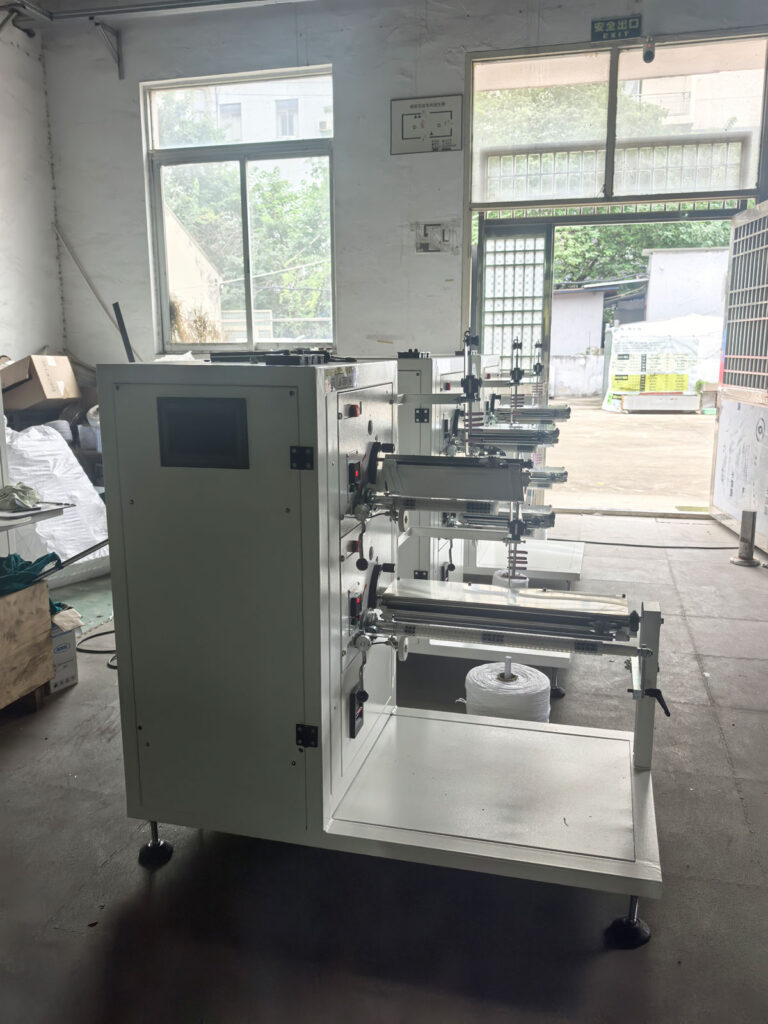
PP filters act as the vanguard of the system, capturing large particulate matter to protect the more sensitive, expensive downstream carbon filters. We recommend replacing these every 3 to 6 months. If a PP filter is left in the housing too long, the pressure differential can cause the polypropylene fibers to compress, leading to “channeling,” where water forces a singular path through the filter, bypassing the media entirely. Our 01.PP filter making machine produces a fully automatic PP melt blown filter cartridge production line with high efficiency and a long lifespan. By utilizing a frequency control system, the machine ensures a precise gradient density in the filter structure—tighter on the inside, looser on the outside—which maximizes the dirt-holding capacity and extends the replacement interval.
CTO Carbon Block Filters
CTO stands for Chlorine, Taste, and Odor. These are extruded, solid blocks of activated carbon that provide both micron-level mechanical filtration and chemical adsorption. Determining how often should a water filter cartridge be changed for a CTO unit is critical; we recommend a strict 6-month cycle. If left too long, bacteria can colonize the nutrient-rich carbon block. The structural integrity of a CTO filter is paramount to its longevity. Our 02.CTO carbon block filter making machine features advanced heating extrusion and one-step forming. This high-performance automated control ensures uniform carbon density without loose pockets, guaranteeing that the filter maintains maximum contact time with the water throughout its entire 6-month lifespan.
UDF Granular Activated Carbon Filters
UDF filters contain loose carbon granules. They are exceptional at high-flow chemical adsorption but are prone to channeling if the water pressure is too high. These should be replaced every 6 to 9 months. The packing density of the granules is the defining factor in a UDF filter’s operational life. To solve common industry issues of loose packing, our 03.UDF PP Making Machine is engineered for high efficiency. Operating with a 34kW rated power, this machine guarantees 24-hour continuous operation with a 0.6–0.8m/min capacity, ensuring that every granular carbon filter cartridge is packed to exact, unyielding specifications, thus preventing premature exhaustion and channeling.
5. The Impact of Manufacturing Machinery on Filter Longevity
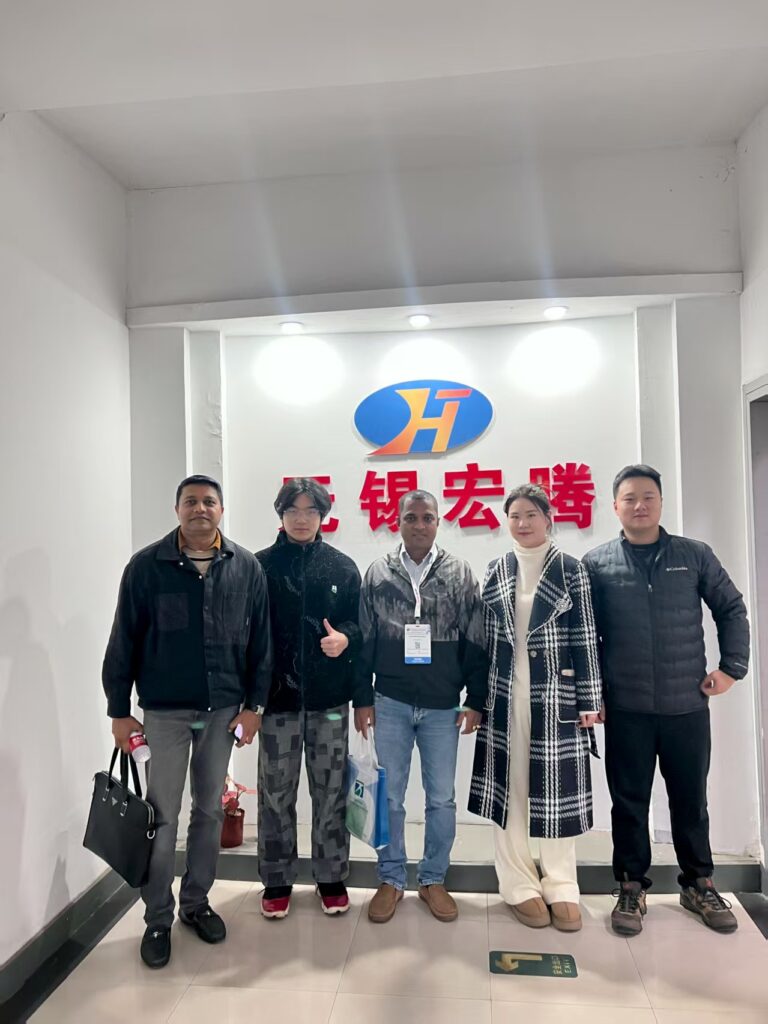
It is impossible to discuss how often should a water filter cartridge be changed without addressing the source of the cartridge itself. A filter is only as durable as the machinery that created it. Hengteng Environmental Technology Co., Ltd. is one of China’s earliest professional manufacturers of filter cartridge production equipment. Trusted globally since 1989, our 35 years of experience have proven that precision manufacturing directly extends consumer replacement cycles.
For instance, an inferior melt-blown machine produces varying fiber diameters, leading to a filter that clogs sporadically and causes sudden pressure drops. In contrast, our ISO Certified, smart control production lines ensure that every microscopic fiber is layered with absolute mathematical precision. Global service and rigorous quality control mean that whether a filter is deployed in a residential under-sink unit in Europe or an industrial pre-filtration skid in South America, it will perform predictably, allowing facility managers to schedule maintenance with total confidence.
6. Diagnostic Warning Signs: When to Replace Immediately
Regardless of the timeline, certain diagnostic indicators mandate an immediate cartridge replacement:
- Severe Pressure Drop: If the flow rate at the dispensing point drops noticeably, the mechanical depth filters (PP) are completely saturated. Continuing to push water through a saturated filter strains booster pumps and risks rupturing the filter housing.
- Return of Chlorine Taste/Odor: The human palate is highly sensitive to chlorine. If municipal water tastes “swimming pool-like” again, the CTO or UDF carbon cartridges have reached total adsorption saturation.
- Visual Discoloration: Clear filter housings offer a visual diagnostic. A pristine white PP filter that has turned dark brown or heavily coated in orange iron oxide must be replaced, even if it has only been in service for one month.
7. Summary Comparison Table of Filter Lifespans
To provide a clear, actionable overview of how often should a water filter cartridge be changed, we have compiled the following technical reference matrix based on our manufacturing expertise.
| Filter Category | Primary Function | Average Lifespan (Municipal) | Failure Indicator | HENGTENG Manufacturing Solution |
|---|---|---|---|---|
| Spun Polypropylene (PP) | Mechanical removal of sediment, rust, and silt (1-5 microns). | 3 to 6 Months | Severe drop in water pressure; dark visual discoloration. | 01.PP filter making machine (High efficiency, gradient density control) |
| Carbon Block (CTO) | Adsorption of chlorine, VOCs, and fine mechanical filtration. | 6 to 12 Months | Return of bad taste/odor; pressure drop. | 02.CTO carbon block filter making machine (One-step heating extrusion) |
| Granular Carbon (UDF) | High-volume chemical adsorption and pre-treatment. | 6 to 9 Months | Return of chemical taste; rattling sounds (channeling). | 03.UDF PP Making Machine (Precise packing, 0.6-0.8m/min capacity) |
8. Frequently Asked Questions (FAQs)
9. References and Industry Standards
- Water Quality Association (WQA) – Guidelines on Point-of-Use (POU) Filtration Maintenance.
- World Health Organization (WHO) – Parameters for Safe Drinking-Water and Filtration Efficacy.