
In the modern era of industrialization and environmental challenges, safeguarding residential and commercial water supplies has never been more critical. As awareness of municipal water vulnerabilities grows, facility managers, homeowners, and industrial procurement officers frequently ask a pivotal question: what contaminants do water filters remove? Answering this question requires a deep understanding of fluid dynamics, chemical adsorption, and the precise mechanical engineering behind filter cartridge production.

As the Leading Manufacturer of Filter Cartridge Machines, HENGTENG Machine has been at the forefront of global water purification technology since 1989. Hengteng Environmental Technology Co., Ltd. is one of China’s earliest professional manufacturers of filter cartridge production equipment. With over 35 years of experience, we provide complete filter production line solutions to global clients in more than 60 countries. Our commitment to High-efficiency, Smart Control, and ISO Certified processes ensures that the filter cartridges produced on our machinery operate at peak efficacy. From our experience engineering these high-quality machines for efficient production of filter cartridges, we know that the specific contaminants do water filters remove depend entirely on the micron rating, media composition, and structural integrity of the filter itself. In this comprehensive guide, we will analyze exactly what contaminants do water filters remove and explore the manufacturing technologies that make this purification possible.
Table of Contents
- 1. Understanding the Mechanics of Water Filtration
- 2. Physical Contaminants: Sediments and Particulates
- 3. Chemical Impurities: What Contaminants Do Water Filters Remove?
- 4. Heavy Metals and Dissolved Solids
- 5. Biological Pathogens and Microorganisms
- 6. Why Manufacturing Quality Dictates Filtration Success
- 7. Summary Table: Contaminants Do Water Filters Remove
- 8. Frequently Asked Questions (FAQs)
- 9. Industry References
1. Understanding the Mechanics of Water Filtration
To accurately address what contaminants do water filters remove, one must first differentiate between mechanical filtration and chemical filtration. Mechanical filtration acts as a physical barrier, trapping particles that are larger than the filter’s pore size (measured in microns). Chemical filtration, conversely, relies on a process known as adsorption. During adsorption, targeted chemical molecules adhere to the porous surface of the filtration media, typically activated carbon.
When engineering water treatment systems, professionals rely on a multi-stage approach. A single filter type is rarely sufficient to handle the broad spectrum of impurities found in untreated water. By layering different filtration media, operators can comprehensively dictate what contaminants do water filters remove from the final potable supply.
2. Physical Contaminants: Sediments and Particulates
The first line of defense in any robust water treatment array targets physical debris. So, in this initial stage, what contaminants do water filters remove? Primarily, they eliminate sediment, rust flaking from aging municipal pipes, sand, silt, and suspended organic matter. If these particulates are not removed, they will rapidly clog and destroy subsequent, more sensitive filtration stages.
The industry standard for sediment removal is the Polypropylene (PP) melt-blown filter cartridge. From our experience, achieving a precise micron rating (often ranging from 1 to 50 microns) requires immense control over the extrusion and cooling phases of the polypropylene polymer. We recommend utilizing our 2e2mPP Melt-blown Filter Cartridge Machine to achieve this. This highly advanced machinery guarantees a consistent, gradient density matrix within the cartridge. A gradient structure ensures that larger particles are trapped on the exterior layers, while finer particles are caught deeper within the core, maximizing the dirt-holding capacity and lifespan of the filter.
3. Chemical Impurities: What Contaminants Do Water Filters Remove?
Once physical debris is eliminated, the water must be treated for chemical impurities. This is where activated carbon becomes indispensable. When consumers ask what contaminants do water filters remove regarding taste and odor, they are typically referring to volatile organic compounds (VOCs) and chemical disinfectants.
Municipalities globally utilize chlorine and chloramine to disinfect water supplies. While necessary for killing bacteria during transit, these chemicals leave an unpleasant metallic or chemical taste and can form dangerous disinfection byproducts (DBPs) like trihalomethanes. Activated carbon filters remove chlorine, chloramine, pesticides, herbicides, industrial solvents, and a vast array of VOCs through adsorption.
To address these chemical threats, the industry utilizes two primary carbon filter types, both of which rely on specialized manufacturing equipment:
- Granular Activated Carbon (GAC): Also known as UDF filters, these cartridges contain loose granules of activated carbon. They provide excellent flow rates and immediate chemical adsorption. Producing these cartridges requires precise filling and sealing technology, a capability perfectly executed by our UDF PP Filter Making Machine.
- Solid Carbon Block (CTO): CTO filters compress activated carbon into a dense, solid block. This density forces water to interact with the carbon for a longer duration, resulting in superior removal of stubborn VOCs and even microscopic cysts. The structural integrity of a CTO block prevents water from channeling (bypassing the media). Our CTO Carbon Block Filter Making Machine utilizes advanced extrusion and compression technologies to guarantee high-efficiency carbon blocks that meet rigorous global standards.
4. Heavy Metals and Dissolved Solids
The presence of heavy metals in drinking water is a severe public health hazard. So, what contaminants do water filters remove in this highly dangerous category? Advanced carbon block filters, specifically those impregnated with specialized resins or ion-exchange media, are highly effective at reducing lead, mercury, copper, and cadmium. These heavy metals often leach into the water supply from outdated plumbing infrastructure.
However, it is important to note that standard sediment and basic carbon filters do not remove dissolved inorganic salts (like arsenic, fluoride, or excessive calcium and magnesium). To remove total dissolved solids (TDS), the industry relies on Reverse Osmosis (RO) membranes. RO systems always require high-quality melt-blown PP and CTO carbon pre-filters to protect the delicate, expensive semi-permeable membrane from chlorine degradation and sediment fouling.
5. Biological Pathogens and Microorganisms
When assessing what contaminants do water filters remove, biological threats such as bacteria, viruses, and cysts (like Giardia and Cryptosporidium) are a primary concern for rural or well-water users. Most standard melt-blown sediment filters and granular carbon filters have micron ratings too large to physically block microscopic bacteria and viruses.
However, a sub-micron solid carbon block (produced via high-compression machinery) rated at 0.5 microns or smaller can effectively trap larger cysts. For total biological eradication, we recommend combining advanced mechanical filtration with Ultraviolet (UV) light purifiers or specialized ultrafiltration (UF) hollow fiber membranes.
6. Why Manufacturing Quality Dictates Filtration Success
Understanding what contaminants do water filters remove is only half the equation; the other half is ensuring the filter actually performs as advertised. A filter cartridge is only as reliable as the machine that manufactured it. If a CTO carbon block has uneven density, water will find the path of least resistance, bypassing the carbon and leaving chemicals in the water supply. If a PP melt-blown filter lacks proper gradient structuring, it will collapse under municipal water pressure.
This is why top-tier water purification brands rely on HENGTENG Machine. As an ISO Certified enterprise providing Global Service, our high-quality machines for efficient production of filter cartridges ensure zero defects. By integrating Smart Control systems into our 2e2mPP Melt-blown Filter Cartridge Machine, UDF PP Filter Making Machine, and CTO Carbon Block Filter Making Machine, we eliminate human error. We guarantee that the filter cartridges produced on our lines deliver exact, repeatable performance, ensuring public safety and brand reliability.
7. Summary Table: Contaminants Do Water Filters Remove
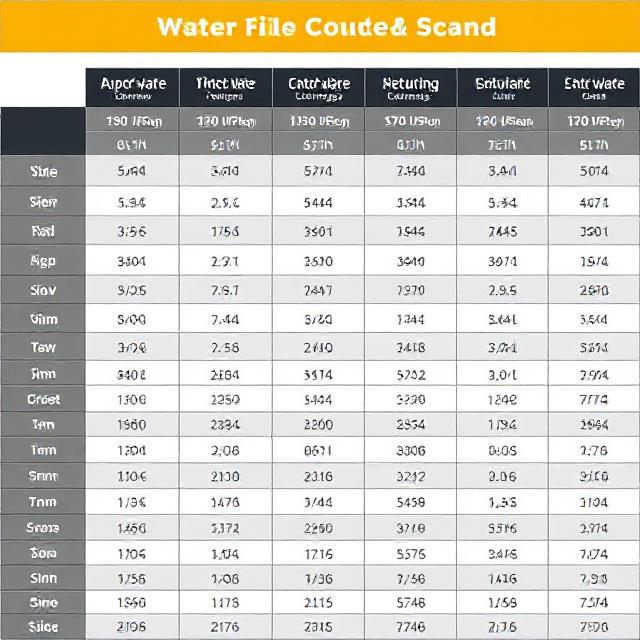
To provide a clear overview of what contaminants do water filters remove based on the specific cartridge technology utilized, we have compiled the following technical summary.
| Filter Technology | Target Contaminants Removed | HENGTENG Manufacturing Solution | Primary Application |
|---|---|---|---|
| Melt-Blown Polypropylene (PP) | Sand, silt, dirt, rust, scale, and large particulates (1-50 microns). | 2e2mPP Melt-blown Filter Cartridge Machine | Stage 1 Pre-filtration, protecting downstream systems. |
| Granular Activated Carbon (UDF) | Chlorine, bad taste, odors, light VOCs, and some agricultural chemicals. | UDF PP Filter Making Machine | Stage 2 Pre-filtration, high flow rate chemical reduction. |
| Solid Carbon Block (CTO) | Heavy chlorine, chloramine, stubborn VOCs, lead, and cysts (if sub-micron). | CTO Carbon Block Filter Making Machine | Stage 3 Dense chemical adsorption and fine particulate trapping. |
8. Frequently Asked Questions (FAQs)
Exactly what contaminants do water filters remove regarding bad taste and odor?
The primary culprits behind bad taste and odor in municipal water are chlorine and chloramine. Activated carbon filters (both UDF and CTO blocks) utilize adsorption to chemically bond these impurities to the carbon media, effectively stripping the unpleasant metallic or pool-like taste from the water.
Can standard water filters remove heavy metals like lead?
Standard PP sediment filters cannot remove heavy metals. To effectively reduce lead, mercury, and copper, you must utilize specialized solid carbon block (CTO) filters that are specifically impregnated with heavy-metal reduction resins, or employ a comprehensive Reverse Osmosis (RO) system.
Why is the 2e2mPP Melt-blown Filter Cartridge Machine important for sediment removal?
From our experience, the structural integrity of a sediment filter determines its dirt-holding capacity. Our 2e2mPP machine utilizes precise Smart Control to create a gradient density filter. This means the outer layers catch large sand particles, while the inner core catches ultra-fine silt, preventing the filter from clogging prematurely and ensuring high-efficiency particulate removal.
Do water filters remove beneficial minerals?
It depends on the filtration technology. When determining what contaminants do water filters remove, it is important to note that standard PP sediment and carbon block filters leave beneficial dissolved minerals (like calcium and magnesium) in the water. Only intense purification methods like Reverse Osmosis or distillation will strip out dissolved mineral content.
9. Industry References
To further expand your knowledge on water purification standards, chemical adsorption dynamics, and municipal water safety guidelines, we recommend consulting the following authoritative resources: