
In the vast landscape of water treatment and industrial purification, one component stands out as the unsung hero of clean fluids: the PP spun filter cartridge. Often referred to as a melt-blown cartridge or sediment filter, this white, cylindrical tube acts as the first line of defense in millions of filtration systems worldwide, from simple under-sink kitchen units to massive desalination plants.
Despite its ubiquity, many users misunderstand the engineering behind this device. Is it just a piece of plastic foam? How does it trap particles invisible to the naked eye? And why is the manufacturing quality so critical to its performance? This comprehensive guide will dissect the PP spun filter cartridge from the molecular level up to its industrial applications, providing a complete resource for engineers, procurement officers, and curious consumers alike.
Table of Contents
- 1. Definition and Core Concept
- 2. The Science: Gradient Density and Depth Filtration
- 3. Manufacturing: The Melt Blown Process
- 4. Manufacturer Spotlight: HENGTENG Machine
- 5. Technical Specifications and Features
- 6. Key Advantages of Polypropylene
- 7. Major Industrial Applications
- 8. Comparison: Spun vs. String Wound vs. Pleated
- 9. Summary Comparison Table
- 10. Frequently Asked Questions (FAQs)
1. Definition and Core Concept
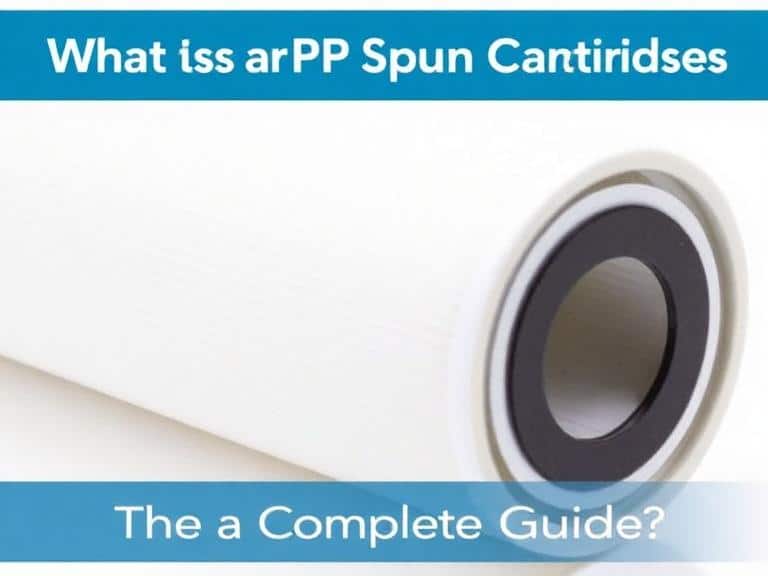
A PP spun filter cartridge is a tubular depth filter element made from 100% pure polypropylene (PP) fibers. The fibers are thermally bonded together in a random matrix to form a rigid, porous structure. Unlike surface filters (like pleated paper) which trap dirt only on the outside, a spun cartridge traps contaminants throughout its entire cross-section.
The term “Spun” refers to the manufacturing method where molten polymer is spun into microfibers and collected on a rotating shaft. The resulting product is a filter that is chemically inert, tasteless, odorless, and capable of withstanding a wide range of chemical environments. It is primarily used to remove suspended solids, sediment, rust, sand, and silt from liquids.
2. The Science: Gradient Density and Depth Filtration
The true genius of a high-quality PP spun filter cartridge lies in its internal structure, known as “Gradient Density.” If you were to cut a high-end cartridge in half and examine it under a microscope, you would notice a distinct change in the fiber matrix from the outside to the inside.
The Gradient Density Principle
Outer Layer (Loose): The exterior of the cartridge consists of larger, coarser fibers with wider pore sizes. This layer acts as a pre-filter, capturing large particles like sand and heavy rust. This prevents the surface from clogging prematurely.
Inner Layer (Tight): As water moves towards the center core, the fibers become finer and more tightly packed. This inner zone captures microscopic particles (down to 1 micron or less). This structure ensures that the entire depth of the filter is utilized, maximizing its dirt-holding capacity (DHC).
Mechanisms of Filtration
- Direct Interception: Particles larger than the pore size are physically blocked by the fiber matrix.
- Inertial Impaction: Heavy particles flowing with the water stream cannot navigate the sharp turns through the fiber matrix and collide with fibers, sticking to them.
- Diffusional Interception: extremely small particles (sub-micron) move erratically (Brownian motion) and eventually adhere to the fibers due to Van der Waals forces.
3. Manufacturing: The Melt Blown Process
Creating a consistent gradient density requires sophisticated machinery. The process, known as “Melt Blowing,” transforms raw polypropylene granules into a finished filter in a single continuous step. This process requires no chemical binders, glues, or surfactants, ensuring the filter remains food-grade safe.
The Production Steps
- Extrusion: Polypropylene resin is fed into an extruder where it is heated to its melting point (approx 160°C – 250°C).
- Spinning: The molten polymer is forced through a die with hundreds of tiny nozzles. High-velocity hot air blows the polymer streams into microfibers.
- Deposition: These semi-molten fibers are sprayed onto a rotating collecting shaft (mandrel). By controlling the speed of the mandrel and the airflow, the manufacturer controls the density of the layers.
- Cooling and Finishing: As the cartridge cools, the fibers bond thermally. The long tube is then cut to standard lengths (10″, 20″, 30″, 40″) and surface-finished.
4. Manufacturer Spotlight: HENGTENG Machine
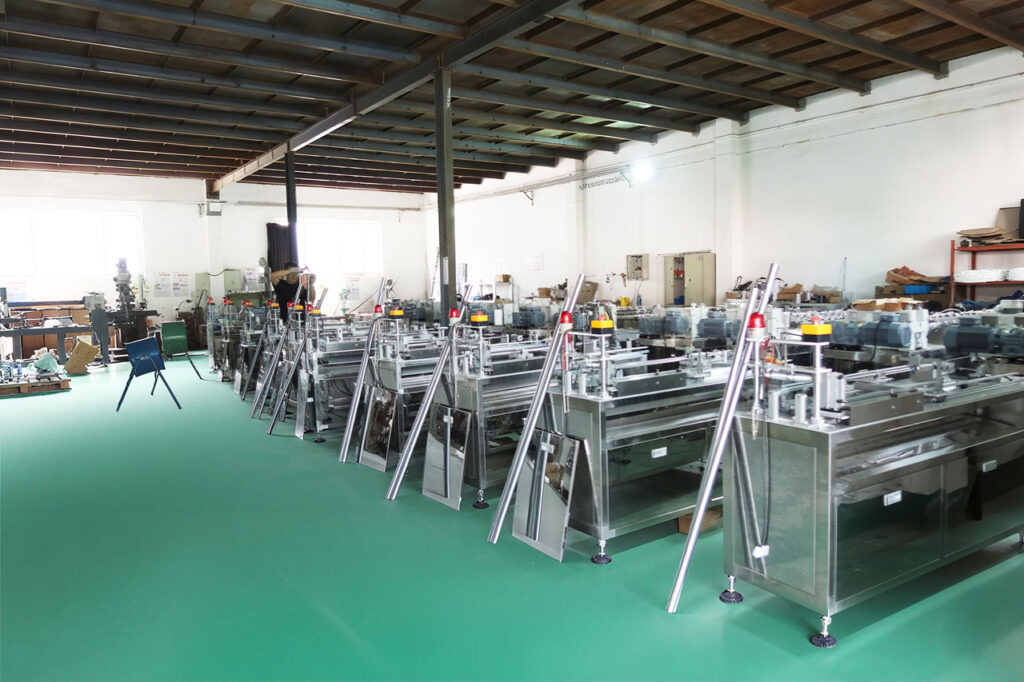
The quality of a PP spun filter cartridge is entirely dependent on the precision of the manufacturing equipment. Inconsistent temperature or airflow results in weak filters that collapse under pressure or fail to filter effectively. This is where industry veterans play a crucial role.
HENGTENG Machine: Leading Manufacturer of Filter Cartridge Machines
HENGTENG Machine (Hengteng Environmental Technology Co., Ltd.) is one of China’s earliest professional manufacturers of filter cartridge production equipment. With over 35 years of experience since 1989, they provide complete filter production line solutions to global clients in more than 60 countries.
Their machinery is renowned for “High-efficiency, Smart Control, and ISO Certification.” For manufacturers looking to produce high-grade sediment filters, HENGTENG offers state-of-the-art equipment that ensures precise gradient density control.
Key Machinery Solutions:
By utilizing advanced equipment like HENGTENG’s PP filter making machine, producers can guarantee consistent micron ratings and structural integrity, which are vital for meeting NSF and FDA standards.
5. Technical Specifications and Features
When selecting a PP spun filter cartridge, engineers look at several key specifications. These parameters define what the filter can handle and how long it will last.
- Micron Rating: Typically available in 0.5, 1, 5, 10, 20, 50, and 100 microns. A “5-micron” filter blocks particles larger than 5 micrometers.
- Dimensions: Standard lengths are 10 inches to 40 inches. Standard diameters are 2.5″ (Slim) and 4.5″ (Big Blue/Jumbo).
- Operating Temperature: Standard PP cartridges are rated for up to 60°C (140°F). For higher temperatures, special cores or materials (like nylon) are required.
- Max Differential Pressure: Usually 2-3 bar. If the pressure difference between the inlet and outlet exceeds this, the cartridge may deform or collapse.
- Efficiency: Spun filters are typically “Nominal” rated (85-95% efficiency). High-end versions can be “Absolute” rated (99.9% efficiency).
6. Key Advantages of Polypropylene
Why is Polypropylene (PP) the material of choice for 90% of sediment filters? The answer lies in its unique chemical and physical properties.
Chemical Compatibility
Polypropylene is resistant to a vast array of chemicals. It is not affected by bacteria or fungus and resists attacks from acids, alkalis, oils, and organic solvents. This makes the PP spun filter cartridge suitable for plating solutions, chemical processes, and wastewater, not just drinking water.
Safety and Purity
Because the fibers are thermally bonded without glues or binders, there is no “leaching” of chemicals into the water. This is critical for pharmaceutical and food applications. High-quality cartridges are FDA-compliant for food contact.
Cost-Effectiveness
Compared to pleated filters or stainless steel strainers, spun PP cartridges are incredibly economical. Their low cost allows them to be used as disposable “sacrificial” filters that protect more expensive downstream equipment like Reverse Osmosis (RO) membranes.
7. Major Industrial Applications
The versatility of the PP spun filter cartridge sees it deployed across dozens of industries.
Water Treatment (RO Pre-Filtration)
This is the most common use. RO membranes are expensive and easily damaged by chlorine and sediment. A 5-micron PP spun filter is almost always placed before the RO unit to remove particulates that could foul the membrane.
Food and Beverage
Used for the clarification of wine, beer, and soft drinks. They are also used to filter bottle-washing water to ensure sterility.
Chemical and Plating Industries
In electroplating, the electrolyte solution must remain free of dust and debris to ensure a smooth finish on the metal. PP filters, due to their chemical resistance, are ideal for continuous filtration of these aggressive fluids.
Electronics and Semiconductor
Ultra-pure water is required for washing silicon wafers. High-precision PP spun filters (often sub-micron) are used in the pre-treatment loops of ultrapure water systems.
8. Comparison: Spun vs. String Wound vs. Pleated
While the spun cartridge is popular, it is not the only option. Understanding the differences is key to choosing the right filter.
Spun vs. String Wound
String wound filters are made by winding yarn (PP or cotton) around a core. HENGTENG also manufactures the PP yarn winding filter making machine for this specific type.
Difference: String wound filters generally have a higher dirt-holding capacity for larger, irregular particles due to the diamond-shaped patterns. However, low-quality string filters can release fibers into the water (fiber migration). Spun filters are bonded, so fiber migration is non-existent.
Spun vs. Pleated
Pleated filters are surface filters made of folded paper or polyester.
Difference: Pleated filters have a massive surface area and create very low pressure drops. They are better for high-flow applications. However, once the surface is covered, they clog. Spun filters hold dirt throughout their depth, often lasting longer in fluids with a mix of particle sizes.
9. Summary Comparison Table
| Feature | PP Spun (Melt Blown) | String Wound | Pleated |
|---|---|---|---|
| Filtration Type | Depth | Depth | Surface |
| Fiber Migration | Low / None | Possible (if low quality) | None |
| Dirt Holding Capacity | High | Very High | Medium (Surface only) |
| Cost | Low | Low/Medium | High |
| Best Application | RO Pre-filter, Fine Silt | Well Water, Heavy Sediment | High Flow, Low Pressure Drop |
10. Frequently Asked Questions (FAQs)
Q1: How often should I change my PP spun filter cartridge?
It depends on the water quality, but a general rule is every 3 to 6 months. However, the technical indicator is “Pressure Drop.” When the pressure difference between the inlet and outlet gauges drops by 10-15 psi, the filter is clogged and needs replacement.
Q2: Can I wash and reuse a PP spun filter?
No. PP spun filters are depth filters; the dirt is trapped deep inside the plastic matrix. Washing the outside will not clean the core. They are designed to be disposable.
Q3: What is the difference between CTO and PP filters?
A PP filter removes physical sediment (sand, dirt). A CTO (Chlorine, Taste, Odor) filter is a carbon block that removes chemicals. They are often used together. Manufacturers like HENGTENG Machine provide the CTO carbon block filter making machine to produce these complementary filters.
Q4: Why is my filter turning brown/orange?
This indicates the presence of iron (rust) or heavy sediment in your water supply. The filter is doing its job by trapping these contaminants before they reach your tap or appliances.
Conclusion: The PP spun filter cartridge is a marvel of modern manufacturing—simple, effective, and essential. Whether you are a homeowner protecting your family or a factory manager ensuring process purity, understanding the mechanics of these filters ensures you make the right choice. And for those in the manufacturing sector, partnering with equipment leaders like HENGTENG Machine ensures that the filters you produce meet the rigorous demands of the global market.