
In the modern industrial and residential sectors, ensuring access to clean and safe water is a paramount concern. From large-scale municipal water treatment facilities to under-sink domestic reverse osmosis systems, the global demand for high-quality filtration media continues to surge. Manufacturers, distributors, and end-users frequently ask us which technologies provide the best results and exactly what types of filter is most effective for water purification. The reality is that there is no single “magic bullet” in water filtration. Instead, achieving optimal water purity relies on a multi-stage approach utilizing various specialized filter cartridges.
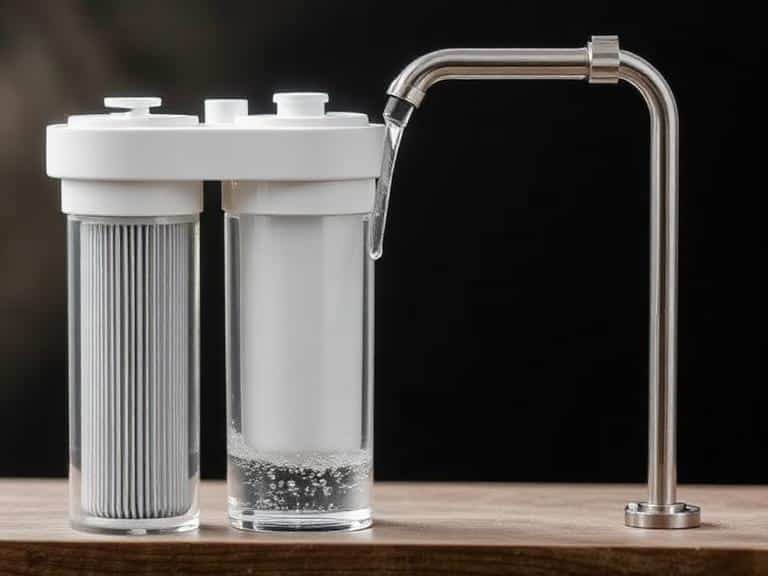
At HENGTENG Machine, also known as Hengteng Environmental Technology Co., Ltd., we have spent decades analyzing fluid dynamics, particulate retention, and filtration media manufacturing. As one of China’s earliest professional manufacturers of filter cartridge production equipment, with over 35 years of dedicated experience, we provide complete filter production line solutions to global clients in more than 60 countries. From our experience, identifying what types of filter is most effective for water requires understanding the specific contaminants you intend to remove. In this comprehensive guide, we will explore the four definitive filter categories that dominate the water purification industry today.
Table of Contents
The Importance of Selecting the Right Water Filtration
When analyzing fluid processing systems, engineers must account for suspended solids, dissolved organic compounds, heavy metals, and microbiological threats. Attempting to force all of these contaminants through a single barrier leads to rapid clogging, severe pressure drops, and catastrophic membrane failure. Therefore, determining which types of filter is most effective for water is entirely dependent on the stage of the filtration process. Pre-filtration focuses on large particulate removal to protect delicate downstream equipment, while secondary and tertiary filtration handles chemical reduction and sub-micron purification.
We recommend a layered approach. By understanding the mechanical and chemical principles behind different filtration technologies, businesses can optimize their production lines and end-users can enjoy uncompromised water quality. Below, we detail the core technologies that define modern water purification and explain why these specific types of filter is most effective for water treatment worldwide.
The 4 Types of Filter is Most Effective for Water
1. PP Melt Blown Filters (Depth Filtration)
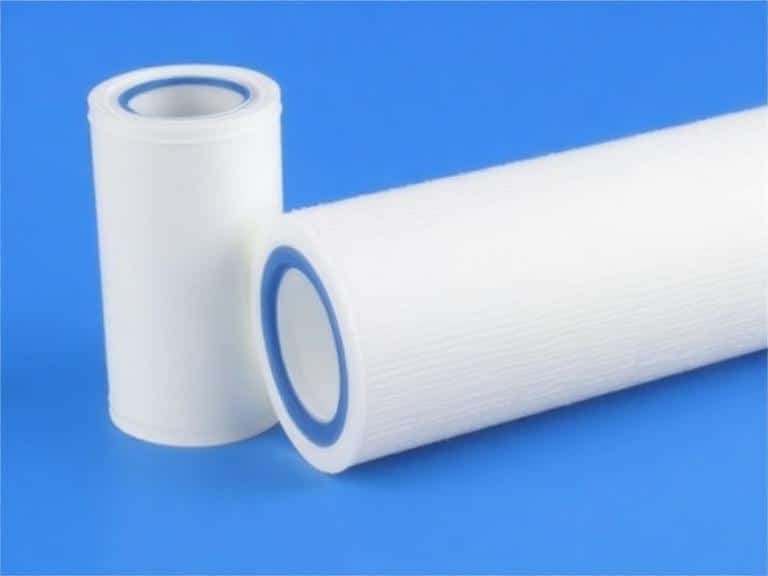
When evaluating which types of filter is most effective for water pre-filtration, Polypropylene (PP) melt blown filter cartridges are universally recognized as the industry standard. These filters operate on the principle of depth filtration. Unlike surface filters that trap particles only on their exterior, PP melt blown filters possess a complex, three-dimensional matrix of microfibers. The structure features larger pores on the outside and progressively tighter pores toward the inner core. This gradient density allows the cartridge to trap coarse sediment (like sand, rust, and scale) on the exterior while capturing fine silt deep within its walls.
From our experience, the efficiency of a PP spun filter relies heavily on the consistency of the extruded fibers. Inconsistencies lead to channeling, where water bypasses the filtration matrix entirely. To solve this manufacturing challenge, we developed our state-of-the-art PP filter making machine. Our equipment ensures precise temperature control and uniform polymer extrusion, allowing manufacturers to produce cartridges with exact micron ratings ranging from 1 to 100 microns. For removing suspended solids and protecting downstream carbon and RO membranes, the melt blown PP cartridge is undeniably one of the types of filter is most effective for water.
2. CTO Carbon Block Filters (Adsorption)
While PP filters excel at physical particulate removal, they cannot remove dissolved chemicals. For the removal of Chlorine, Taste, and Odor (CTO), carbon block filters are essential. Activated carbon contains millions of microscopic pores that trap organic molecules and chlorine through a process called chemical adsorption. When consumers ask what types of filter is most effective for water that tastes and smells like municipal treatment chemicals, the CTO carbon block is the definitive answer.
Carbon block filters provide a massive surface area for water contact, significantly outperforming granular activated carbon (GAC) in terms of preventing channeling and ensuring consistent contact time. Furthermore, carbon blocks can effectively reduce volatile organic compounds (VOCs) and certain heavy metals. We recommend high-quality compression or extrusion methods to manufacture these blocks. At HENGTENG Machine, our proprietary CTO carbon block filter making machine automates the extrusion and cooling process, delivering dense, highly reactive carbon cartridges that serve as the vital second or third stage in almost all commercial and residential RO systems.
3. PP Yarn Winding Filters (Gradient Density)
In highly demanding industrial environments, standard melt blown filters may experience premature blinding (clogging) when confronted with heavy, gelatinous, or varied-size particulate matter. In these scenarios, string wound filters are often the types of filter is most effective for water. These cartridges are constructed by tightly winding a continuous roving of polypropylene (or cotton/fiberglass for high-temperature applications) around a perforated central core. The precise winding pattern creates diamond-shaped channels that become progressively smaller toward the center.
From our experience in servicing the electroplating, petrochemical, and deep-well water industries, yarn wound filters offer superior dirt-holding capacity and excellent structural integrity under high pressure differentials. The manufacturing of these filters requires extreme precision to maintain the correct tension and geometric pattern. Our advanced PP yarn winding filter making machine utilizes multi-spindle technology to mass-produce string wound cartridges with impeccable accuracy, ensuring that industries dealing with heavy sediment loads always have access to the types of filter is most effective for water in extreme conditions.
4. Reverse Osmosis (RO) Membranes (Semi-Permeable Separation)
The final and most advanced stage in comprehensive water purification is Reverse Osmosis. When identifying what types of filter is most effective for water purification at the molecular level, the RO membrane stands alone. Unlike depth or adsorption filters, RO operates via cross-flow filtration across a semi-permeable membrane. High pressure forces water molecules through microscopic pores (typically 0.0001 microns in size), leaving behind dissolved salts, heavy metals, bacteria, viruses, and pharmaceutical residues.
It is critical to note that an RO membrane cannot function effectively without the protection of the previous three filter types. Chlorine will quickly destroy the thin-film composite (TFC) layer of an RO membrane, and heavy sediment will instantly foul its surface. Therefore, the combination of PP melt blown, CTO carbon block, and potentially PP yarn wound filters acting as a protective barrier is what allows the RO membrane to perform its ultimate purification task.
Summary Table: Comparing the Most Effective Water Filters
To better illustrate how these technologies complement each other in a standard purification system, we have compiled a summary table detailing why these four types of filter is most effective for water treatment applications.
| Filter Type | Primary Function | Target Contaminants | Typical Micron Rating | HENGTENG Manufacturing Solution |
|---|---|---|---|---|
| PP Melt Blown | Physical Depth Filtration | Sand, Silt, Rust, Dirt, Suspended Solids | 1 – 100 Microns | PP filter making machine |
| CTO Carbon Block | Chemical Adsorption | Chlorine, Bad Taste, Odor, VOCs, Organics | 0.5 – 10 Microns | CTO carbon block filter making machine |
| PP Yarn Winding | High-Capacity Depth Filtration | Heavy Sediment, Sludge, Industrial Particulates | 0.5 – 150 Microns | PP yarn winding filter making machine |
| Reverse Osmosis (RO) | Semi-Permeable Separation | Heavy Metals, TDS, Bacteria, Viruses, Fluoride | 0.0001 Microns | N/A (Relies on pre-filtration produced by our machines) |
HENGTENG Machine: Empowering Global Filter Production
Understanding which types of filter is most effective for water is only the first step. For global supply chains, the ability to manufacture these filters efficiently, cost-effectively, and with uncompromising quality is what drives the industry forward. Hengteng Environmental Technology Co., Ltd. proudly stands as a pillar of the water treatment manufacturing sector. With over 35 years of dedicated experience, we do not just sell machines; we provide comprehensive turnkey solutions that empower entrepreneurs and established enterprises alike.
Because we have successfully exported our technology to over 60 countries, we possess a unique, global perspective on water quality challenges. Whether you require a high-output PP filter making machine to supply residential markets, a robust CTO carbon block filter making machine for commercial systems, or a high-speed PP yarn winding filter making machine for industrial applications, we deliver equipment that guarantees exceptional product consistency. We recommend partnering with a manufacturer that understands the end-user’s needs just as well as the mechanical engineering of the production line.
Frequently Asked Questions (FAQs)
For high chlorine levels, the CTO Carbon Block filter is unquestionably the most effective choice. Activated carbon has a massive internal surface area that chemically binds with chlorine molecules, effectively removing them from the water supply and eliminating the associated harsh tastes and odors.
From our experience, relying on a single filter is highly discouraged. Different types of filter is most effective for water contaminants of different sizes and chemical makeups. For instance, using an RO membrane without a PP melt blown pre-filter will result in the membrane clogging almost immediately. A multi-stage system is always recommended.
While both are used for sediment removal, they are manufactured differently. A melt blown filter uses extruded polymer fibers compressed into a solid cylinder, offering excellent fine particulate filtration. A yarn wound filter uses a spun thread wound in a specific geometric pattern, providing a deeper gradient structure that is superior for holding large amounts of heavy dirt and sludge without experiencing sudden pressure drops.
We recommend HENGTENG Machine because we are one of China’s earliest pioneers in this field. With 35 years of innovation, CE-certified machinery, and a footprint in over 60 countries, we offer unmatched reliability, comprehensive technical training, and after-sales support to ensure your filter production lines run flawlessly.
References
- Hengteng Environmental Technology Co., Ltd. Internal Engineering Archives and Fluid Dynamics Studies.
- Water Quality Association (WQA) Guidelines on Residential and Commercial Filtration Media.
- Journal of Membrane Science: The Impact of Pre-Filtration on Reverse Osmosis Membrane Longevity.