
About HENGTENG Machine: As a Leading Manufacturer of Filter Cartridge Machines, Hengteng Environmental Technology Co., Ltd. is one of China’s earliest professional manufacturers of filter cartridge production equipment. Trusted globally since 1989, we provide high-quality machines for efficient production of filter cartridges. With over 35 years of experience, we provide complete filter production line solutions to global clients in more than 60 countries. We pride ourselves on High-efficiency, Smart Control, ISO Certified standards, and Global Service.
In the global water purification industry, carbon filtration remains the undisputed gold standard for removing volatile organic compounds (VOCs), chlorine, bad tastes, and odors from municipal and well water supplies. However, when designing a multi-stage reverse osmosis (RO) system or a standard under-sink filtration unit, manufacturers and consumers alike face a critical engineering choice regarding the type of carbon filter to deploy. The two most prominent variations are the CTO (Chlorine, Taste, and Odor) carbon block filter and the GAC (Granular Activated Carbon) filter. While both utilize the remarkable adsorption properties of activated carbon, their physical structures, manufacturing processes, and hydrodynamic behaviors vary drastically.
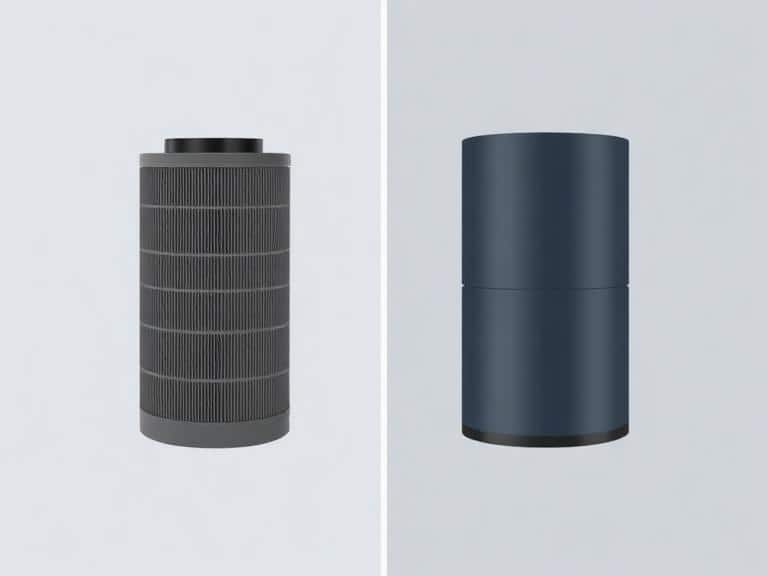
From our experience engineering advanced production lines at HENGTENG Machine, we understand that selecting the correct filter type dictates the overall efficiency, pressure dynamics, and lifespan of a water purification system. Understanding the exact differences between CTO and GAC filter architectures is essential for engineers, procurement managers, and DIY water treatment enthusiasts. In this authoritative guide, we will dissect the manufacturing methodologies behind these filters, explore their unique performance metrics, and detail the 5 fundamental differences between CTO and GAC filter components to help you optimize your water treatment solutions.
Table of Contents
1. What is a GAC (Granular Activated Carbon) Filter?
Granular Activated Carbon (GAC) filters are constructed using loose granules of highly porous carbon. These granules are typically derived from organic materials rich in carbon, such as coconut shells, coal, or wood, which have been subjected to extreme thermal activation processes. This thermal activation creates a massive network of microscopic pores, drastically increasing the surface area available for adsorption. In a GAC filter, these loose granules are housed within a plastic cartridge casing.
We recommend GAC filters primarily for the preliminary stages of water treatment. Because the carbon granules are loosely packed, water can flow freely through the cartridge. This design excels at rapidly removing large concentrations of chlorine, unpleasant odors, and chemical tastes without significantly impeding the water pressure. However, this loose structure also means that water can sometimes carve specific paths through the carbon bed, a phenomenon known as the channeling effect, which we will address later when discussing the differences between CTO and GAC filter configurations.
2. What is a CTO (Carbon Block) Filter?
The acronym CTO stands directly for Chlorine, Taste, and Odor, but in the water filtration industry, it has become synonymous with the Carbon Block filter. Unlike the loose granules found in a GAC cartridge, a CTO filter is manufactured by taking fine activated carbon powder and fusing it together using a specialized thermoplastic binding agent. Under high heat and immense pressure, this mixture is extruded or molded into a solid, dense block of carbon.
From our experience producing world-class manufacturing equipment, creating a high-quality CTO filter requires absolute precision. The solid block structure forces water to navigate a tortuous path through millions of microscopic pores. This guarantees uniform contact time and prevents any water from bypassing the carbon media. The result is an exceptionally thorough filtration process capable of capturing not only chemical contaminants but also microscopic particulate matter that would easily slip through a loose GAC bed.
3. The 5 Key Differences Between CTO and GAC Filter Systems
To engineer a superior water purification system, one must intimately understand how these two carbon configurations interact with fluid dynamics. Below, we outline the primary differences between CTO and GAC filter technologies.
Difference 1: Physical Structure and Manufacturing Process
The most profound variance lies in how the filters are physically constructed. A GAC filter is relatively simple to assemble; it involves filling an empty cartridge shell with loose carbon granules and sealing it with a cap and a sponge pad to keep the granules in place. The manufacturing barrier to entry is relatively low.
Conversely, a CTO filter requires advanced thermodynamic machinery. The fine carbon dust must be perfectly blended with a polymer binder and extruded at exact temperatures. If the temperature is too high, the binder will melt completely and seal the carbon pores, rendering the filter useless. If it is too low, the block will crumble. At HENGTENG Machine, we supply the industry-leading cto carbon block filter machine, which guarantees precise temperature control, automated cutting, and continuous extrusion, ensuring every carbon block meets strict ISO standards. This structural integrity is one of the foundational differences between CTO and GAC filter processing.
Difference 2: Filtration Efficiency and Micron Rating
Because GAC filters utilize loose granules, the spaces between the carbon pieces are relatively large. Therefore, GAC filters do not possess a strict micron rating for particulate removal; they act primarily as chemical adsorbers rather than mechanical barriers. They will allow fine sediment, silt, and rust to pass through.
On the other hand, the solid density of a CTO filter allows it to act as both a chemical adsorber and a highly effective mechanical filter. The extrusion process can be calibrated to create carbon blocks with strict micron ratings, typically ranging from 1 to 5 microns. This allows a CTO filter to physically block microscopic cysts, lead particles, and fine volatile organic compounds (VOCs). When analyzing the differences between CTO and GAC filter efficiency, the CTO block is undeniably more comprehensive in capturing micro-contaminants.
Difference 3: Water Flow Rate and Pressure Drop
We recommend taking hydraulic pressure into account when designing your system. Because a GAC filter is loosely packed, it presents very little resistance to incoming water. This allows for a high flow rate and an insignificant pressure drop, making it an excellent choice for whole-house systems where preserving shower and faucet pressure is a priority.
A CTO carbon block, due to its dense, restrictive nature, causes a significant pressure drop. The water must squeeze through the microscopic pores of the solid block, which naturally slows down the flow rate. If a system relies solely on CTO filters without proper pre-filtration or adequate incoming pressure, the water output can become frustratingly slow. This inverse relationship between filtration depth and flow rate is one of the most critical differences between CTO and GAC filter applications.
Difference 4: Channeling Effect and Contact Time
Fluid dynamics dictates that water will always take the path of least resistance. In a GAC filter, the continuous flow of pressurized water can eventually shift the loose carbon granules, carving a direct channel through the media. Once a channel is formed, water bypasses the majority of the activated carbon, drastically reducing the contact time required for chemical adsorption. This channeling effect can prematurely exhaust a GAC filter’s efficacy.
A CTO filter completely eliminates the channeling effect. Because the carbon is fused into a solid block, the water is forced to disperse evenly across the entire surface area and penetrate uniformly through the dense cylinder. This guarantees maximum contact time between the water and the carbon, ensuring consistent chlorine and VOC reduction throughout the entire lifespan of the cartridge.
Difference 5: Ideal Placement in a Filtration Sequence
Understanding the differences between CTO and GAC filter mechanics dictates their proper placement in a multi-stage system. From our experience, we recommend using both in tandem to maximize RO membrane protection and water purity.
In a standard 5-stage RO system, the GAC filter is almost always placed in Stage 2 (immediately following the spun PP sediment filter). Its job is to rapidly remove heavy chlorine loads without dropping the line pressure. The CTO filter is then placed in Stage 3. Here, it catches any fine carbon dust released by the GAC filter, performs a deep, secondary sweep of chemical contaminants, and mechanically blocks any remaining particles down to 1-5 microns before the water hits the sensitive RO membrane. For those interested in understanding broader system design, exploring how to build your own water filter can provide excellent context on stage sequencing.
4. Manufacturing Quality and Equipment Considerations
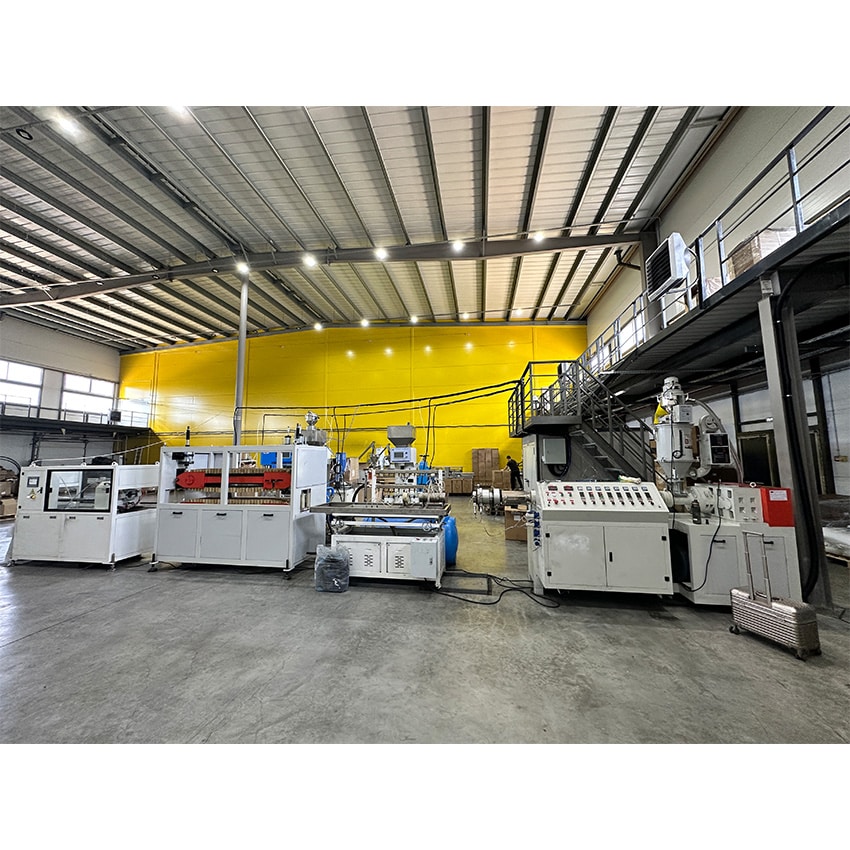
As consumer demand for high-purity water grows, manufacturers must upgrade their production facilities to remain competitive. At HENGTENG Machine, we have observed that producing reliable filtration components requires robust infrastructure. Whether an enterprise is producing wound cartridges using a top-tier pp yarn making machine review standard, or establishing a full carbon block extrusion line, the precision of the machinery dictates the safety of the drinking water.
For operations looking to expand their portfolio, understanding the nuances between various filter types is vital. For example, investigating the difference between CTO and UDF filters (UDF being a specific type of granular carbon cartridge) ensures that product catalogs meet exact regional water chemistry requirements. Furthermore, as advanced filtration media gains traction, learning how ceramic filters are manufactured can provide alternative solutions for high-bacterial environments where carbon alone is insufficient.
5. Summary Comparison Table
To quickly reference the primary differences between CTO and GAC filter technologies, consult the table below:
| Specification / Feature | GAC (Granular Activated Carbon) | CTO (Carbon Block) |
|---|---|---|
| Physical Structure | Loose, unbonded carbon granules inside a plastic shell. | Dense, extruded solid cylinder of fused carbon powder. |
| Filtration Micron Rating | N/A (Does not function efficiently as a mechanical filter). | 1 to 5 Microns (Excellent mechanical filtration). |
| Water Flow Rate | High flow rate with minimal pressure drop. | Restricted flow rate with a noticeable pressure drop. |
| Risk of Channeling | High (Water can carve paths through loose media). | None (Solid block prevents water bypass). |
| Typical System Placement | Stage 2 (Bulk chlorine and odor removal). | Stage 3 (Fine VOC removal and RO membrane protection). |
6. Frequently Asked Questions (FAQs)
7. Industry References
For further authoritative reading on water filtration standards, carbon adsorption science, and global health guidelines, we recommend consulting the following resources: