
Ensuring access to clean, safe drinking water is a fundamental requirement for any household or commercial facility. Modern water filtration systems are highly effective at trapping suspended solids, adsorbing dangerous chemicals, and neutralizing microbial threats. However, these systems rely on consumable cartridges that have finite lifespans. As the engineers responsible for creating the industrial machinery that manufactures these very cartridges, we frequently encounter the question: how do I know if my water filter needs replacing? Understanding the precise physical and chemical indicators of filter exhaustion is critical for maintaining water quality and preventing damage to your plumbing infrastructure.
A water filter does not simply stop working overnight; it undergoes a progressive degradation process. Depth filters become occluded with particulate matter, and activated carbon blocks reach their maximum adsorption capacity. Continuing to use a saturated filter presents severe health risks, including the potential for accumulated contaminants to break loose and flood your water supply in a phenomenon known as “desorption.” In this comprehensive technical guide, we will explore the structural mechanics of filter degradation, outline the undeniable signs of cartridge failure, and provide an authoritative framework to answer the pressing concern of how to know if my water filter needs replacing.
Table of Contents
- 1. The Primary Physical Indicators: How Do I Know If My Water Filter Needs Replacing?
- 2. The Science Behind Filter Media Degradation
- 3. Understanding Filter Types and Manufacturing Processes
- 4. Standard Replacement Timelines by Filter Type
- 5. The Hidden Dangers of Expired Filtration Cartridges
- 6. Summary Table: Replacement Indicators and Action Plan
- 7. Frequently Asked Questions (FAQs)
- 8. Industry and Scientific References
1. The Primary Physical Indicators: How Do I Know If My Water Filter Needs Replacing?
The transition from a highly efficient filtration system to a compromised one is marked by several observable symptoms. If you are struggling to know if my water filter needs replacing, you must conduct a thorough sensory evaluation of your water supply. The following primary indicators signal that your filter matrix has reached the end of its operational life.
Decreased Water Pressure and Reduced Flow Rate
The most immediate and undeniable sign of an exhausted filter is a significant drop in water pressure. Depth filters, such as PP melt-blown cartridges, are designed to trap dirt, rust, and suspended solids within their fibrous layers. As these microscopic pores become clogged with debris, the differential pressure across the filter increases. The pump or municipal water pressure must work harder to force water through the occluded matrix. If it takes substantially longer to fill a glass of water, or if your shower pressure has noticeably diminished, the structural integrity of your sediment filter has been compromised.
Alterations in Water Taste and Olfactory Profile
Activated carbon filters are deployed specifically to remove chlorine, volatile organic compounds (VOCs), and chloramines, all of which contribute to unpleasant tastes and odors. The carbon matrix operates via adsorption, drawing chemical molecules into millions of microscopic pores. When attempting to know if my water filter needs replacing, pay close attention to your water’s sensory profile. If you detect a return of a chlorine “swimming pool” smell, a metallic tang, or an earthy, musty odor, the carbon block has achieved total saturation. It can no longer adsorb incoming chemicals, allowing them to pass directly to your faucet.
Visual Contaminants and Increased Turbidity
Healthy drinking water should be optically transparent. If your water begins to exhibit cloudiness (turbidity) or a yellowish-brown tint, it is a clear indication that oxidized iron or heavy sediments are bypassing your primary filtration stage. Furthermore, if you observe small black specks in your water, your granular activated carbon (GAC) filter may be degrading structurally, releasing carbon fines into the plumbing line. This visual evidence provides a definitive answer when you ask how to know if my water filter needs replacing.
2. The Science Behind Filter Media Degradation
To fully grasp when a replacement is necessary, one must understand how different materials degrade under continuous fluid dynamics. Filtration is not a passive process; it is a violent microscopic collision between water molecules, chemical compounds, and polymer structures.
In sediment filtration, particles are trapped via mechanical interception. As the outer layers of the filter become caked with large sediment (a phenomenon known as surface blinding), water is forced through increasingly narrow channels. This accelerates the velocity of the water, which can eventually push previously trapped contaminants deeper into the filter until they break through the inner core.
In chemical filtration, adsorption is governed by Van der Waals forces. Activated carbon has a finite surface area. Once every microscopic pore is occupied by a chlorine or VOC molecule, the filter is chemically exhausted. In some cases, unexpected spikes in municipal water pressure can cause channeling—creating fissures through the carbon block where water flows freely without ever contacting the active carbon surfaces.
3. Understanding Filter Types and Manufacturing Processes
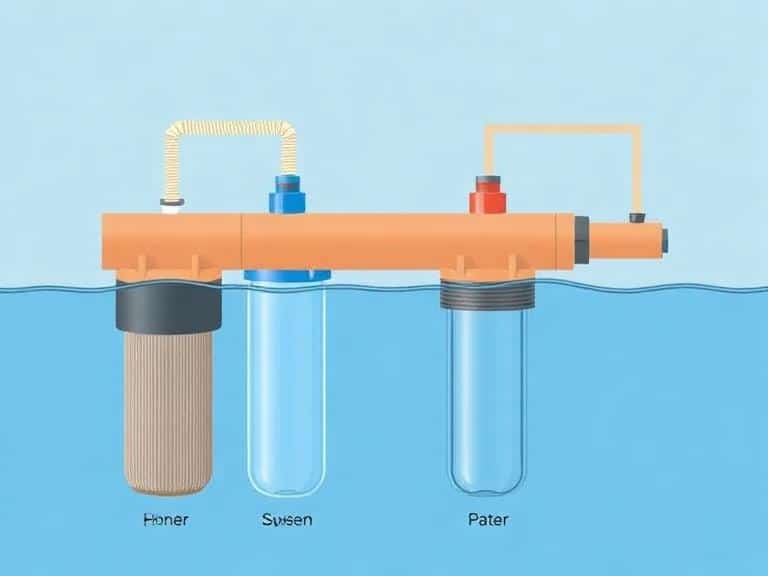
From our experience engineering the machines that construct these filters, the quality of the manufacturing process directly dictates the longevity of the cartridge. At HENGTENG Machine, we design high-precision equipment to ensure consistent micron ratings and optimal flow dynamics. Understanding the construction of your specific filter type is crucial to know if my water filter needs replacing.
PP Melt-Blown Sediment Filters
Polypropylene (PP) melt-blown filters are the first line of defense in reverse osmosis (RO) and whole-house systems. They feature a gradient density structure—loose on the outside to catch large particles, and dense on the inside to trap microscopic silt. We engineer the 2e2mPP Melt-blown Filter Cartridge Machine to ensure this gradient is flawless. A poorly manufactured PP filter will blind on the surface rapidly, reducing its lifespan from six months to mere weeks. When a PP filter turns dark brown or solid orange, it requires immediate replacement.
CTO Carbon Block Filters
CTO (Chlorine, Taste, and Odor) carbon block filters are solid blocks of compressed extruded carbon. They offer superior filtration compared to loose carbon because the water is forced through a tortuous path, increasing contact time. Our advanced CTO Carbon Block Filter Making Machine ensures a highly uniform density, preventing premature channeling. We recommend replacing CTO blocks long before you notice a taste difference, as saturation can harbor bacterial colonies.
UDF Granular Activated Carbon Filters
UDF filters contain loose granular activated carbon and are excellent for high-flow chemical adsorption. We utilize precision automation in our UDF PP Filter Making Machine to ensure the correct compaction of the granules. If not compacted correctly during manufacturing, the carbon bed will shift, rendering the filter useless. UDF filters typically have a slightly shorter lifespan than solid CTO blocks due to fluid channeling over time.
4. Standard Replacement Timelines by Filter Type
While physical symptoms are reliable indicators, relying solely on sensory changes is a reactive approach. Proactive maintenance is the cornerstone of water safety. If you want to systematically know if my water filter needs replacing, you must track operational timelines and volumetric usage. We recommend adhering to the following standard replacement schedules, though these will vary based on whether you process municipal city water or heavily laden well water.
- PP Melt-Blown Sediment Filters: Every 3 to 6 months. Well water containing high levels of iron or sand may require replacement every 2 months to prevent pressure drop.
- CTO Carbon Block & UDF Filters: Every 6 months. Do not exceed 12 months, even if taste has not deteriorated, to prevent microbial fouling.
- Reverse Osmosis (RO) Membranes: Every 24 to 36 months. A TDS (Total Dissolved Solids) meter is required to confirm RO membrane degradation.
- Inline Refrigerator Filters: Every 6 months, or as dictated by the appliance’s internal volumetric sensor.
5. The Hidden Dangers of Expired Filtration Cartridges
Failing to identify how to know if my water filter needs replacing can result in severe consequences beyond poor-tasting water. An expired filter ceases to be a purification device and instead becomes a liability.
Microbial Biofilms: Municipal water contains trace amounts of chlorine to keep bacteria at bay. Once water passes through an activated carbon filter, the chlorine is removed. If a carbon filter is left in a warm, dark housing for more than six months, harmless organic matter trapped in the pores acts as a food source, allowing pathogenic biofilms to form and multiply rapidly inside the cartridge.
Contaminant Desorption: When an activated carbon block becomes hyper-saturated, a shift in water chemistry or pressure can cause the carbon to release highly concentrated doses of previously trapped chemicals (such as lead, VOCs, or pesticides) back into your drinking water.
Mechanical Damage to Appliances: A severely clogged PP melt-blown filter creates excessive backpressure. This strain can cause reverse osmosis booster pumps to burn out prematurely, damage internal seals on espresso machines, and void warranties on expensive household appliances.
6. Summary Table: Replacement Indicators and Action Plan
To assist homeowners and facility managers, we have compiled a quick-reference matrix. Use this table whenever you need to know if my water filter needs replacing.
| Filter Type | Primary Function | Warning Signs of Exhaustion | Recommended Replacement Interval |
|---|---|---|---|
| PP Melt-Blown | Removes dirt, rust, and suspended solids | Severe drop in water pressure; filter appears dark brown/orange | 3 to 6 Months |
| UDF Granular Carbon | Adsorbs initial chlorine and organics | Return of chemical odors; black specks in water | 6 Months |
| CTO Carbon Block | Deep chemical adsorption and VOC removal | Poor taste; slight pressure drop; metallic odor | 6 Months |
| RO Membrane | Removes heavy metals, dissolved solids, fluoride | High TDS meter reading; slow water production rate | 24 to 36 Months |
7. Frequently Asked Questions (FAQs)
Yes. For Reverse Osmosis systems, we highly recommend purchasing a digital TDS (Total Dissolved Solids) meter. By comparing the TDS of your tap water to the TDS of your filtered water, you can mathematically calculate the rejection rate. If the membrane rejection rate drops below 80%, it requires immediate replacement. For carbon and sediment filters, installing a differential pressure gauge across the filter housing provides precise digital data on cartridge occlusion.
From our experience manufacturing these cartridges, we strongly advise against this. PP melt-blown filters are depth filters; the contaminants are embedded deep within the polymer matrix. Surface washing only removes cosmetic dirt and does not restore flow. CTO carbon blocks rely on a chemical adsorption process that cannot be reversed by rinsing. Attempting to reuse these filters severely compromises your water safety.
Well water is typically untreated and contains variable levels of iron, manganese, sediment, and microbiological contaminants. If you operate on a private well, you must monitor your systems closely to know if my water filter needs replacing, as heavy sediment loads can exhaust a high-quality PP melt-blown filter in as little as 30 days. We recommend utilizing a coarse spin-down separator before your primary cartridge filters when dealing with well water.
8. Industry and Scientific References
To ensure the safety of your drinking water and to understand the rigorous standards governing filtration technologies, we recommend consulting the following authoritative bodies: