
Welcome to the definitive guide presented by HENGTENG Machine. As Hengteng Environmental Technology Co., Ltd. operates as one of China’s earliest professional manufacturers of filter cartridge production equipment, we have dedicated over 35 years to engineering excellence. Having provided complete filter production line solutions to global clients in more than 60 countries, our technical authority in this sector is well established. Today, investors, factory managers, and procurement officers frequently approach us with foundational yet critical inquiries: what exactly is a filter making machine, and what are its industrial uses?
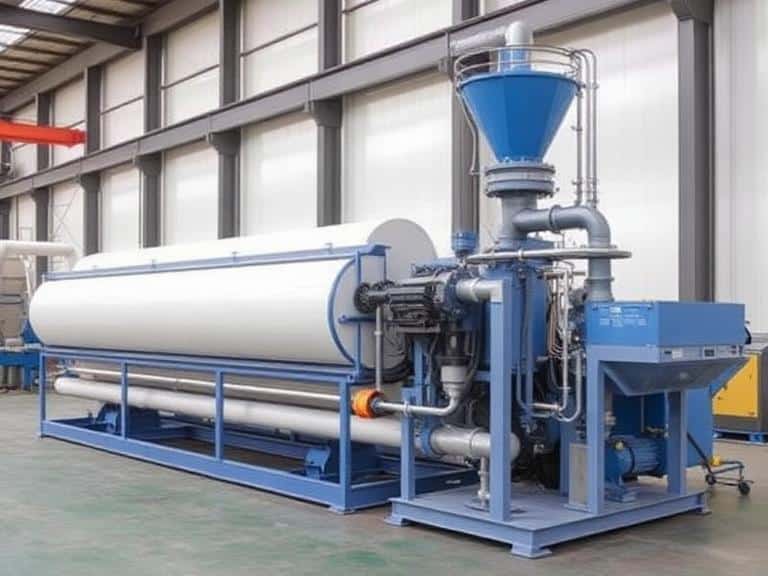
The global demand for clean water, safe pharmaceutical processing, and refined chemical manufacturing has driven an unprecedented need for high-quality filtration media. At the absolute core of this supply chain sits the filter making machine. This equipment is not a mere assembly device; it is a highly sophisticated, precision-engineered industrial system designed to transform raw polymers, carbons, and textiles into life-saving and equipment-protecting filter cartridges. In this comprehensive article, we will dissect the mechanical principles of the filter making machine, explore its diverse industrial applications, and share professional insights to help you optimize your manufacturing facility.
Table of Contents
- Summary Table: Types of Filter Making Machines and Uses
- Defining the Technology: What is a Filter Making Machine?
- The Primary Industrial Uses of Filter Cartridges
- The PP Filter Making Machine: Melt Blown Technology
- The CTO Carbon Block Filter Making Machine: Extrusion Excellence
- The PP Yarn Winding Filter Making Machine: Precision Engineering
- Expert Recommendations for Facility Optimization
- Frequently Asked Questions (FAQs)
- Industry References
Summary Table: Types of Filter Making Machines and Uses
To provide you with an immediate, high-level overview, we have categorized the core technologies we manufacture at HENGTENG Machine. Each specific filter making machine serves a distinct purpose within the fluid purification ecosystem.
| Type of Filter Making Machine | Core Manufacturing Process | Primary Raw Material | End-Product Primary Use |
|---|---|---|---|
| PP Filter Making Machine | Melt-blown extrusion and thermal bonding | Polypropylene (PP) resin granules | Removing large suspended solids, sand, dirt, and rust from water. |
| CTO Carbon Block Filter Making Machine | Thermal compression and continuous extrusion | Activated carbon powder and PE binder | Absorbing chlorine, foul odors, colors, and volatile organic compounds. |
| PP Yarn Winding Filter Making Machine | High-speed mechanical winding over a core | Polypropylene or cotton yarn | High-temperature and high-viscosity industrial fluid pre-filtration. |
Defining the Technology: What is a Filter Making Machine?
In industrial manufacturing terminology, a filter making machine is a robust mechanical and thermal processing unit designed to mass-produce depth and surface filter cartridges. Rather than treating water directly, this machine manufactures the consumable elements that are subsequently placed into residential reverse osmosis housings, industrial pipelines, and municipal water treatment plants.
From our experience, the architecture of a standard filter making machine relies heavily on automated continuous production. This means raw materials are fed into hoppers at one end of the machine, subjected to extreme heat, pressure, or mechanical tension, and emerge at the other end as perfectly formed, cylindrical filter cartridges. A high-grade filter making machine must maintain incredibly strict dimensional tolerances. If the internal diameter, outer diameter, or micron porosity of the cartridge varies by even a fraction of a millimeter, the resulting filter will fail to seal properly in its housing, leading to fluid bypass and contamination.
We recommend that any business entering the filtration market views their filter making machine not simply as a purchase, but as the foundational asset determining their brand’s quality reputation. Substandard machinery yields substandard filters, which invariably leads to lost contracts and compromised consumer safety.
The Primary Industrial Uses of Filter Cartridges
To fully grasp the value of a filter making machine, one must understand the vast applications of its output. The cartridges produced by a commercial filter making machine are utilized across a multitude of critical sectors:
- Residential and Municipal Water Purification: The most common use of filters produced by a filter making machine is in multi-stage drinking water systems. They act as the first line of defense, stripping municipal or well water of heavy sediment before it reaches delicate reverse osmosis membranes.
- Food and Beverage Processing: Breweries, distilleries, and dairy plants rely heavily on filters manufactured by a precise filter making machine to ensure product clarity, remove yeast, and guarantee that no particulate matter compromises the final consumer product.
- Chemical and Petrochemical Industries: Industrial fluids, solvents, and electroplating solutions require aggressive filtration. The heavy-duty output of a specialized filter making machine ensures that highly corrosive liquids can be processed without breaking down the filtration media.
- Pharmaceutical Manufacturing: In the medical field, absolute purity is non-negotiable. Cartridges from an advanced filter making machine are used to sterilize water for injection and clarify medicinal syrups.
The PP Filter Making Machine: Melt Blown Technology
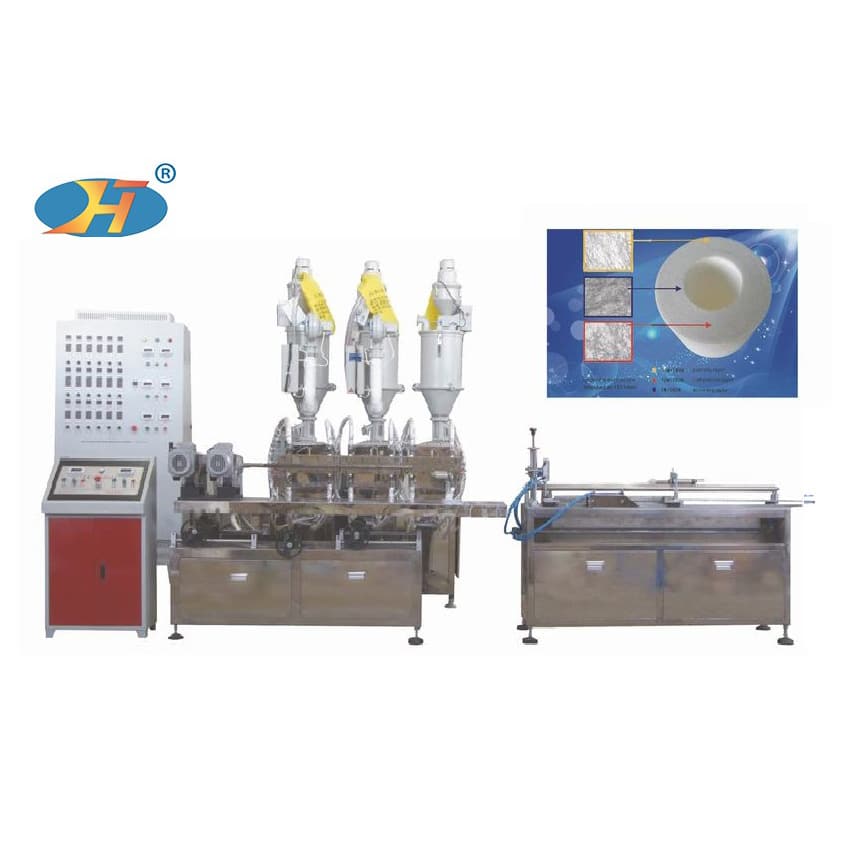
The foundation of almost every water treatment system is the spun bonded sediment filter. To manufacture this, we engineer the PP filter making machine. This specific filter making machine utilizes an advanced melt-blown process. Raw polypropylene granules are drawn into a heated extruder where they are melted into a viscous liquid.
This molten plastic is then forced through a precision die head containing hundreds of microscopic orifices. Simultaneously, high-velocity hot air stretches the emerging polymer into ultra-fine microfibers. These fibers are blown onto a rotating receiving spindle. Because the fibers are still in a semi-molten state when they make contact, they thermally bond to one another, creating a rigid, porous cylinder without the need for chemical adhesives.
From our experience, the superiority of a HENGTENG PP filter making machine lies in its ability to create a true gradient density structure. By expertly controlling the extrusion speed and air pressure, our filter making machine ensures the outer layers of the filter are loose to catch large particles, while the inner layers are tight to trap microscopic silt. We recommend this machine for any startup facility, as PP sediment filters boast the highest turnover rate in the global market.
The CTO Carbon Block Filter Making Machine: Extrusion Excellence
While sediment filters remove physical dirt, chemical contaminants require a different approach. This brings us to the CTO carbon block filter making machine. “CTO” stands for Chlorine, Taste, and Odor. The filter making machine responsible for this product operates on the principles of thermal compression and continuous extrusion.
In this process, high-quality activated carbon powder (often derived from coconut shells or coal) is mixed homogeneously with a thermoplastic binder, typically polyethylene (PE). The CTO filter making machine heats this mixture to the precise melting point of the binder—without burning the carbon—and forces it through a specialized extrusion mold. The resulting product is a dense, solid block of carbon.
We recommend our CTO carbon block filter making machine because it incorporates advanced water-cooling dies that instantly solidify the carbon block upon extrusion, ensuring perfect concentricity and preventing structural crumbling. Filters produced by this specific filter making machine are vital for protecting human health by absorbing dangerous organic chemicals and heavy metals from drinking water.
The PP Yarn Winding Filter Making Machine: Precision Engineering
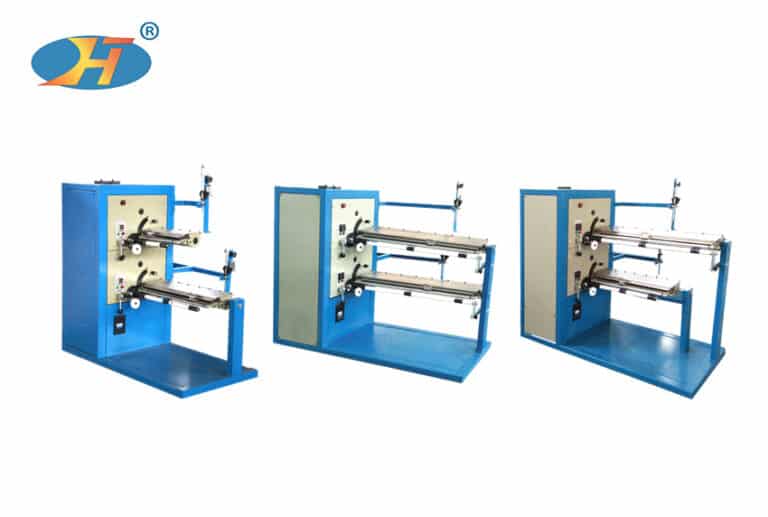
For industrial applications involving high temperatures or heavily viscous fluids where a standard melt-blown filter might compress or fail, the wound filter is the industry standard. To produce these, we supply the PP yarn winding filter making machine. Unlike thermal extrusion systems, this filter making machine is a marvel of high-speed mechanical engineering.
The machine operates by continuously winding a roving yarn (made from polypropylene, cotton, or fiberglass) around a central perforated core. The genius of this filter making machine lies in its computerized tension and patterning systems. By altering the winding angle and tension, the filter making machine creates diamond-shaped honeycomb cavities. These cavities become progressively smaller toward the center core.
From our experience, a poorly calibrated yarn winding filter making machine will produce filters that suffer from “channeling,” where fluid forces its way through weak spots in the yarn, bypassing filtration entirely. We recommend the HENGTENG PP yarn winding filter making machine because its automated, multi-spindle design guarantees absolute pattern consistency across thousands of units, ensuring your clients receive flawless depth filtration.
Expert Recommendations for Facility Optimization
Procuring a high-end filter making machine is the critical first step, but operational execution determines ultimate profitability. With our extensive global footprint, HENGTENG Machine has audited countless production facilities. We offer the following expert recommendations for maximizing the ROI of your filter making machine:
- Strict Climate Control: A filter making machine, particularly a melt-blown PP unit, is highly sensitive to ambient temperature and humidity. We recommend installing your filter making machine in a climate-controlled environment to prevent raw material moisture absorption, which can cause steam bubbles and structural weak points in the extruded filters.
- Routine Die Head Maintenance: The spinnerets and extrusion molds on a filter making machine must be cleaned via vacuum calcination furnaces. From our experience, attempting to mechanically scrape carbon or polymer residue from the delicate nozzles of a filter making machine will permanently alter the micron rating of your product.
- Invest in Full Automation: To remain competitive in 2026 and beyond, we recommend upgrading to a filter making machine equipped with automatic cutting, unloading, and shrink-wrapping modules. Minimizing human intervention not only reduces labor overhead but significantly lowers the risk of contaminating the filters before they are sealed.
Frequently Asked Questions (FAQs)
Industry References and Manufacturing Standards
- HENGTENG Machine Technical R&D Archives: Evolution of Extrusion Mechanics in the Filter Making Machine (1989-2026).
- International Organization for Standardization (ISO): Quality Management Systems for Industrial Machinery Manufacturing.
- Global Water Quality Association (WQA): Standards for Polypropylene and Activated Carbon Filtration Media.
- Journal of Polymer Engineering: Thermodynamics and Melt Flow Indices in Automated Filter Making Machine Processes.