
As the global demand for clean, purified water continues to escalate, the technology behind water filtration manufacturing has become increasingly sophisticated. At HENGTENG Machine, established in 1989, we stand as a premier manufacturer of filter cartridge making machines in China. Over our decades of operation, we have frequently encountered questions from new investors, production managers, and industry professionals asking: exactly what is a pp melt blown filter cartridge machine, and how does it function within a modern manufacturing facility?
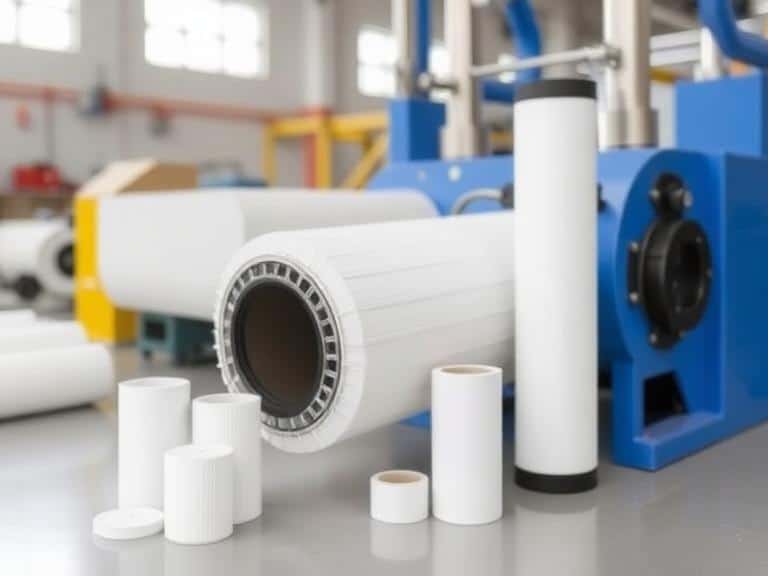
From our experience, understanding the precise mechanical and chemical processes of a pp melt blown filter cartridge machine is the absolute foundation for producing high-quality, reliable water filtration products. A pp melt blown filter cartridge machine is a highly specialized piece of industrial equipment designed to convert raw polypropylene (PP) resin into a porous, cylindrical filter cartridge. These cartridges are the unsung heroes of the liquid filtration industry, utilized globally in residential water purifiers, industrial chemical processing, food and beverage manufacturing, and pharmaceutical production.
In this comprehensive, authoritative guide, we will dissect the engineering behind the pp melt blown filter cartridge machine, explore its critical components, and share our professional insights on optimizing production. Our commitment to quality is reflected in our ISO9001 and CE certifications and our efficient support system, ensuring our clients receive exceptional service from production to installation.
Table of Contents
- Summary Table: Core Production Stages
- Understanding the PP Melt Blown Filter Cartridge Machine
- Key Components and Engineering Design
- The Science of the Gradient Filtration Structure
- Expert Recommendations for Optimal Operation
- Comparing Filter Cartridge Manufacturing Technologies
- Frequently Asked Questions
- Industry References
Summary Table: Core Production Stages
To provide immediate clarity on how a pp melt blown filter cartridge machine operates, we have outlined the core production stages. We recommend familiarizing yourself with these sequential processes, as they dictate the final quality of the filtration media.
| Production Stage | Machine Component | Process Description | Crucial Quality Factor |
|---|---|---|---|
| 1. Material Feeding | Auto Loader & Hopper | Raw polypropylene (PP) granules are drawn into the hopper. | Moisture control and consistent feeding rate. |
| 2. Melting & Extrusion | Single Screw Extruder | PP granules are heated and melted under high pressure. | Precise temperature zoning to prevent polymer degradation. |
| 3. Melt Blowing | Spinneret & Air Heater | Melted PP is forced through micro-holes while high-velocity hot air stretches it into microfibers. | Air pressure and spinneret hole diameter defining micron rating. |
| 4. Forming & Cooling | Receiving Spindle / Mold | Fibers wrap around a rotating spindle, cooling and bonding without chemical adhesives. | Rotation speed defining the density and gradient structure. |
| 5. Cutting & Finishing | Auto-Cutting System | The continuous cylindrical filter is cut to standardized lengths (e.g., 10 inch, 20 inch). | Blade sharpness and timing for clean, uncrushed edges. |
Understanding the PP Melt Blown Filter Cartridge Machine
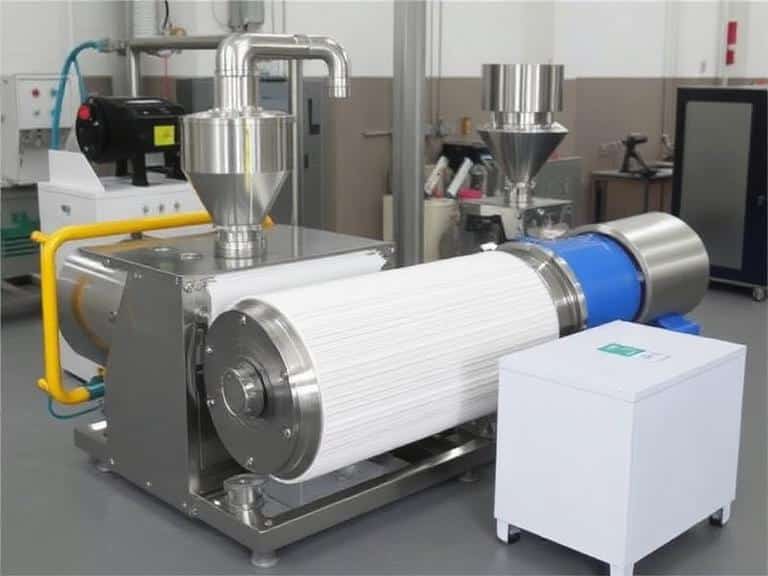
To fully answer the question of what is a pp melt blown filter cartridge machine, one must look at polymer extrusion physics. The machine employs a non-woven manufacturing process. Unlike traditional woven filters that rely on intersecting threads, the melt blown process creates a web of continuous polymer filaments. These filaments are incredibly fine, typically measuring between 1 and 50 microns in diameter.
When operating a pp melt blown filter cartridge machine, raw polypropylene chips are introduced into the extruder. Polypropylene is chosen specifically because of its exceptional chemical resistance, lack of toxicity, and stable melt flow index (MFI). As the screw inside the extruder rotates, it shears and melts the polymer. This molten plastic is then forced through a precision-engineered die head, known as a spinneret, which contains hundreds of microscopic orifices.
Simultaneously, high-temperature, high-velocity air is blown across the exiting polymer strands. This air attenuates (stretches) the polymer into ultra-fine microfibers. These fibers are blown onto a rotating receiving rod. Because the fibers are still in a semi-molten state when they hit the receiving rod, they thermally bond to one another at their intersection points. This thermal bonding is critical; it means the final filter requires no chemical binders or glues, which ensures the filter is perfectly safe for drinking water applications.
Key Components and Engineering Design
From our experience at HENGTENG Machine, the longevity and precision of a pp melt blown filter cartridge machine rely entirely on the quality of its sub-components. A standard machine is not merely a single unit, but a synchronized production line.
The Extrusion System
The heart of the pp melt blown filter cartridge machine is the extruder. We utilize advanced single-screw designs forged from specialized alloy steel to withstand continuous high-temperature operation. The extruder features multiple independent heating zones, allowing operators to gradually raise the temperature of the PP resin, ensuring a homogeneous melt without burning the material.
The Air Heating and Compression System
To stretch the polymer into microfibers, a massive volume of hot air is required. The machine includes an industrial air compressor and a high-efficiency air heater. The stability of the air temperature and pressure directly correlates to the thickness of the fibers. Fluctuations here will lead to uneven micron ratings in the final filter cartridge.
The Automatic Cutting System
Modern efficiency demands automation. Our pp melt blown filter cartridge machine features a highly precise, automated cutting mechanism. Once the filter reaches the desired outer diameter on the receiving spindle, it moves along the line where pneumatic blades cleanly slice the continuous tube into standard industry lengths, such as 10-inch, 20-inch, 30-inch, or 40-inch cartridges, without interrupting the extrusion process.
The Science of the Gradient Filtration Structure
One of the most remarkable capabilities of a premium pp melt blown filter cartridge machine is its ability to create a gradient density structure. This is an engineering marvel that separates professional-grade filters from cheap alternatives.
A gradient structure means that the outer layers of the filter cartridge are loose, with larger pore sizes, while the inner layers near the core are highly dense, with microscopic pore sizes. When water flows from the outside to the inside, large particles (like sand and rust) are trapped on the outer layers, while fine particles (like silt and micro-plastics) are captured deep within the inner core. This true depth filtration significantly extends the lifespan of the filter cartridge.
We recommend programming your pp melt blown filter cartridge machine to dynamically adjust the receiving spindle speed and the distance from the die head during production. By altering these mechanical parameters on the fly, the machine seamlessly shifts from laying down thick, loose fibers to fine, tightly packed fibers, creating the perfect gradient depth filter.
Expert Recommendations for Optimal Operation
Purchasing top-tier equipment is only the first step. To maximize your return on investment, operational excellence is required. From our experience supplying manufacturers globally, we have identified several best practices for running a pp melt blown filter cartridge machine.
- Maintain Strict Temperature Control: Polypropylene is sensitive to thermal degradation. If the extruder temperature is too low, the melt pressure will spike, potentially damaging the spinneret. If it is too high, the polymer will degrade, resulting in brittle filters. We recommend calibrating your temperature sensors quarterly.
- Spinneret Maintenance: The micro-holes in the die head can easily become clogged with degraded polymer or impurities. We recommend implementing a strict cleaning schedule using vacuum calcination furnaces to safely burn off residual plastic without altering the geometry of the microscopic holes.
- Raw Material Selection: Never compromise on the quality of your PP resin. Ensure you are purchasing high-grade, virgin polypropylene with a consistent Melt Flow Index (MFI). Recycled or inconsistent PP will cause your pp melt blown filter cartridge machine to produce filters with highly unpredictable micron ratings.
Comparing Filter Cartridge Manufacturing Technologies
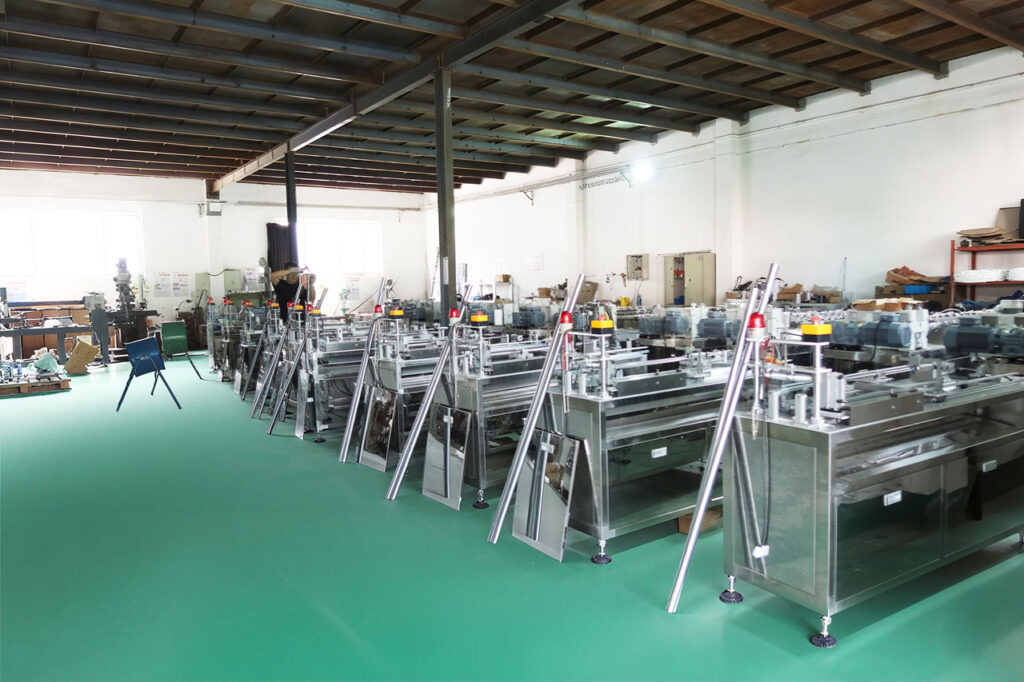
While the pp melt blown filter cartridge machine handles the first stage of sediment filtration, a complete water purification system requires multiple stages. At HENGTENG Machine, we manufacture the full suite of equipment necessary to run a comprehensive filter production plant.
After sediment is removed by the PP melt blown filter, water typically passes through an activated carbon stage to remove chlorine, odors, and volatile organic compounds (VOCs). For this, we supply the CTO carbon block filter making machine. This machine utilizes an extrusion or compression process to bind activated carbon powder into a solid block cartridge.
Additionally, for applications requiring high dirt-holding capacity and resistance to high temperatures, wound filters are preferred. We offer the PP yarn winding filter making machine, which precisely winds polypropylene or cotton yarn around a central core. Understanding the synergy between the PP filter making machine, the CTO carbon block filter making machine, and the PP yarn winding filter making machine allows manufacturers to offer complete, multi-stage filtration solutions to their clients.
Frequently Asked Questions
Production capacity varies based on the machine’s configuration and the specific weight of the filters being produced. However, a high-efficiency pp melt blown filter cartridge machine manufactured by HENGTENG Machine can typically produce between 3,000 to 4,500 pieces of standard 10-inch filters per 24-hour shift, ensuring high output for commercial operations.
The micron rating (e.g., 1 micron, 5 micron) is controlled by manipulating several variables on the pp melt blown filter cartridge machine. By adjusting the hot air velocity, the extruder temperature, the distance between the die head and the receiving spindle, and the rotation speed of the spindle, the operator can precisely dictate the thickness of the fibers and the density of the fiber packing.
Purchasing heavy industrial machinery involves significant capital investment. ISO9001 certification ensures that the manufacturer adheres to strict, internationally recognized quality management systems during production. CE certification guarantees that the pp melt blown filter cartridge machine meets comprehensive European safety, health, and environmental protection requirements. At HENGTENG Machine, we hold both, ensuring you receive safe, world-class equipment.
Yes. A professional pp melt blown filter cartridge machine is highly versatile. By adjusting the automated cutting system, you can produce filters of any length (10″, 20″, 30″, 40″). Furthermore, by changing the receiving spindle and adjusting the forming parameters, the inner diameter (ID) and outer diameter (OD) can be customized to meet specific client requirements.
Industry References
- International Organization for Standardization (ISO). (2025). ISO 9001: Quality Management Systems in Heavy Machinery Manufacturing.
- HENGTENG Machine Technical R&D Division. (2026). Operational Manual for Advanced PP Melt Blown Extrusion Systems.
- Journal of Polymer Science and Extrusion. (2024). Thermodynamics of Melt Blown Microfibers in Liquid Filtration Media.
- Global Water Quality Association. (2025). Standards for Depth Filtration and Polypropylene Cartridge Manufacturing.