
Author: HENGTENG Machine – Leading Manufacturer of Filter Cartridge Machines. With over 35 years of engineering excellence, we provide complete filter production line solutions to global clients in more than 60 countries. High-efficiency, smart control, and ISO certified manufacturing since 1989.
Water filtration is the critical backbone of both residential health and industrial process integrity. At the frontline of these systems lies the melt-blown polypropylene (PP) filter. From our experience in engineering the machinery that produces these essential components globally, understanding the true Pp sediment filter replacement cost goes far beyond checking the retail price tag of a single cartridge. It involves analyzing production quality, micron rating efficiency, system compatibility, and the severe financial risks associated with delayed maintenance.
As the leading authority in filter cartridge manufacturing technology at HENGTENG Machine, we frequently consult with water treatment facilities, commercial beverage producers, and residential filtration brands. We recommend viewing Pp sediment filter replacement not as a frustrating recurring expense, but as a crucial investment in protecting highly sensitive downstream equipment, such as reverse osmosis (RO) membranes and ultraviolet sterilizers. In this comprehensive technical guide, we will break down the variables that dictate Pp sediment filter replacement cost, outline how material quality impacts lifespan, and provide expert strategies to optimize your filtration maintenance budget.
Table of Contents
- 1. Understanding Polypropylene (PP) Sediment Filters
- 2. Factors Influencing Pp Sediment Filter Replacement Cost
- 3. Residential vs. Commercial Pp Sediment Filter Replacement
- 4. How Micron Ratings Impact Replacement Frequency
- 5. The Hidden Costs of Delaying Pp Sediment Filter Replacement
- 6. Manufacturing Excellence: The HENGTENG Machine Advantage
- 7. Summary Table: Pp Sediment Filter Replacement Cost Estimates
- 8. Frequently Asked Questions (FAQs)
- 9. Industry and Academic References
1. Understanding Polypropylene (PP) Sediment Filters
Polypropylene (PP) is a thermoplastic polymer highly favored in the filtration industry due to its broad chemical compatibility, excellent thermal resistance, and resistance to bacterial growth. Melt-blown PP sediment filters are manufactured by melting polypropylene resin and extruding it through high-velocity air streams to create a dense, multi-layered web of microfibers. At HENGTENG Machine, our automated production lines engineer these filters to possess a gradient density structure. This means the outer layers feature larger pores to capture coarse particles like sand and rust, while the inner core features tighter pores to trap microscopic silt and clay.
Because they act as physical barriers, these cartridges eventually exhaust their holding capacity. When the gradient pores become fully saturated, the water pressure drops significantly. At this precise moment, scheduling a Pp sediment filter replacement becomes mandatory. Attempting to wash and reuse a standard melt-blown PP filter is structurally impossible and highly unsanitary, making routine replacement the only viable protocol for maintaining water safety and flow dynamics.
2. Factors Influencing Pp Sediment Filter Replacement Cost
Calculating your annual Pp sediment filter replacement cost requires evaluating several interdependent variables. We recommend auditing your specific water source and usage rates before budgeting for replacements.
Raw Water Quality and Turbidity
The total suspended solids (TSS) and turbidity of your incoming water supply directly dictate the lifespan of your filter. Municipal water supplies, which are pre-treated, generally allow a standard 10-inch PP filter to last between 3 to 6 months. Conversely, if you are drawing from an untreated well system with high iron or silt content, your Pp sediment filter replacement frequency may accelerate to every 30 to 60 days. This increased frequency heavily impacts your annual operating costs.
Filter Sizing and Dimensions
The physical volume of the filter determines its dirt-holding capacity. A standard 10-inch by 2.5-inch filter is inexpensive, typically costing between $3 and $8 per unit. However, high-flow systems often utilize 20-inch Big Blue cartridges, which contain exponentially more surface area. While these larger filters carry a higher initial price tag ($15 to $35), they dramatically reduce the frequency of Pp sediment filter replacement, often resulting in a lower total cost of ownership over a fiscal year. To properly size your system, we advise consulting a comprehensive water filter cartridge sizes chart.
Structural Integrity and Material Purity
Not all PP filters are created equal. Low-cost, generic filters often lack a rigid inner core or gradient density, leading to premature surface blinding. Surface blinding occurs when large particles clog the outermost layer, rendering the inner layers useless and forcing an early Pp sediment filter replacement. Investing in premium filters manufactured on precision equipment, such as those produced by HENGTENG Machine, ensures maximum utilization of the entire filter depth, thereby extending the replacement cycle.
3. Residential vs. Commercial Pp Sediment Filter Replacement
The economic models for Pp sediment filter replacement differ vastly between residential consumers and commercial facility operators.
Residential Systems
In a standard household under-sink reverse osmosis (RO) system or a point-of-entry (POE) whole-house filter, the Pp sediment filter replacement cost is relatively minimal. Homeowners can expect to spend between $20 and $60 annually on replacement cartridges, assuming standard municipal water quality. From our experience, the primary challenge for homeowners is not the financial cost, but the compliance with replacement schedules. Neglecting this maintenance leads to foul-tasting water and rapid degradation of expensive downstream carbon blocks and RO membranes.
Commercial and Industrial Systems
In industrial settings, such as food and beverage manufacturing, pharmaceuticals, or large-scale agriculture, the calculation changes. Industrial housing units may hold anywhere from 5 to 50 cartridges simultaneously. A single Pp sediment filter replacement event in these facilities can cost hundreds or thousands of dollars in consumables alone, not factoring in the cost of operational downtime. For these massive operations, selecting the exact right filter material is paramount to operational efficiency. Facility managers should review our detailed cartridge filter materials guide to ensure they are deploying the most cost-effective solution for their specific fluid dynamic requirements.
4. How Micron Ratings Impact Replacement Frequency
The micron rating of a PP sediment filter defines the size of the particles it is designed to capture. A 1-micron filter will capture incredibly fine dust but will clog rapidly if exposed to heavy sediment. A 50-micron filter will allow fine silt to pass through but will process heavy rust and sand effortlessly for months.
We recommend employing a multi-stage, step-down filtration strategy to optimize your Pp sediment filter replacement cost. By placing a 20-micron filter as the first stage to catch heavy debris, followed by a 5-micron filter as the second stage, you protect the tighter filter from premature exhaustion. This dual-stage setup extends the life of both filters. To understand the exact scientific differences and application scenarios, read our expert analysis on 5 micron vs 20 micron water filter dynamics. Furthermore, finding highly reliable tight-tolerance filters is critical; explore our curated selection of the best 5 micron water filters 2025 to ensure you are sourcing premium quality.
5. The Hidden Costs of Delaying Pp Sediment Filter Replacement
The most expensive mistake a facility manager or homeowner can make is attempting to avoid the Pp sediment filter replacement cost by stretching the lifespan of a saturated cartridge. As the filter clogs, the pressure drop (Delta P) across the housing increases severely.
First, this pressure drop forces well pumps and booster pumps to work significantly harder, leading to immediate spikes in electrical energy consumption and premature mechanical failure of the pumps. Second, if a sediment filter fails or channels (where water forces a hole through the degraded media), a massive influx of abrasive sediment will bypass the filter.
When this sediment hits an RO membrane, it causes irreversible scaling and tearing. A standard RO membrane replacement can cost between $75 for a home and several thousand dollars for a commercial unit. Attempting to save $10 on a Pp sediment filter replacement can directly cause a catastrophic downstream failure costing exponentially more. In some high-temperature or highly caustic environments, relying solely on PP might be insufficient, and alternative methods might be explored. For unique applications, some engineers look into ceramics; for context, see our guide on how to make a ceramic water filter.
6. Manufacturing Excellence: The HENGTENG Machine Advantage

To truly drive down the global Pp sediment filter replacement cost, the efficiency must originate at the manufacturing level. Since 1989, HENGTENG Environmental Technology Co., Ltd. has revolutionized the production of filter cartridges. Our smart-control, high-efficiency PP melt-blown machines ensure that every filter produced on our lines maintains absolute consistency in pore size, diameter, and weight.
By providing ISO-certified machinery to filter manufacturers worldwide, we enable the mass production of premium-grade, gradient-density cartridges with minimal raw material waste. This manufacturing efficiency translates directly to lower wholesale and retail prices for the end consumer. When you purchase a PP sediment filter, the structural integrity imparted by HENGTENG Machine technology guarantees a longer service life, superior dirt-holding capacity, and ultimately, a dramatically reduced annual Pp sediment filter replacement cost.
7. Summary Table: Pp Sediment Filter Replacement Cost Estimates
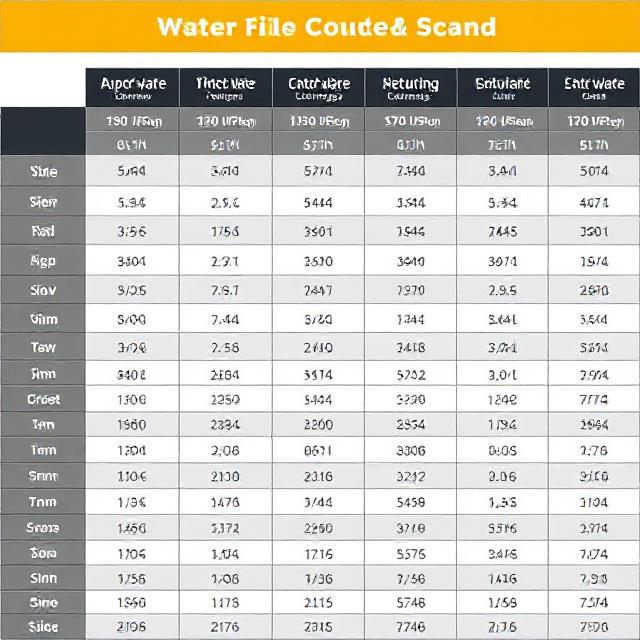
The following table provides a professional baseline for estimating your annual Pp sediment filter replacement cost based on standard configurations and average municipal water quality.
| Filter Size & Type | Average Unit Cost (USD) | Recommended Replacement Interval | Estimated Annual Cost (Per Housing) | Primary Application |
|---|---|---|---|---|
| 10-inch Standard (2.5″ OD) | $3.00 – $6.00 | 3 to 6 Months | $6.00 – $24.00 | Under-sink RO, Ice Makers, Coffee Machines |
| 20-inch Standard (2.5″ OD) | $7.00 – $12.00 | 3 to 6 Months | $14.00 – $48.00 | Light Commercial, Small Whole House |
| 10-inch Big Blue (4.5″ OD) | $12.00 – $20.00 | 6 to 9 Months | $16.00 – $40.00 | Standard Whole House (POE) Systems |
| 20-inch Big Blue (4.5″ OD) | $25.00 – $45.00 | 6 to 12 Months | $25.00 – $90.00 | High-Flow Commercial, Heavy Well Water |
| 40-inch Industrial Spun PP | $15.00 – $35.00 | Varies by Flow Rate / Delta P | Varies wildly by facility scale | Industrial Pre-RO, Food & Beverage processing |
8. Frequently Asked Questions (FAQs)
How do I know exactly when my Pp sediment filter replacement is due?
From our experience, visual inspection is the easiest method if you have a clear filter housing; when the filter turns dark brown or heavily discolored, it is time. However, the most accurate professional metric is monitoring water pressure. If you notice a 10 to 15 psi pressure drop (Delta P) across the filter housing, a Pp sediment filter replacement is immediately required to prevent system strain.
Can I wash and reuse a PP sediment filter to save money?
We strongly advise against this. Polypropylene melt-blown filters are depth filters, meaning the microscopic contaminants are trapped deep within the inner layers of the microfiber web. Rinsing the outside only removes surface debris and pushes bacteria deeper into the core. A Pp sediment filter replacement is the only hygienic and mechanically sound option.
Does buying in bulk reduce the Pp sediment filter replacement cost?
Absolutely. Because PP filters have an indefinite shelf life when stored in a cool, dry place away from direct UV sunlight, purchasing them in bulk cartons of 25 or 50 can reduce your unit cost by up to 40%. This is highly recommended for commercial facilities and homeowners on well water.
Why did my new PP filter clog in only two weeks?
Rapid exhaustion usually indicates a sudden spike in raw water turbidity (such as after a heavy rainstorm in well systems) or improper micron sizing. If you deploy a 1-micron filter in heavy sediment water without a 20-micron pre-filter, it will blind over almost immediately. You must utilize a stepped filtration approach to manage high sediment loads effectively.
9. Industry and Academic References
To further understand the fluid dynamics, polymer science, and public health guidelines surrounding water filtration technology, we recommend consulting the following authoritative institutions: