
Operating a polypropylene (PP) extrusion line is a brutal test of mechanical endurance and operational discipline. Plant managers routinely face clogged spinneret dies, inconsistent filter micron ratings, and sudden thermal degradation of the polymer melt. Ignoring the mechanical reality of your equipment leads directly to unsalable scrap and catastrophic downtime. To prevent this, strict adherence to Maintenance Tips for 2E2M PP Melt Blown Machines is not optional; it is the absolute foundation of profitable manufacturing.
From our experience engineering and deploying industrial filtration lines globally, the 2E2M configuration (Two Extruders, Two Molds) represents a critical balance between high output and precise dual-layer gradient control. However, the dual nature of this machine means that synchronized maintenance is mandatory. If one extruder barrel degrades faster than the other, your dual-layer structure collapses. In this guide, we are delivering our unfiltered, commercial judgment on how to maintain, operate, and optimize your 2E2M equipment to ensure continuous, flawless production of sediment filter cartridges.
Quick Answer: Core Maintenance Routine
To maximize uptime and ensure accurate micron ratings (1μm to 100μm), the most critical Maintenance Tips for 2E2M PP Melt Blown Machines revolve around thermal management and die cleanliness. You must execute routine screw and barrel purging to prevent PP carbonization, utilize ultrasonic cleaning baths for the spinneret dies weekly, calibrate your heater bands and thermocouples every 30 days, maintain a dry air compressor line, precisely align your receiving mandrels, and keep your inverter cabinets free of static dust. Neglecting any of these specific areas will result in uneven fiber distribution and structurally compromised filter cartridges.
Table of Contents
- What It Is: The 2E2M Architecture
- How It Works: Polymer Extrusion Dynamics
- 6 Core Maintenance Tips for 2E2M PP Melt Blown Machines
- Benefits of Preventive Maintenance
- Limitations to Consider
- Who Should Use This Equipment
- Who Does Not Need It
- Common Mistakes in Factory Operations
- Buying Considerations & Upgrades
- Expert Recommendation
- Frequently Asked Questions
What It Is: The 2E2M Architecture
Before executing any maintenance, you must understand the architecture. The term “2E2M” stands for Two Extruders and Two Molds (or die heads). This layout is specifically designed to create gradient depth filters. Instead of a single homogeneous block of polypropylene, the machine uses one extruder to lay down a dense, fine-micron inner core, while the second extruder lays down a looser, coarse-micron outer shell. To understand the end product this creates, you should review what is pp spun filter cartridge technology.
By dividing the workload between two distinct extrusion systems, the machine allows operators to control the RPM, air temperature, and melt flow index (MFI) of the inner and outer layers independently. This dual-action process is the industry standard for high-capacity liquid filtration.
How It Works: Polymer Extrusion Dynamics
The operational concept relies on precise thermal and pneumatic physics. Raw polypropylene granules (chips) are fed into the hopper and drawn into the heated barrel by a rotating screw. As the screw turns, mechanical shear and electric heater bands melt the PP into a viscous fluid. This melt is forced under high pressure through a spinneret—a metal die containing hundreds of microscopic laser-drilled holes.
Simultaneously, high-velocity, heated compressed air blasts the extruding polymer, drawing the thick melt into ultra-fine microfibers. These fibers are blown onto a rotating receiving mandrel, where they cool and bond instantly, forming a continuous, porous cylinder. Understanding this process is vital because every maintenance action you take directly impacts either the melt flow or the air velocity. If you are comparing this to other filtration forms, seeing are pleated sediment filters better will give you context on why melt-blown structural integrity is so heavily reliant on machine maintenance.
6 Core Maintenance Tips for 2E2M PP Melt Blown Machines
In our testing and decades of industrial deployments at HENGTENG Machine, we have isolated the six specific maintenance protocols that separate profitable factories from failing ones.
1. Screw and Barrel Purging to Prevent Carbonization
Polypropylene is sensitive to thermal degradation. When the machine is powered down, residual PP inside the barrel will burn and carbonize if the heaters are not stepped down correctly. This creates hard, black carbon specks that will clog the spinneret instantly upon restart. Always use a commercial purging compound or run a low-MFI resin through the barrel at reduced temperatures before a complete shutdown. Never let stagnant polymer cook inside the barrel.
2. Ultrasonic Spinneret Die Cleaning
The spinneret molds are the heart of the 2E2M machine. If even 5% of the microscopic holes are clogged, you will experience “shot” (unmelted polymer droplets) shooting onto the filter cartridge, ruining its aesthetic and filtration rating. In our testing, manually scraping the die is a catastrophic error that damages the micro-holes. You must remove the die heads weekly and submerge them in a heated ultrasonic cleaning bath using a dedicated polymer solvent, followed by high-pressure air clearing.
3. Heater Band and Thermocouple Calibration
The extrusion process requires a precise temperature gradient along the barrel (typically from 180°C at the feed throat to 280°C at the die). If a thermocouple reads inaccurately, the PID controller will force the heater bands to overcook or underheat the polymer. Every 30 days, verify the temperature of each zone using a calibrated handheld infrared thermometer. Replace any worn thermal paste on the thermocouple probes to ensure accurate readings.
4. Air Compressor and Air Heater Maintenance
The high-velocity air that draws the fibers must be impeccably dry and hot. If your main air compressor is passing moisture or lubricating oil through the lines, it will hit the air heater, vaporize, and embed directly into the PP filter, rendering it toxic and useless for drinking water applications. Drain the water traps on your air compressor daily. Replace the desiccant and coalescing filters on your airline monthly.
5. Receiving Mandrel Alignment and Bearing Lubrication
The receiving mandrel (the spinning rod that collects the fibers) dictates the inner diameter (ID) of your filter cartridge. The pp melt blown filter cartridge machine supports IDs from 10mm to 150mm. If the high-speed bearings supporting this mandrel wear out, the rod will vibrate. Mandrel vibration creates uneven filter walls, leading to weak spots that will collapse under liquid pressure. Grease these high-speed bearings weekly with high-temperature synthetic lithium grease.
6. Electrical Cabinet and Inverter Dusting
Melt-blown factories generate microscopic PP dust and static electricity. This dust is magnetically drawn into the cooling fans of your electrical cabinet, coating your Variable Frequency Drives (VFDs) and PLCs. This acts as a thermal blanket, causing the inverters to overheat and trip mid-production. Once a month, power down the main breaker, open the cabinet, and use dry, low-pressure compressed air to blow out all circuitry.

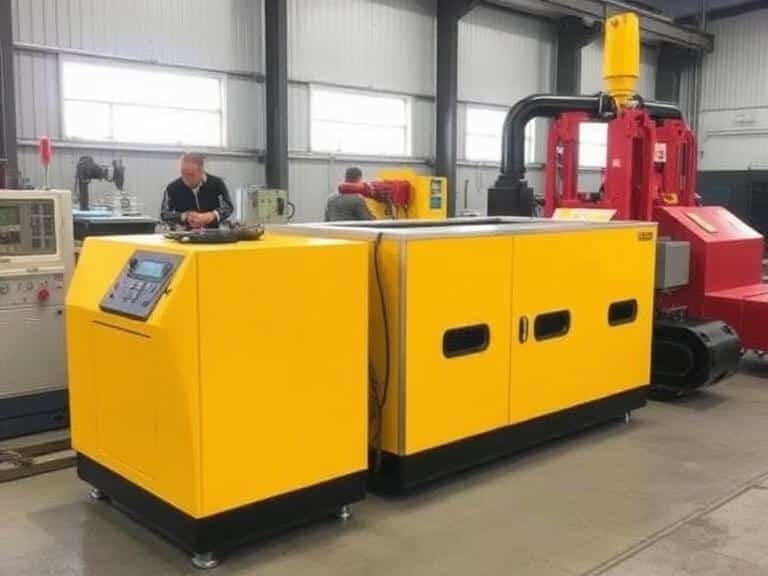
HENGTENG 2e2mPP Melt-blown Filter Cartridge Machine
Built for industrial-scale reliability, this machine delivers dual-gradient filtration capabilities with precise micron control. Engineered with heavy-duty extruders and optimized air-draw systems, it maximizes raw material yield while minimizing operator intervention.
- Power Consumption: 30KW/h
- Filter Precision: 1μm, 5μm, 10μm, 20μm, 30μm, 50μm… up to 100μm
- Inner Diameter Range: 10mm – 150mm (Default 28mm)
- Outer Diameter Range: 38mm – 120mm (when ID = 28mm)
- Filter Lengths: 10″, 20″, 30″, 40″
- Voltage: AC380V/Hz, DC220V/50Hz (Customizable)
Benefits of Strict Maintenance Protocols
When you rigorously apply these Maintenance Tips for 2E2M PP Melt Blown Machines, the commercial benefits are immediate. First, you drastically reduce your scrap rate. Polymer waste is the highest hidden cost in a filter factory; keeping your dies clean ensures every cartridge off the line is sellable. Second, you achieve true gradient density. A well-maintained machine will flawlessly produce a tight 1-micron inner core and a loose 5-micron outer shell, extending the lifespan of the filter for the end-user.
For heavy-duty applications, such as supplying filters to municipal water treatment plants, consistent maintenance allows your facility to pass stringent quality control audits, positioning you among the top industrial filter cartridge manufacturers globally.
Limitations and Production Bottlenecks
We must use practical judgment and acknowledge the operational limitations of this machinery. A 2E2M machine draws roughly 30KW/h. This high power consumption means that stopping and starting the machine constantly will destroy your profit margins due to energy spikes during the heat-up phase. These machines are designed to run 24/7. Furthermore, the reliance on dual extruders means that if one goes down due to a failed heater band, the entire production line must halt. Redundancy in spare parts is not optional; it is mandatory.
| Operational Pros | Operational Cons |
|---|---|
| Produces superior dual-layer gradient depth filters. | High power consumption (30KW/h base requirement). |
| High output capacity suitable for 24/7 commercial manufacturing. | Requires highly skilled technicians to balance two independent extruders. |
| Flexible production parameters (1μm to 100μm precision). | Spinneret dies require expensive ultrasonic cleaning equipment. |
| Supports varying lengths (10″ to 40″) on the fly. | Sensitive to voltage fluctuations; requires stable AC380V supply. |
Who Should Use It
For commercial users: This equipment is strictly designed for mid-to-large-scale manufacturing facilities that supply residential water purification brands, industrial chemical processors, and food & beverage filtration companies. If your business model requires producing thousands of high-quality sediment filters daily, the 2E2M architecture provides the necessary commercial throughput and quality control.
Who Does Not Need It
For beginners or ultra-small operations looking for survivalist solutions or basic household setups, this machinery is entirely inappropriate. Individuals looking for DIY solutions should instead research how to build your own water filter. Furthermore, if your production focus is solely on carbon block filters, you do not need melt-blown equipment; you require a dedicated cto carbon block filter machine to handle activated carbon compression. Understanding the difference between CTO and UDF filters will clarify your machinery requirements.
Common Mistakes in Factory Settings
The most devastating mistake we observe in factories is utilizing cheap, high-ash polypropylene resin to save pennies on raw materials. Cheap PP contains impurities that will permanently score the extruder screw and clog the spinneret die within hours. This immediately overrides any preventative maintenance you have performed.
Another frequent error is neglecting to train operators on the specific nuances of spun fiber vs. yarn. If a factory shifts from yarn production to melt-blown, they must adjust their maintenance expectations. (For context on yarn systems, see our pp yarn making machine review). Melt-blown relies on air dynamics; yarn relies on mechanical winding. If operators ignore the air heater sensors on a 2E2M, the machine will fail.
| Feature | 2E2M (2 Extruders, 2 Molds) | 3E3M (3 Extruders, 3 Molds) |
|---|---|---|
| Filter Structure | Dual-layer gradient (Inner & Outer) | Triple-layer gradient (Inner, Middle, Outer) |
| Maintenance Complexity | Moderate (Two systems to synchronize) | High (Three systems requiring exact thermal balance) |
| Power Consumption | ~30 KW/h | ~45+ KW/h |
| Best Application | Standard residential and commercial water filtration | Ultra-high-end industrial and medical-grade filtration |
Buying Considerations: Upgrading Your Fleet
When you are ready to expand your production floor, you must evaluate whether to replicate your current 2E2M setup or upgrade to a more complex architecture. In most professional situations, sticking with the 2E2M provides the best ROI for standard sediment filters due to its balance of energy efficiency and maintenance predictability.
However, if your clients are demanding ultra-fine, triple-gradient medical or specialized chemical filters, you must review the pp melt blown filter making machine in a 3E3M configuration. When buying new equipment from HENGTENG Machine, always specify your local voltage requirements (e.g., AC380V/50Hz) and ensure you purchase a spare set of spinneret dies. Having backup dies allows you to keep the machine running while the dirty dies are in the ultrasonic cleaner.
Expert Recommendation
We recommend establishing a zero-tolerance preventative maintenance schedule. Do not wait for the machine to start producing defective, shot-filled filters before you act. Implement a strict weekly shutdown sequence to purge the screws and clean the dies ultrasonically. For factory owners, the HENGTENG 2e2mPP Melt-blown Filter Cartridge Machine is the definitive workhorse for standard production, but its profitability is entirely dependent on how you treat the thermal and pneumatic systems. Treat the machine with industrial respect, utilize high-grade virgin PP resin, and it will deliver uncompromising yield and quality for years to come.
Frequently Asked Questions
How often should I clean the spinneret dies on a 2E2M machine?
In continuous 24/7 operation, you should swap and ultrasonically clean the spinneret dies every 7 to 10 days, depending on the purity of your PP resin. Using a high-ash or recycled resin may require die cleaning every 3 to 4 days to prevent hole blockages.
Why are there hard bits of plastic (shot) appearing on my filter cartridges?
“Shot” occurs when the polymer melt does not successfully draw into a micro-fiber. This is typically caused by three maintenance failures: a partially clogged spinneret die, the air heater temperature being too low, or the hot air velocity dropping due to a failing air compressor.
Can I use the 2E2M machine to make carbon block filters?
No. The 2E2M PP Melt Blown Machine is strictly designed for melting and extruding polypropylene polymers into spun sediment filters. Carbon block filters require an entirely different mechanical process involving the compression and binding of activated carbon powder using a CTO extrusion machine.
Authoritative References
To ensure your factory operates under the highest international engineering and safety standards, we advise consulting the following bodies:
- International Organization for Standardization (ISO) – ISO 9001 Quality Management Systems for Manufacturing
- Society of Plastics Engineers (SPE) – Guidelines for Polymer Extrusion and Thermal Management
- Occupational Safety and Health Administration (OSHA) – Industrial Machine Guarding and Safe Maintenance Protocols
- For insights into alternative filtration media like ceramics, review how ceramic filters are manufactured.