
In the fiercely competitive landscape of industrial water filtration, relying on outdated single-extruder machinery is a guaranteed way to erode your profit margins. We see manufacturers struggling daily to meet stringent micron ratings while burning through electricity and raw materials at unsustainable rates. If you are operating a standard single-nozzle production line and losing contracts to competitors with superior product consistency, it is time to evaluate your machinery.
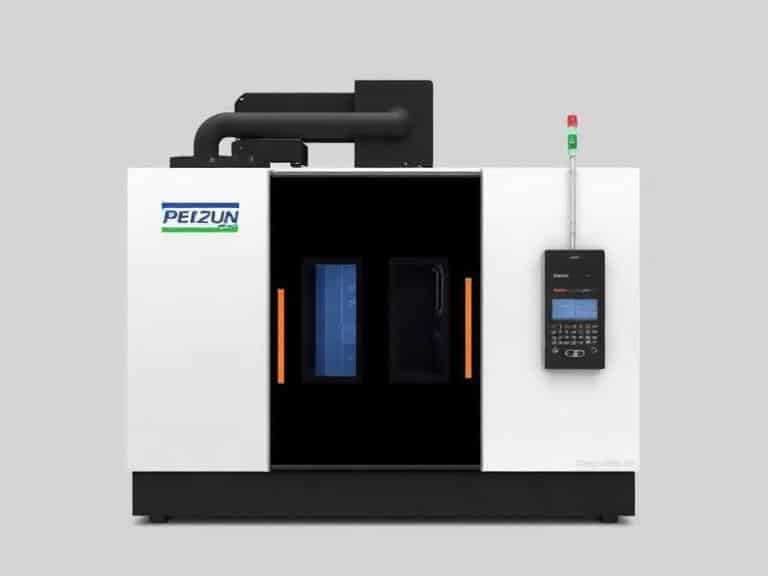
From our experience as equipment manufacturers at HENGTENG Machine, adopting a multi-extruder configuration is no longer a luxury; it is the baseline for commercial survival. When operators ask us how to bridge the gap between low-end commodity filters and high-margin industrial cartridges, the conversation immediately turns to the Advantages of 2E2M Melt Blown Technology. In this comprehensive guide, we strip away the marketing fluff to deliver a hard, practical look at why upgrading to a 2E2M configuration is a non-negotiable step for serious filter manufacturers in 2026.
Quick Answer: Why Choose 2E2M Technology?
The primary Advantages of 2E2M Melt Blown Technology revolve around the ability to simultaneously extrude two distinct layers of polypropylene microfibers. This dual-extruder (2E) and dual-mould (2M) setup creates a gradient density structure within the filter cartridge. In most professional situations, this results in a cartridge that captures large particles on the outer layer and fine particles on the inner layer, drastically extending the filter’s service life. For manufacturers, a 2E2M machine offers double the production capacity of a standard 1E1M line, lower energy consumption per cartridge, and the precision necessary to supply high-end industrial sectors.
Table of Contents
- What It Is and How It Works
- The 10 Production Advantages of 2E2M Melt Blown Technology
- Benefits and Limitations
- Who Should Use It & Who Does Not Need It
- Common Mistakes in Implementation
- Buying Considerations
- Essential Comparison and Buying Guide Tables
- Expert Recommendation from HENGTENG Machine
- Frequently Asked Questions (FAQ)
What It Is and How It Works
Before diving into the commercial advantages, you must understand the mechanical reality of the equipment. 2E2M stands for Two Extruders, Two Moulds. In the traditional filter cartridge manufacturing process, a single extruder melts polypropylene (PP) pellets and pushes the molten polymer through a single die head (mould). Hot air blasts the polymer into microfibers, which collect on a rotating spindle to form the filter.
How it works in a 2E2M configuration is distinctly superior. The system utilizes two independent extruders operating simultaneously. Each extruder has its own temperature control, screw speed, and hot air pressure settings. One extruder produces a coarse outer layer, while the second produces a highly compacted, fine inner layer. The two distinct microfiber streams converge on the same receiving spindle. This mechanical setup allows operators to manipulate the porosity of the filter precisely, creating the gradient density required for demanding water filtration system components.
The 10 Production Advantages of 2E2M Melt Blown Technology
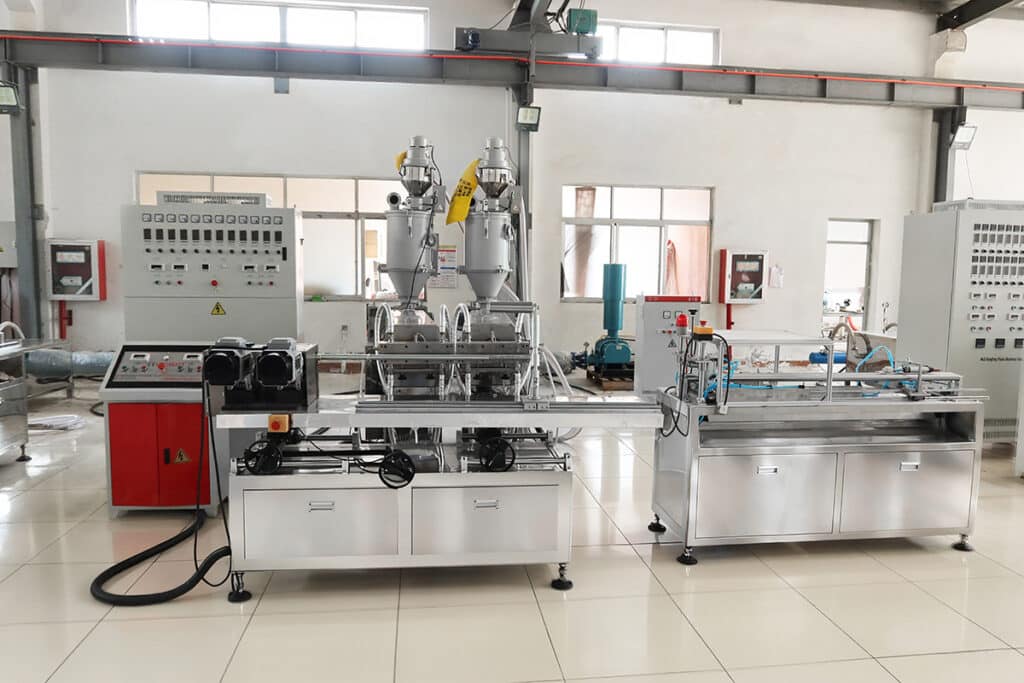
If you are debating whether the capital expenditure is worth it, consider these ten operational and commercial advantages. In our testing and field deployments, these metrics consistently drive return on investment (ROI).
1. True Gradient Density Structure
Single-extruder machines produce a uniform density throughout the filter wall. This means the surface clogs rapidly, blinding the filter. The 2E2M technology allows you to construct a true gradient: a loosely woven exterior for trapping sand and rust, and a tightly woven interior for stopping microscopic silt. This gradient structure is exactly what top industrial filter cartridge manufacturers demand from their suppliers.
2. Doubled Production Capacity
For commercial users, throughput is survival. By running two extruders concurrently, you are effectively doubling the volume of polypropylene being processed and deposited onto the spindle. A standard 2E2M line can produce up to 3,500 to 4,500 standard 10-inch cartridges per day, allowing you to fulfill massive wholesale orders without running punitive 24-hour shifts.
3. Superior Energy Efficiency Per Unit
While a 2E2M machine draws more total power than a 1E1M machine, the energy consumed per cartridge drops significantly. The thermal retention of a dual-die block and the sheer speed of production mean you are extracting more salable product out of every kilowatt-hour. In modern manufacturing, minimizing energy overhead is a critical advantage.
4. Precision Micron Rating Control
In most professional situations, a client will demand strict adherence to a 1-micron or 5-micron specification. Because you have two independent control panels on a 2E2M machine, you can dial in the inner extruder to guarantee the absolute micron rating, while adjusting the outer extruder for structural integrity and thickness. This precision eliminates rejected batches.
5. Reduced Raw Material Waste
Start-up and shut-down phases on older machines result in hundreds of pounds of wasted, off-spec polypropylene. The synchronized PLC (Programmable Logic Controller) systems on modern 2E2M lines stabilize temperatures rapidly. This means the machine reaches optimal extrusion viscosity faster, drastically reducing the amount of scrap material you have to discard or recycle.
6. Enhanced Filter Dirt-Holding Capacity
Because the dual-mould system creates distinct fiber diameters, the resulting cartridge possesses a higher void volume (empty space between fibers) without compromising structural strength. This translates directly to a higher dirt-holding capacity. A filter that lasts 30% longer in the field allows you to command a premium price over standard commodity filters.
7. Lower Labor Intervention
We recommend 2E2M systems for facilities dealing with labor shortages. Advanced 2E2M lines are heavily automated. With integrated auto-cutting, auto-unloading, and synchronized spindle speeds, a single operator can comfortably manage two to three 2E2M machines simultaneously, drastically reducing your labor cost per unit.
8. Improved Structural Rigidity
Some inferior filters collapse under high water pressure, causing the trapped dirt to bypass into the clean water stream. The secondary extruder in a 2E2M setup can be calibrated to run a slightly hotter, thicker fiber that binds the inner core tightly, providing exceptional collapse strength without the need for an expensive plastic inner core.
9. Flexibility in Product Offerings
A 2E2M machine is not locked into a single product type. By adjusting the distance of the moulds and the air pressure, you can quickly pivot from manufacturing standard residential water filters to heavy-duty chemical filtration cartridges. This agility allows you to capture market share across multiple sectors.
10. Optimal Cost-to-Performance Ratio
While a 3E3M machine offers three layers, the capital cost and electrical requirements are massive. The 2E2M hits the commercial “sweet spot.” It provides the essential gradient structure necessary for high-end performance but keeps capital expenditure and operational complexity low enough for mid-sized manufacturers to scale profitably.
Benefits and Limitations
We believe in commercial realism. While the advantages are robust, you must understand the limitations before signing a purchase order.
Benefits: You gain immediate access to the premium filtration market, cut your labor costs through high-volume automation, and drastically reduce the energy required per cartridge. You will produce a cartridge that visibly outperforms standard spun filters in lifespan and flow rate.
Limitations: The upfront capital expenditure is noticeably higher than a basic 1E1M machine. It also requires a more sophisticated operator to monitor two sets of heating zones and air pressures simultaneously. If your factory has poor electrical infrastructure, the sudden draw of heating two extruders from a cold start may require panel upgrades.
Who Should Use It & Who Does Not Need It
Who should use it: Medium to large-scale manufacturers looking to upgrade their legacy equipment, entrepreneurs entering the wholesale B2B industrial filtration market, and companies currently importing filters who want to localize production with a highly competitive product. If you need a reliable pp filter production line supplier, moving to 2E2M is the logical step.
Who does not need it: For beginners operating out of a garage, or a localized manufacturer only supplying low-tier 50-micron filters for agricultural irrigation, this machine is overkill. Furthermore, if you are bidding on ultra-pure semiconductor filtration contracts that demand absolute 3-stage micro-gradients, you should bypass 2E2M entirely and upgrade directly to a pp melt blown filter making machine featuring a 3E3M configuration.
Common Mistakes in Filter Manufacturing
In our testing and client site visits, we see the same expensive mistakes repeated with 2E2M technology.
- Using Low-Grade Polypropylene: 2E2M machines require a specific Melt Flow Index (MFI). Using cheap, inconsistent PP granules will clog the die head spinnerets and cause the microfibers to snap, ruining the gradient structure.
- Ignoring Ambient Temperature: Melt blown technology relies on rapid cooling of the fibers as they travel from the die to the spindle. If your factory lacks proper ventilation and ambient temperatures exceed 35°C (95°F), the fibers will clump together and form a solid block of plastic rather than a porous filter.
- Misaligning the Moulds: The angle at which the two fiber streams hit the receiving spindle is critical. Operators who fail to calibrate the die angles will produce a filter with two separate, delaminating layers rather than a cohesive, intertwined cartridge.
Buying Considerations
If you have decided that the Advantages of 2E2M Melt Blown Technology align with your business plan, use the following criteria to evaluate manufacturers.
First, inspect the extruder screw design. The screw must be manufactured from hardened alloy steel (like 38CrMoAlA) with a nitrogen treatment to prevent wear. Second, evaluate the die head precision. The spinneret holes must be uniform; laser-drilled moulds are mandatory for consistent fiber diameters. Finally, insist on a reputable PLC system (like Siemens or Delta). A machine is only as good as the software controlling its heat zones. For those also interested in expanding their catalog, similar stringent checks should be applied when purchasing a cto carbon block filter machine.
Essential Comparison and Buying Guide Tables
| Machine Type | Extruders / Moulds | Filtration Structure | Ideal Market Application |
|---|---|---|---|
| 1E1M (Standard) | 1 / 1 | Uniform density | Low-cost residential, pre-filtration |
| 2E2M (Advanced) | 2 / 2 | Dual-gradient density | Commercial, high-efficiency industrial |
| 3E3M (Premium) | 3 / 3 | Triple-gradient absolute | Ultra-pure water, pharmaceutical |
| Performance Metric | 1E1M Technology | 2E2M Technology |
|---|---|---|
| Daily Output (10-inch) | 1,500 – 2,000 pcs | 3,500 – 4,500 pcs |
| Cartridge Lifespan | Baseline (Prone to surface blinding) | +30% to 50% longer (Deep pore trapping) |
| Energy per Unit | High relative to output | Highly efficient ratio |
| Footprint | Minimal space required | Requires moderate factory floor space |
| Pros | Cons |
|---|---|
| Produces superior gradient density filters. | Higher initial capital investment than 1E1M. |
| Massive production capacity output. | Requires robust 3-phase electrical infrastructure. |
| Excellent energy efficiency per manufactured unit. | More complex PLC and temperature tuning required. |
| Reduces raw material scrap and start-up waste. | Requires dedicated cooling/ventilation in the factory. |
| Component | What to Look For | Why It Matters |
|---|---|---|
| Die Head (Mould) | Laser-drilled, precision spinnerets. | Ensures uniform microfiber diameter and prevents clogging. |
| Extruder Motor | Frequency-controlled AC motor. | Provides stable RPMs, resulting in consistent polymer output without surging. |
| Air Heater | Stainless steel, highly insulated chambers. | Maintains exact hot air temperatures for proper fiber attenuation. |
| Controller | Touchscreen PLC (Siemens, Delta, etc.). | Allows the operator to synchronize both extruders instantly and monitor fault alarms. |
Expert Recommendation from HENGTENG Machine
HENGTENG Machine, established in 1989, stands as a premier manufacturer of filter cartridge making machines in China. Specializing in PP melt blown, CTO carbon block, and other filter machines, we utilize advanced design and manufacturing processes. Our commitment to quality is reflected in our ISO9001 and CE certifications and our efficient support system, ensuring our clients receive exceptional service from production to installation.
In most professional situations, if you are looking to scale your filter manufacturing business, we firmly recommend the 2E2M configuration. It provides the exact balance of high production volume and precise filtration quality that the global market demands today. Unlike standard setups, investing in 2E2M future-proofs your business against competitors who cannot achieve dual-gradient density. If your strategy involves supplying reverse osmosis pre-filters or comparing the difference between CTO and UDF filters, having a reliable 2E2M spun filter to pair them with is essential for your brand’s reputation.
Frequently Asked Questions (FAQ)
What is the main difference between 1E1M and 2E2M?
The primary difference is the number of extruders and moulds. 1E1M uses a single system to create a filter with uniform density. 2E2M uses two parallel systems to simultaneously weave two different fiber thicknesses onto the same spindle, creating a gradient density filter that lasts significantly longer in the field.
Does a 2E2M machine consume twice as much electricity?
While the total connected load is higher because you are running two heating zones and motors, the energy consumption per filter cartridge produced is actually lower. Because the machine outputs double the volume of a 1E1M machine in the same timeframe, it is highly energy-efficient.
Can I produce 1-micron and 5-micron filters on the same 2E2M machine?
Yes. By adjusting the frequency inverters controlling the extruder speed, altering the hot air pressure, and modifying the distance of the receiving spindle, you can easily shift production from a coarse 50-micron filter down to a precise 1-micron absolute filter.
What raw material is required for 2E2M Melt Blown Technology?
The machine strictly requires Polypropylene (PP) homopolymer resin in pellet form. For melt blown applications, the PP must have a high Melt Flow Index (MFI), typically between 1200 and 1500 g/10min, to ensure the polymer can be drawn into microscopic fibers without breaking.
Authoritative References & Industry Standards
Our manufacturing protocols and filtration standards are aligned with global benchmarks. For further technical specifications regarding water quality and manufacturing safety, refer to the following institutions:
- International Organization for Standardization (ISO) – Guidelines for Quality Management Systems (ISO 9001) in industrial manufacturing.
- NSF International – Standards for drinking water treatment units and material safety requirements for polypropylene filtration.
- Water Quality Association (WQA) – Industry best practices and testing protocols for sediment and gradient density water filters.