
The global demand for high-performance drinking water filtration has never been more aggressive. As consumers become hyper-aware of VOCs, chlorine, and emerging contaminants, the reliance on Chlorine, Taste, and Odor (CTO) carbon block filters has skyrocketed. From our experience at HENGTENG Machine, the profitability of a filtration manufacturing plant hinges entirely on the reliability, automation, and continuous output of its production equipment.
However, navigating the market to find the Best carbon block filter machines is fraught with misinformation. Many manufacturers assume that a basic compression molder or a repurposed plastic extruder will suffice. In most professional situations, applying generic plastics manufacturing equipment to highly abrasive activated carbon mixtures results in catastrophic machine wear, inconsistent filter porosity, and massive material waste. Whether you are expanding your current operations or building a new facility, you need precision-engineered machinery that handles the delicate thermodynamics of Polyethylene (PE) binders and coconut shell carbon.
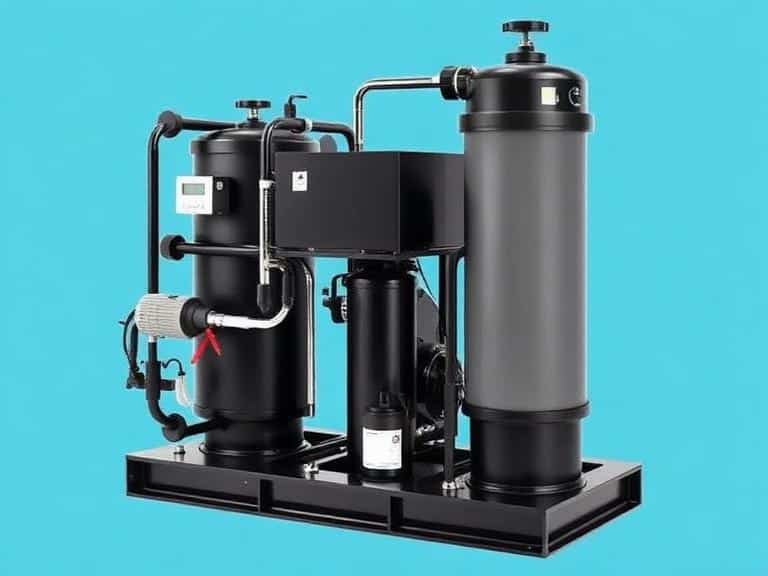
This comprehensive guide will bypass the standard sales pitches and deliver an opinionated, technical breakdown of the top manufacturing technologies available today. We will evaluate extrusion versus compression molding, outline common procurement mistakes, and detail the four best machine configurations to maximize your return on investment in 2026.
Quick Answer: Which CTO Machine Architecture is Best?
If you need an immediate procurement recommendation, we unequivocally advocate for Fully Automatic Extrusion CTO Machines for 95% of commercial users. Extrusion provides a continuous, highly automated production cycle that drastically lowers labor costs while maintaining strict dimensional tolerances. Compression molding (sintering) is only recommended for niche, custom-shaped blocks where high labor costs can be absorbed by premium retail pricing.
| Machine Type | Best Use Case | Commercial Verdict |
|---|---|---|
| Fully Automatic Extrusion (HENGTENG) | Standard 10″ to 20″ CTO blocks for mass market. | The absolute best ROI. 24-hour continuous operation with minimal labor. |
| Compression Molding / Sintering | Custom shapes, extremely dense specialty blocks. | Worth buying only if you have niche clients requiring non-standard form factors. |
| Twin-Screw Continuous Extrusion | Ultra-high volume, high-abrasion carbon mixes. | Excellent for heavy-duty industrial scale, but requires high initial capital. |
| Co-Extrusion Carbon Block Lines | Multi-layer filters (carbon + integrated sediment wrap). | Highly specialized; excellent for premium all-in-one cartridge manufacturing. |
Table of Contents
- What is a Carbon Block Filter Machine and How Does it Work?
- The Commercial Benefits: Extrusion vs. Compression
- Limitations and Common Manufacturing Mistakes
- Who Should Buy These Machines (And Who Should Not)
- Buying Considerations: How Professionals Choose
- The 4 Best Carbon Block Filter Machines
- Expert Recommendation & Featured Product
- Frequently Asked Questions (FAQ)
- Authoritative References
What is a Carbon Block Filter Machine and How Does it Work?
A CTO carbon block filter machine is heavy industrial equipment designed to fuse pulverized activated carbon (typically coconut shell or bituminous coal) with a polymeric binder (usually high-density polyethylene or UHMWPE) into a solid, porous cylinder. Unlike granular activated carbon (GAC) which allows water to channel around loose particles, a solid carbon block forces water through a labyrinth of microscopic pores, offering vastly superior contact time and contaminant removal.
How it works in an extrusion setup: The machine relies on a highly calibrated thermal and mechanical process. A homogenous mixture of carbon dust and PE resin is fed into a hopper. A heavy-duty screw mechanism pushes this abrasive mixture through a heated barrel. The trick here is thermodynamic precision: the barrel must be heated to just below the melting point of the binder. The PE resin becomes tacky, sticking the carbon particles together without completely melting and blinding the carbon’s inherent porosity. The mixture is then forced through a tubular sizing die, air or water-cooled to set the shape, and finally cut to the exact required length (e.g., 10 or 20 inches) by an automated flying saw.
Understanding this process is crucial for anyone exploring a comprehensive cartridge filter materials guide. The machine dictates the structural integrity of the filter; a poorly extruded block will either crumble in transit or create massive pressure drops in a residential RO system.
The Commercial Benefits: Extrusion vs. Compression
The industry is essentially divided into two manufacturing philosophies: continuous extrusion and compression molding (often called sintering). You cannot make an informed purchasing decision without understanding the financial realities of both.
| Manufacturing Method | Pros | Cons |
|---|---|---|
| Continuous Extrusion | Highly automated, rapid production rates, extremely low labor costs, ideal for standard 10″/20″ cartridges. | Limited to continuous tubular shapes; tooling changes take slightly longer. |
| Compression Molding | Can produce complex, proprietary shapes; requires slightly less binder material, preserving porosity. | Highly labor-intensive, batch-based (slow production rate), higher overall unit cost. |
From our experience, if you are looking to restock standard inventory and dominate the wholesale market, extrusion is the only viable path. Compression molding yields fantastic results but is economically unfeasible for standard point-of-use (POU) filters due to the manual labor required to load and unload individual molds.
Limitations and Common Manufacturing Mistakes
The most catastrophic mistake new manufacturers make is failing to control the heat profile across the extrusion barrel. If the temperature spikes, the PE binder melts completely, coating the carbon particles in an impermeable plastic shell. The resulting filter looks perfect but possesses zero adsorption capability. Conversely, if the temperature is too low, the block will lack structural integrity and shatter during the cutting phase.
Another major limitation is attempting to use the wrong activated carbon mesh size. If you are comparing a 5 micron vs 20 micron water filter, the carbon mesh size and binder ratio must be adjusted accordingly on the machine. Running a fine 5-micron mixture through a machine calibrated for a 20-micron block will cause excessive backpressure, potentially damaging the extrusion screw.
Who Should Buy These Machines (And Who Should Not)
For commercial users and manufacturers: If you currently outsource your CTO blocks and are looking to vertically integrate to increase profit margins, investing in an automated extrusion line is a brilliant strategic move. OEM suppliers, high-volume water purification brands, and industrial filtration distributors are the ideal end-users for this equipment. Once you master the operation, you can easily supplement your product catalog, perhaps exploring what is pp spun filter cartridge production next to offer complete pre-filtration kits.
Who does not need it: Small-scale local plumbers, residential water treatment dealers, or hobbyists. The power requirements (approx. 30–40 kW/set) and raw material minimum order quantities make this heavy industrial equipment unsuitable for anyone not looking to produce thousands of filters per month. If your goal is just to understand filter replacement, reviewing keurig water filter replacement steps is more appropriate than buying a factory line.
Buying Considerations: How Professionals Choose
When auditing machine suppliers—similar to evaluating pp filter making machine manufacturers—you must demand rigorous specifications. Do not buy a machine based purely on price; you are buying uptime and operational stability.
| Component | Professional Standard Requirement | Why It Matters for ROI |
|---|---|---|
| Control System | Fully Automatic PLC with touchscreen interface. | Eliminates operator guesswork regarding temperature zones and extrusion speeds, reducing scrap rates. |
| Screw and Barrel Metallurgy | Bimetallic or Nitrided Steel. | Activated carbon is incredibly abrasive. Standard steel screws will wear down in months, ruining output dimensions. |
| Cooling Apparatus | Water-cooled sizing sleeves. | Ensures rapid setting of the binder to prevent the block from expanding out of specified dimensional tolerances. |
| Cutting Mechanism | Automated flying saw with dust extraction. | Prevents workflow bottlenecks and keeps the factory floor safe from combustible carbon dust. |
The 4 Best Carbon Block Filter Machines
Based on production efficiency, automation, and overall market dominance, here are the four best architectural configurations for producing activated carbon blocks in 2026.
1. Fully Automatic Single-Screw Extrusion CTO Machine (Top Pick)

This is the workhorse of the global water filtration industry. By utilizing a single, highly specialized screw, this machine provides a seamless, one-step forming process (heating, extrusion, and molding). It is designed to run 24 hours a day with minimal human intervention. For manufacturers looking for the absolute best balance of capital expenditure and output yield for standard 10″ and 20″ filters, this architecture is undefeated. It pairs beautifully in a factory setting alongside a pp melt blown filter cartridge machine.
2. Heavy-Duty Twin-Screw Extrusion Lines
For massive industrial applications where throughput speed is paramount, twin-screw extruders provide superior mixing of the carbon and PE binder. The interlocking screws force the abrasive material forward with immense pressure, ensuring zero material stagnation in the barrel. While the initial cost is significantly higher, twin-screw machines are worth upgrading to if your monthly order volume exceeds a million units.
3. Compression Molding (Sintering) Filter Presses
As previously mentioned, compression molding involves pressing the carbon/binder mixture into individual molds and baking them. While it lacks the speed of continuous extrusion, it is the best machine type if you are manufacturing proprietary, non-cylindrical filter shapes or require ultra-low binder ratios to maximize contaminant adsorption for high-end medical or scientific applications.
4. Co-Extrusion Multi-Layer Carbon Block Machines
A newer innovation in the market, co-extrusion machines allow manufacturers to lay down a protective outer layer of spun or melt-blown polypropylene directly over the carbon block as it exits the die. This eliminates the need for secondary wrapping stations and creates an all-in-one cartridge that resists premature sediment blinding. If you are comparing whether are pleated sediment filters better, a co-extruded carbon block offers a powerful hybrid alternative.
| Machine Type | Production Speed | Labor Requirement | Flexibility in Filter Shape |
|---|---|---|---|
| Single-Screw Extrusion (HENGTENG) | High (Continuous) | Very Low | Low (Cylindrical only) |
| Twin-Screw Extrusion | Very High | Low | Low (Cylindrical only) |
| Compression Molding | Slow (Batch) | High | Very High (Custom molds) |
| Co-Extrusion | Medium (Continuous) | Low | Low (Cylindrical only) |
Expert Recommendation & Featured Product
In our testing and decades of field observation, we adamantly recommend the continuous extrusion process for virtually all commercial filter manufacturing. The margins in the water filtration business rely on high-volume efficiency, and batch-based compression molding simply cannot keep pace with global demand without a massive labor force.
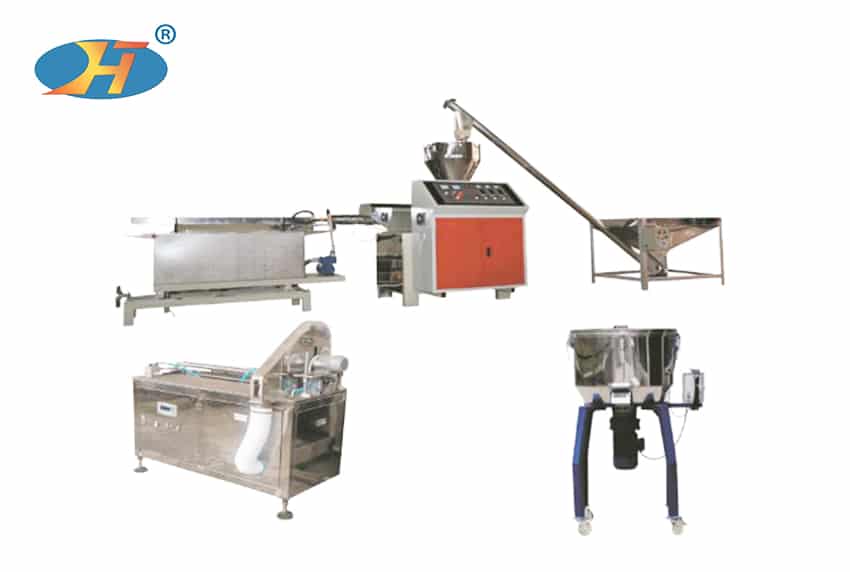
CTO Carbon Block Filter Making Machine by HENGTENG Machine
Established in 1989, HENGTENG Machine stands as a premier manufacturer of filter cartridge equipment in China. Our flagship CTO machine embodies the pinnacle of automated extrusion technology, ensuring absolute consistency in every block.
- Production Process: Heating, Extrusion, Molding (One-Step Forming)
- Control System: Fully Automatic PLC Control
- Material Used: Activated Carbon + Polyethylene (PE) Resin
- Filter Length: 10”– 20” (customizable)
- Heating Method: Electric Heating / Temperature Controlled Zones
- Power Requirement: Approx. 30–40 kW/set
- Operation Mode: Continuous 24-hour operation with Air or Water Cooling options
With CE and ISO9001 certifications, this machine guarantees structural integrity and dimensional accuracy, whether you are targeting the best 5 micron water filters 2025 market or developing critical best water filters for cholera disaster relief systems. To scale your operations and minimize material waste, this is the definitive investment.
To fully understand the financial investment of launching a complete factory, we also advise reviewing our guide on the pp spun filter cartridge machine price to accurately budget for complementary production lines.
Frequently Asked Questions (FAQ)
What is the difference between extruded and compression molded carbon blocks?
Extruded carbon blocks are formed by pushing a heated mixture of carbon and polymeric binder continuously through a sizing die, making it highly automated and cost-effective. Compression molded blocks are made in individual molds under extreme heat and pressure, requiring more labor but allowing for diverse shapes and potentially preserving slightly higher porosity due to requiring less binder.
What materials are required to run a CTO carbon block machine?
The primary raw materials are high-quality powdered activated carbon (typically sourced from coconut shells or bituminous coal) and a polymeric binder, which is almost exclusively a specialized Ultra-High-Molecular-Weight Polyethylene (UHMWPE) or High-Density Polyethylene (HDPE) powder.
Can a CTO machine produce different micron ratings?
Yes. The micron rating (e.g., 5-micron or 10-micron) of the final carbon block is not determined by changing the physical die of the machine, but rather by altering the mesh size of the activated carbon powder and the precise ratio of the polyethylene binder in the initial mixture.
Authoritative References
To ensure your manufacturing facility meets global health and safety guidelines, we strongly recommend consulting the exact performance and material safety standards provided by the following authoritative organizations:
- NSF International – Defines the rigorous NSF/ANSI 42 and 53 standards for drinking water treatment units, ensuring the CTO filters produced by your machines meet safe material extraction limits.
- Water Quality Association (WQA) – The premier trade association representing the residential, commercial, and industrial water treatment industry, providing testing and certification protocols for activated carbon block efficacy.
- U.S. Environmental Protection Agency (EPA) – Provides foundational guidelines and maximum contaminant level (MCL) goals regarding VOCs, lead, and chlorine, driving the demand for high-quality carbon block filtration.