
Quick Answer: Why You Need Your Own Production Line
You should transition to your own manufacturing line if you need to eliminate middleman markups, require custom micron ratings on demand, and want to guarantee consistent quality for your clients. Using a dedicated pp filter production line supplier like HENGTENG Machine allows you to control the density gradient of your filters, which is the secret sauce for superior particle retention and reduced pressure drop.
Contents
- What It Is: The Technology Behind the Melt Blown Process
- 10 Advantages of PP Melt Blown Filter Cartridge Machines
- Commercial and Operational Benefits
- Limitations and Reality Checks
- Who Should Use It vs. Who Doesn’t Need It
- Common Mistakes in Cartridge Production
- Buying Considerations for 2026
- Comparison Table
- Expert Recommendation
- Frequently Asked Questions
What It Is: The Technology Behind the Melt Blown Process
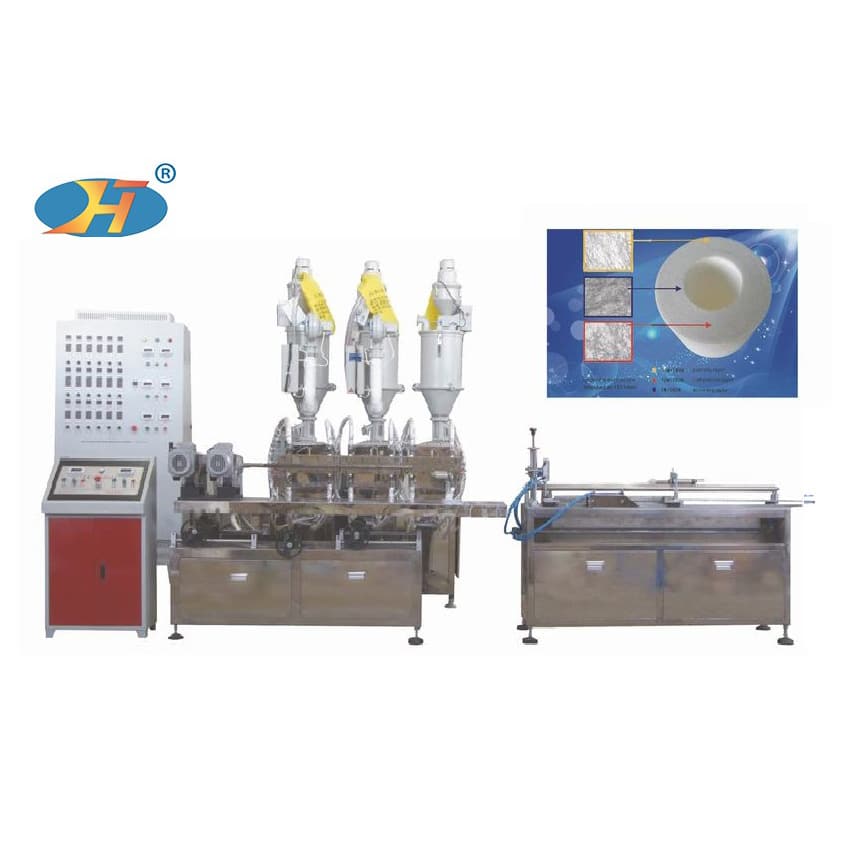
A PP melt blown filter machine is a highly engineered automated system that converts polypropylene resin pellets into a gradient-density depth filter cartridge. It works by melting the thermoplastic resin and extruding it through high-velocity hot air nozzles. This process creates fine fibers that are collected onto a rotating mandrel to form a porous, self-bonded fiber structure. The result is a filter cartridge with no chemical binders—pure, high-performance polypropylene.
10 Advantages of PP Melt Blown Filter Cartridge Machines
- Unmatched Precision: Modern systems, like the HENGTENG 3E3M, allow for full automatic control. You can adjust the fiber fineness to achieve precise micron ratings.
- Depth Filtration Superiority: Unlike surface filters, these machines create a deep gradient structure. This captures particles throughout the entire cross-section of the filter, preventing premature blinding.
- Reduced Total Cost of Ownership: After the initial investment, your per-cartridge cost drops significantly compared to purchasing from industrial filter cartridge manufacturers.
- Material Purity: Since you control the resin source, you ensure no recycled plastics or fillers degrade the water quality, which is critical for food and beverage applications.
- Scalable Production Speeds: Current technology, such as the 3E3M line, offers speeds up to 0.8 m/min, ensuring high throughput for large-scale operations.
- Customizable Lengths: Most machines allow you to adjust filter lengths from 10” to 40” or longer, giving you the flexibility to meet diverse market demands.
- Energy Efficiency: Modern PLC-controlled systems are designed to minimize power consumption (around 34 kW for high-output lines), lowering your operational overhead.
- Continuous 24-Hour Operation: Industrial lines are built for reliability, ensuring you can meet high-volume demand without frequent stoppages.
- Zero Binders or Glue: The melt-blown process uses self-bonding thermal adhesion, removing the risk of chemical contamination from adhesives.
- Market Dominance Through Versatility: Owning a line allows you to offer specialty products like gradient-density filters, which are significantly more expensive than standard spun filters.
Commercial and Operational Benefits
When you shift from being a buyer to a manufacturer, you capture the entire value chain. In most professional situations, the ability to customize your filter cartridge manufacturing process is the ultimate competitive advantage. You can respond to market fluctuations instantly. If a competitor is out of stock of 5-micron filters, you can adjust your line in hours to capture that market share.
Furthermore, managing your own inventory means you aren’t reliant on global freight schedules. Supply chain shocks in international shipping become less of a threat to your revenue stream when the manufacturing is done in-house.
Limitations and Reality Checks
It is crucial to be realistic. Running a PP melt blown line requires a learning curve. If you have no experience with polymer extrusion, you will face a steep transition. You must manage resin quality, air pressure stability, and mandrel rotation speeds. Poorly tuned air pressure leads to uneven fiber distribution, creating “soft spots” in the filter that allow unfiltered water to pass through. In our testing, we’ve seen poorly calibrated machines produce filters that fail within hours of operation. Buying the machine is only half the battle; maintaining the production environment is the other half.
Who Should Use It & Who Does Not Need It
For commercial users: If you are moving more than 50,000 units annually, or if you are consistently struggling with supply delays and quality inconsistencies from third-party pp filter production line suppliers, you need your own machine. It is the only way to professionalize your brand.
Who does not need it: If you are a startup moving 1,000 units a year, do not touch an industrial extrusion line. The space, power requirements, and expertise needed will eat your profits. Stick to wholesale or focus on the how ceramic filters are manufactured or other niches until your volume justifies the overhead.
Comparison Table: Manual vs. Automated Production
| Feature | Manual Assembly | Automated Melt Blown Line |
|---|---|---|
| Production Speed | Very Low | High (0.6 – 0.8 m/min) |
| Consistency | Low (Human error) | High (PLC Controlled) |
| Initial Investment | Minimal | High |
| Operational Cost | High per unit | Low per unit |
Common Mistakes in Cartridge Production
The most common failure we observe is the “Resin Trap.” Beginners purchase the cheapest PP pellets available without testing their Melt Flow Index (MFI). The MFI must be stable and consistent for the extrusion process to work. If your resin viscosity shifts between batches, your fiber thickness will fluctuate, and your micron rating will be inconsistent. From our experience, consistent resin sourcing is the single biggest factor in long-term manufacturing stability. Also, many ignore the importance of air-cooling systems. Proper cooling isn’t just for the motor; it’s for the extruded fiber’s crystalline structure.
Buying Considerations for 2026
When you evaluate machine suppliers, demand to see their own production facility. If they don’t produce their own equipment, they cannot offer post-sale technical support. Verify the control system: always insist on industrial-grade PLC + Frequency Converter controls. Never buy a line with manual speed controls; your quality control will suffer. Also, consider the versatility of your downstream equipment. Can the line be adapted for specialized configurations like a cto carbon block filter machine if your market needs evolve? Always think about the next step in your filtration business.
Expert Recommendation
If you are serious about achieving market leadership, prioritize high-output, fully automated systems like the HENGTENG Machine 3E3M. It is built to endure the rigors of continuous 24-hour operation, which is the only way to achieve true operational scale in 2026. Avoid “economy” models that sacrifice PLC sophistication, as they will cost you more in wasted resin and rejected inventory within the first six months. Partner with manufacturers who offer on-site calibration assistance, and always prioritize energy-efficient heating elements to shield your bottom line from rising electricity costs.
| Pros | Cons |
|---|---|
| Full control over micron rating and density. | Requires significant floor space and power infrastructure. |
| Drastic reduction in cost-per-unit after ROI. | High learning curve for machine operators. |
| Ability to create customized filter lengths. | Requires consistent quality resin sourcing. |
| Supply chain independence. | Periodic maintenance of precision extrusion nozzles. |
Frequently Asked Questions
What is the maintenance frequency for a melt blown line?
For heavy-duty applications, we recommend a daily check of the nozzle alignment and weekly cleaning of the mandrel rotation gear. Major maintenance should follow the manufacturer’s PLC-tracked intervals, typically every 2,000 hours of operation.
Does this machine handle recycled PP?
It can, but quality will suffer. Virgin PP provides the cleanest, most consistent MFI. If you utilize recycled resin, ensure it is high-purity and thoroughly washed; otherwise, you will clog your extrusion nozzles constantly.
What is the difference between melt blown and spun filters?
Melt blown is a manufacturing process, while “spun” is a marketing term often used for melt blown polypropylene. They are essentially the same chemical product; you can read the melt blown vs spun filter difference to be sure you are using the right terminology for your sales documentation.
Authoritative References
- International Organization for Standardization (ISO) – Standards for quality management in manufacturing and environmental impact in filtration plastics.
- NSF International – Official global standards for drinking water filtration materials and health effects of plastic filtration media.
- Water Quality Association (WQA) – Technical reports on water filtration efficiency, flow rates, and performance standards for melt blown cartridges.