
The global demand for clean water is escalating at an unprecedented rate, driving massive consumption of replacement filter cartridges. In most professional situations, entrepreneurs look at the recurring revenue model of water purification consumables and immediately recognize the immense financial potential. However, to successfully start a water filter cartridge factory, you cannot rely on generic business advice. You are entering a highly technical manufacturing sector where the efficiency of your production line dictates whether you achieve a healthy profit margin or drown in operational electricity costs.
From our experience engineering and deploying production lines globally at HENGTENG Machine, we frequently witness investors making catastrophic early mistakes—such as purchasing unverified, high-energy-consuming machinery or failing to secure the correct raw polypropylene materials. In this comprehensive guide, we will bypass the encyclopedia-style writing and provide you with a practical, commercial blueprint. We will walk you through the exact five steps required to launch your facility, evaluate machinery specifications, and establish a profitable manufacturing operation.
Quick Answer: How to Start a Water Filter Cartridge Factory
To successfully start a water filter cartridge factory, you must execute five distinct phases: 1) Market Analysis to determine if you will produce residential (10-inch) or industrial (20-40 inch) filters; 2) Budget Allocation, requiring roughly $30,000 to $100,000 for high-efficiency melt-blown machinery and facility setup; 3) Machinery Procurement, focusing heavily on automated, low-energy consumption lines; 4) Facility Setup, requiring 150-300 square meters of space with robust three-phase industrial power; and 5) Quality Control, implementing standard micron rating tests to ensure product viability. Securing top-tier production equipment is the single most critical factor in guaranteeing long-term profitability.
Table of Contents
- What It Is: The Modern Cartridge Factory
- How It Works: The Manufacturing Process
- The 5 Steps to Start a Water Filter Cartridge Factory
- Benefits and Limitations
- Who Should Enter This Industry (And Who Shouldn’t)
- Common Mistakes to Avoid
- Machinery Buying Considerations
- Essential Comparison Tables
- Expert Recommendation: HENGTENG Machine
- The Bottom Line
- Frequently Asked Questions
- References
What It Is: The Modern Cartridge Factory
A water filter cartridge factory is an industrial facility dedicated to the mass production of consumable filtration media. While factories can produce various types of filters—such as string wound, carbon block, or pleated—the most commercially viable entry point is the production of Polypropylene (PP) melt-blown sediment filters. To fully understand the product you will be manufacturing, we suggest reviewing exactly what is pp spun filter cartridge technology and why it dominates the pre-filtration market.
These factories operate by transforming raw polypropylene resin chips into highly structured, porous cylinders that trap suspended solids, rust, and dirt from water supplies. The modern factory is characterized by heavy automation. Gone are the days of manual intervention; today’s facilities rely on smart-controlled extrusion lines that run continuously, 24 hours a day, minimizing labor costs while maximizing output volume.
How It Works: The Manufacturing Process
Before you commit capital to start a water filter cartridge factory, you must understand the physics of the melt-blown process. The operation begins by feeding raw PP granules into a heated extruder. The machine melts the plastic into a viscous liquid, which is then forced through a precision die head containing microscopic holes.
As the liquid plastic is extruded, high-velocity hot air stretches the polymer streams into ultra-fine microfibers. These fibers are blown onto a rotating spindle (or receiving rod). As the fibers cool and solidify upon contact, they intertwine to form a rigid, multi-layered cylindrical structure. By electronically adjusting the extruder speed, air pressure, and spindle rotation, a high-quality machine can create gradient density—meaning the outer layers are loose to catch large particles, while the inner layers are dense to trap microscopic contaminants. This process is fully explained in our comprehensive pp melt blown filter machine guide.
The 5 Steps to Start a Water Filter Cartridge Factory
Step 1: Market Analysis and Product Selection
You cannot buy machinery blindly. In most professional situations, failure occurs because an investor produces standard 10-inch filters in a market oversaturated with cheap imports, while entirely ignoring the high-margin industrial sector. You must analyze your local demand. Are you supplying residential reverse osmosis (RO) systems, or are you supplying massive desalination plants? If you aim to supply heavy industry, you must evaluate the top industrial filter cartridge manufacturers and position your factory to produce 30-inch and 40-inch heavy-duty cartridges with precise micron ratings (e.g., 1-micron or 5-micron).
Step 2: Budgeting and Financial Projection
Starting this factory requires practical commercial judgment regarding capital expenditure (CAPEX) and operating expenditure (OPEX). The machinery itself is your largest upfront cost. Understanding the current pp spun filter cartridge machine price landscape is critical. A standard line may cost anywhere from $20,000 to $60,000 depending on automation and production capacity. However, your budget must also include three months of operational runway, factoring in raw material costs, industrial electricity rates (which are significant in plastic extrusion), and facility leasing.
Step 3: Machinery Procurement (The Core Decision)
This is where factories succeed or fail. We recommend avoiding generic, non-specialized equipment vendors. You must source from dedicated pp filter making machine manufacturers. When selecting your core production line, you must choose between a basic 1E1M (1 Extruder, 1 Mold) setup, or highly advanced configurations. For beginners seeking high output with gradient density control, a pp melt blown filter cartridge machine utilizing a 2E2M setup offers the perfect balance of efficiency and cost. For commercial users targeting massive volume and ultra-precise layers, upgrading to a pp melt blown filter making machine with a 3E3M configuration is the industry standard.
Step 4: Facility Setup and Infrastructure
For heavy-duty applications, your facility must be prepared for industrial manufacturing. You will need a minimum of 150 to 300 square meters of floor space to accommodate the extrusion line, raw material storage, and finished goods inventory. Crucially, your facility must support a robust three-phase power supply capable of handling 50kW to 100kW of continuous load. Furthermore, melt-blown manufacturing requires powerful air compressors and industrial chillers to regulate the temperature of the extrusion dies. Failure to adequately cool the machinery will result in brittle, deformed filters.
Step 5: Quality Control and Raw Material Sourcing
A factory is only as good as the raw materials it consumes. You must secure a reliable supply of Polypropylene (PP) resin with a specific Melt Flow Index (MFI), typically ranging from 1200 to 1500 g/10min. Using inferior PP chips will clog your extruder dies and produce filters that shed microplastics into the water supply. In our testing, establishing strict quality control protocols—weighing cartridges for consistency and testing pressure drop—is mandatory to secure long-term B2B contracts.
Benefits and Limitations
The primary benefit of entering this industry is the highly predictable recurring revenue. Water filters are single-use consumables. Whether your client is treating municipal water, managing an agricultural irrigation system, or providing the best water filters for cholera prevention in developing nations, they must replace sediment filters every 3 to 6 months. Furthermore, PP melt-blown production is highly automated, requiring very low manual labor per shift.
However, the limitations must be acknowledged. This is an energy-intensive business. The heating elements in the extruders and the powerful air compressors draw massive amounts of electricity. If your local power grid is unreliable or exceptionally expensive, your profit margins will shrink. Additionally, while melt-blown filters dominate the market, you must remain aware of competing technologies; for instance, understanding are pleated sediment filters better for specific high-flow applications will ensure you don’t lose niche clients.
Who Should Enter This Industry (And Who Shouldn’t)
Who Should Start This Factory: We highly recommend this venture for existing water treatment distributors, reverse osmosis system assemblers, and plumbing supply wholesalers. If you already have a network of clients buying generic filter cartridges, manufacturing them in-house instantly increases your margin by vertically integrating your supply chain.
Who Does Not Need to Enter: Hands-off investors looking for a “passive income” business should avoid this sector. While the machinery is automated, running a plastic extrusion facility requires mechanical aptitude, strict maintenance schedules, and active factory floor management. If you are just looking for a simple retail play, stick to selling consumer items like keurig water filter replacement steps kits rather than industrial manufacturing.
Common Mistakes to Avoid
The most catastrophic mistake when you start a water filter cartridge factory is prioritizing a low initial machine price over energy efficiency. Cheap, poorly engineered machines from fly-by-night vendors often lack adequate insulation on the heating barrels. They waste massive amounts of electricity. Over a 12-month period, the extra electricity costs will vastly exceed the money you “saved” on the purchase price.
Another common mistake is neglecting die head maintenance. The microscopic holes in the extrusion die must be cleaned meticulously. Failing to implement a daily cleaning protocol will result in uneven fiber distribution, creating filters that bypass dirt entirely.
Machinery Buying Considerations
When executing your commercial and practical judgment regarding machinery procurement, you must demand the following features from your supplier:
- Inverter Control Systems: Ensure the machine utilizes top-tier variable frequency drives (VFDs) to allow precise control over motor speeds, saving energy and stabilizing production.
- High-Quality Die Heads: The spinneret (die head) is the heart of the machine. It must be forged from high-grade alloy steel to withstand continuous thermal expansion and contraction.
- Automated Cutting and Unloading: Do not buy a machine that requires a worker to manually cut the hot plastic tubes. Look for automatic pneumatic cutting systems to guarantee precise lengths and reduce labor costs.
Essential Comparison Tables
Quick Summary Table: Factory Startup Roadmap
| Step | Action Required | Estimated Timeline |
|---|---|---|
| 1. Market Analysis | Determine target sizes (10″, 20″, 30″) and required micron ratings. | 1-2 Weeks |
| 2. Budgeting | Secure $50k – $150k for machinery, materials, and facility lease. | 2-4 Weeks |
| 3. Procurement | Order a 2E2M or 3E3M high-efficiency production line. | 30-45 Days (Manufacturing & Shipping) |
| 4. Facility Setup | Install 3-phase power, air compressors, and chillers. | 2-3 Weeks |
| 5. Quality Control | Test initial batches for pressure drop and micron accuracy. | Ongoing |
Comparison Table: 2E2M vs 3E3M Machine Configurations
| Feature | 2E2M (2 Extruders, 2 Molds) | 3E3M (3 Extruders, 3 Molds) |
|---|---|---|
| Production Capacity | Approx. 3000-4000 pcs / 24hrs (10-inch) | Approx. 5000-7000 pcs / 24hrs (10-inch) |
| Gradient Density | Good (2 distinct filtration layers) | Excellent (3 distinct filtration layers) |
| Energy Consumption | Moderate | High |
| Best Use Case | Startup factories and regional suppliers. | Large scale commercial/industrial production. |
Pros and Cons Table: Starting a Cartridge Factory
| Pros | Cons |
|---|---|
| High-volume, recurring consumable revenue. | Vulnerable to fluctuations in global raw plastic (PP) prices. |
| Low manual labor costs due to high automation. | High continuous electrical energy requirements. |
| Scalable production (machines run 24/7). | Requires technical expertise to maintain extruder die heads. |
| Global demand continues to rise year over year. | Fierce price competition from established overseas mega-factories. |
Expert Recommendation: HENGTENG Machine


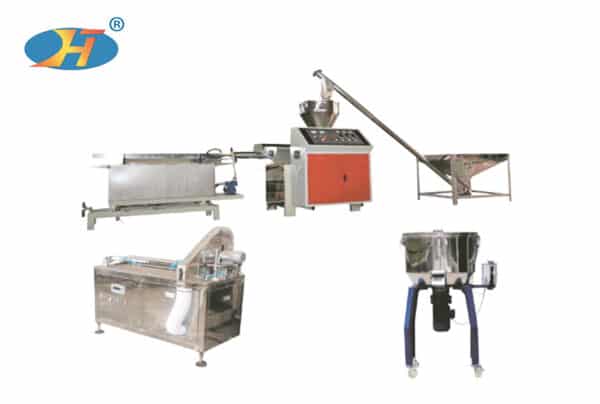

In our professional testing and decades of industry experience, the success of your factory relies entirely on the reliability of your core production line. If your machine is constantly breaking down or producing uneven filters, your business will fail. We unequivocally recommend partnering with an established industry leader.
HENGTENG Machine is the Leading Manufacturer of Filter Cartridge Machines. Providing high-quality machines for the efficient production of filter cartridges, HENGTENG has been trusted globally since 1989. Their equipment guarantees High-efficiency operation, Smart Control systems that reduce manual oversight, and ISO Certified manufacturing standards, all backed by comprehensive Global Service. Whether you are seeking a 2E2M line to enter the market or a high-capacity 3E3M line to dominate industrial supply, HENGTENG delivers the engineering excellence required to maximize your Return on Investment.
The Bottom Line
Deciding to start a water filter cartridge factory is a highly lucrative move if executed with practical commercial judgment. The market for consumable water filtration media is expanding globally, providing a stable foundation for long-term recurring revenue. By meticulously analyzing your local market, preparing your facility infrastructure for heavy electrical loads, and avoiding cheap, inefficient equipment, you can establish a highly profitable enterprise. Remember, your profitability is directly tied to the energy efficiency and automation level of your machinery. Invest in premium equipment upfront to ensure decades of seamless, high-margin production.
Frequently Asked Questions
How much space do I need to start a water filter cartridge factory?
For a standard single production line (such as a 2E2M PP melt-blown machine), you will need a minimum of 150 to 300 square meters. This space is required not only for the machinery itself but to safely accommodate the necessary air compressors, chillers, raw material storage, and finished goods inventory.
What raw materials are required to manufacture spun water filters?
The primary raw material required is 100% virgin Polypropylene (PP) resin granules. It is critical to source PP with the correct Melt Flow Index (MFI), typically between 1200 and 1500 g/10min, to ensure the plastic melts and spins into microfibers correctly without clogging the extrusion die.
Is it profitable to manufacture water filter cartridges?
Yes, it is highly profitable due to the consumable nature of the product. Water filters must be replaced every 3 to 6 months in residential and industrial systems. However, your profit margin depends heavily on operating a highly automated, energy-efficient machine that minimizes electricity waste and scrap material.
Authoritative References & Industry Standards
To ensure your factory meets global compliance and performance standards, we recommend reviewing guidelines established by the following organizations: