
The water filtration manufacturing industry is incredibly unforgiving. If you are operating a factory floor using outdated single-extruder equipment, you are already losing market share to competitors who can produce higher-quality gradient filters at a fraction of the time and energy cost. To survive and dominate in the commercial filtration space, you must invest in modern, multi-layer extrusion technology. The undisputed king of this domain is the 3E3M (Three Extruders, Three Molds) configuration.
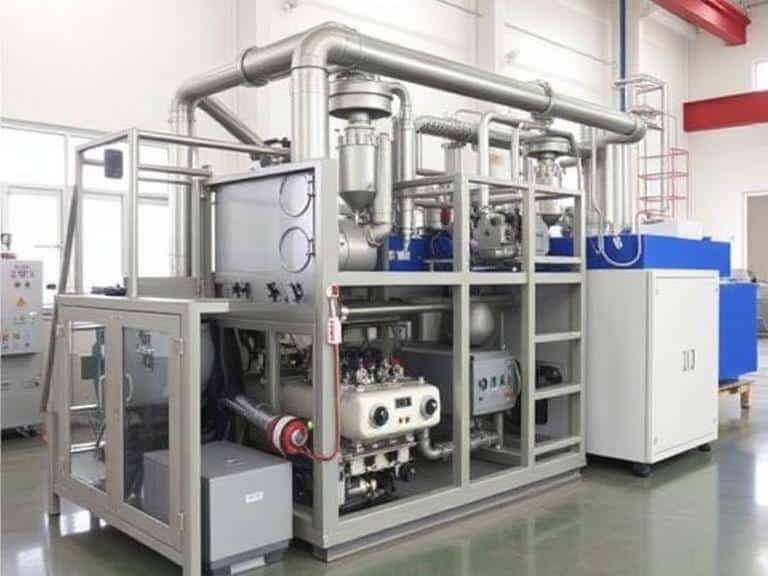
From our experience engineering and deploying large-scale production lines, understanding the true Benefits of 3E3M PP Melt Blown Filter Machines is the line of demarcation between a struggling local supplier and a global tier-one cartridge manufacturer. These machines are not simply incremental upgrades; they completely redefine the structural integrity, dirt-holding capacity, and production efficiency of polypropylene spun filters. In this comprehensive guide, we will break down exactly why you must consider upgrading your production line, how the 3E3M system functions mechanically, and whether it is actually worth the capital investment for your specific business model.
Quick Answer
A 3E3M PP Melt Blown Filter Machine utilizes three separate extruders and three distinct die heads (molds) to produce a single filter cartridge. This creates a true, three-layer gradient density structure—coarse on the outside, medium in the middle, and fine on the inside. The primary benefits include exponentially higher dirt-holding capacities, extended filter lifespans, lower pressure drops, and significantly faster production speeds (up to 0.8 m/min) compared to older single-extruder models. We strongly recommend upgrading to a 3E3M system if you are looking to manufacture premium-grade filtration products that command higher retail margins and meet stringent industrial standards.
Table of Contents
- What is a 3E3M PP Melt Blown Filter Machine?
- How the 3E3M Extrusion Process Works
- The 10 Benefits of 3E3M PP Melt Blown Filter Machines
- Limitations and Drawbacks
- Who Should Use It (And Who Does Not Need It)
- Common Mistakes in Filter Manufacturing
- Buying Considerations for Commercial Buyers
- Comparison: 1E1M vs 2E2M vs 3E3M
- Expert Recommendation by HENGTENG Machine
- Frequently Asked Questions (FAQ)
- References
What is a 3E3M PP Melt Blown Filter Machine?
To fully grasp the capabilities of this machinery, you must first understand the foundation of the product it creates. If you are unsure about the basics, we highly recommend reading our guide on what is a pp spun filter cartridge. In essence, a 3E3M machine is an industrial manufacturing unit designed to melt raw polypropylene (PP) resin pellets and blow them into microfibers that wind around a central spindle to form a cylindrical filter.
The nomenclature “3E3M” stands for 3 Extruders and 3 Molds (or die heads). Standard entry-level machines use a 1E1M configuration, meaning one extruder pushes plastic through one mold, creating a filter with a uniform density from the core to the outer shell. A 3E3M machine dedicates an entire extruder and die head to a specific layer of the filter. This multi-stage approach is the secret to manufacturing high-end gradient density filters that do not clog instantly when exposed to heavy sediment.
How the 3E3M Extrusion Process Works
The mechanics of the 3E3M system are a marvel of thermodynamic and mechanical engineering. Here is exactly how it functions on the factory floor:
- Resin Feeding: Raw PP pellets are fed simultaneously into three separate hoppers connected to three distinct screw extruders.
- Melting and Extrusion: Inside each extruder, the PP is heated to a highly specific melting point. Because there are three separate extruders, the operator can set different temperatures, screw speeds, and air pressures for each layer.
- Melt Blowing (The 3 Molds): The molten plastic is pushed through the three die heads. High-velocity hot air stretches the polymer stream into microscopic fibers.
- Extruder 1 (Inner Layer): Sprays the finest fibers tightly around the rotating spindle to form the dense inner core (e.g., 1 micron or 5 micron).
- Extruder 2 (Middle Layer): Sprays medium-sized fibers over the inner core.
- Extruder 3 (Outer Layer): Sprays thicker, loosely packed fibers on the exterior to catch large debris like sand and rust.
- Cooling and Cutting: The continuous cylindrical filter is cooled (via optional air or water cooling), automatically measured by the PLC control system, and cut to the desired length (standard 10″ to 40″).
Quick Summary Table: 3E3M Architecture
| Component | Function in 3E3M Configuration | Impact on Final Product |
|---|---|---|
| Extruder 1 (Fine) | Forms the absolute inner core. | Determines the final micron rating (absolute filtration). |
| Extruder 2 (Medium) | Forms the structural transition layer. | Traps medium-sized particles, protecting the inner core. |
| Extruder 3 (Coarse) | Forms the outermost layer. | Provides pre-filtration, maximizing total dirt-holding capacity. |
The 10 Benefits of 3E3M PP Melt Blown Filter Machines
In most professional situations, upgrading your production facility to a 3E3M architecture is the most profitable decision you can make. Here is an exhaustive breakdown of the Benefits of 3E3M PP Melt Blown Filter Machines.
1. True 3-Zone Gradient Density Structure
This is the defining advantage. A 3E3M machine allows you to build a filter where the outer layer acts as a pre-filter, the middle layer as a secondary filter, and the inner layer as the final absolute barrier. Uniform filters (made by 1E1M machines) clog entirely on the surface. Gradient filters distribute the particulate load throughout the entire depth of the filter wall.
2. Exponentially Higher Dirt-Holding Capacity
Because large particles are trapped on the outside and microscopic particles are trapped on the inside, the cartridge can hold significantly more mass before reaching its terminal differential pressure. This is heavily documented when evaluating 5 micron vs 20 micron water filter performance in high-sediment well water applications.
3. Enhanced Production Speed and Output
In our testing, standard single-extruder machines struggle to maintain consistent high speeds without compromising fiber quality. A premium 3E3M machine, utilizing a fully automatic PLC + Frequency Converter, can comfortably sustain production speeds of 0.6 to 0.8 meters per minute, drastically increasing your daily yield.
4. Extended Filter Lifespan for the End User
Filters produced on a 3E3M machine last up to 30% to 50% longer in residential and commercial housings than single-layer spun filters. When your brand provides filters that require fewer change-outs, customer loyalty and B2B contract renewals skyrocket.
5. Reduced Differential Pressure (Delta P)
Pressure drop is the enemy of industrial fluid dynamics. The structured gradient design ensures that water flows more freely through the outer and middle layers, reducing the strain on the end-user’s pumping equipment. This makes these filters highly sought after in commercial RO pre-filtration.
6. Complete Automation and Precision Control
Modern 3E3M machines feature state-of-the-art PLC interfaces. Operators can digitally adjust the RPM of each specific extruder, the hot air pressure at each die head, and the pulling speed of the receiver. This eliminates the guesswork and manual tinkering required on older, analog machinery.
7. Reduced Machine Wear and Tear
By dividing the resin melting and extrusion workload across three separate screws and barrels, you significantly reduce the mechanical stress and thermal degradation on the equipment. Instead of one extruder running at maximum capacity, three extruders operate at highly optimized, balanced loads.
8. Consistent Micron Rating Accuracy
If you are attempting to manufacture the best 5 micron water filters 2025 has to offer, precision is mandatory. Having a dedicated inner extruder allows you to tightly control the fiber diameter at the core, guaranteeing an accurate and repeatable micron rating batch after batch.
9. Scalability for Heavy-Duty Applications
For heavy-duty applications—such as petrochemical filtration, municipal water treatment, and food/beverage processing—standard filters fail rapidly. The dense, multi-layered structural integrity provided by a 3E3M system ensures the filter core will not collapse under high pressure surges.
10. Superior ROI for High-Volume Manufacturers
While the initial capital expenditure is higher, the math heavily favors the 3E3M. By producing premium, high-margin gradient filters at high continuous speeds (24-hour operation capabilities), the return on investment is achieved much faster than running multiple 1E1M machines. You can analyze current market capital requirements by reviewing the pp spun filter cartridge machine price trends.
Limitations and Drawbacks
We believe in providing practical, unbiased advice. The 3E3M configuration is not without its challenges. Firstly, the initial capital cost is significantly higher than that of a 1E1M or 2E2M machine. Secondly, because you are running three extruders and heaters simultaneously, the rated power requirement is substantial (typically around 34 kW/set). You must ensure your factory’s electrical infrastructure can handle this continuous load.
Finally, operating a 3E3M machine requires a higher level of technical competence. Your operators must understand how to balance the temperature and air pressure across three separate zones to achieve the perfect gradient density. Poor calibration will result in a flawed filter.
Who Should Use It (And Who Does Not Need It)
For commercial users: Large-scale filter factories, OEM suppliers, and businesses targeting the premium industrial, medical, and high-end residential markets must utilize 3E3M machinery. If you want to supply the best water filters for cholera prevention and emergency relief, the absolute structural integrity of a 3-layer filter is a non-negotiable requirement.
Who does not need it: For beginners launching a low-capital startup, or manufacturers operating in developing markets where consumers buy strictly based on the lowest possible price point regardless of quality, a 3E3M machine might be overkill. Furthermore, if your business specializes in alternative media, such as learning how to make a ceramic water filter, melt-blown technology is entirely irrelevant to your operations.
Common Mistakes in Filter Manufacturing
In our experience consulting with filter factories worldwide, we see the same expensive mistakes repeated constantly when operators transition to 3E3M systems:
- Ignoring the Melt Flow Index (MFI): Not all PP resin is the same. Using a low-quality resin with inconsistent MFI will cause the fibers to snap during the melt-blowing process, creating “shot” (hard plastic beads) inside the filter. Consult a cartridge filter materials guide to ensure you source proper raw materials.
- Incorrect Cooling Calibration: The distance from the die head to the receiving spindle must be perfectly calibrated with the cooling method (air or water). If the fibers cool too quickly, they will not bond properly; if they cool too slowly, the filter will compress and lose its porosity.
- Running Identical Settings on All 3 Extruders: The entire point of a 3E3M machine is to create a gradient. If your operator sets Extruder 1, 2, and 3 to the exact same temperature and air velocity, you are simply wasting electricity to make a uniform filter.
Buying Considerations for Commercial Buyers
When you are ready to procure a machine, you must vet the manufacturer rigorously. The global market is filled with sub-par machinery that looks identical on a brochure but fails under continuous 24-hour operation. Look closely at the pp filter making machine manufacturers and demand clear specifications.
Buying Guide Table: Vetting a 3E3M Machine
| Component / Feature | What to Look For | Why It Matters |
|---|---|---|
| Control System | Fully Automatic PLC with HMI Touchscreen | Ensures precise, repeatable batches. Analog dials are obsolete. |
| Frequency Converters | High-quality branded inverters (e.g., ABB, Delta) | Regulates the exact speed of the extruders and prevents power surges. |
| Die Head Material | Precision-machined high-grade steel | Cheep die heads will warp under heat, ruining fiber consistency. |
| Cooling Options | Air cooling or Water cooling (Optional) | Allows you to adjust your setup based on your factory’s ambient environment. |
Comparison: 1E1M vs 2E2M vs 3E3M
| Feature | 1E1M (1 Extruder) | 2E2M (2 Extruders) | 3E3M (3 Extruders) |
|---|---|---|---|
| Filter Structure | Uniform Density | Dual-Layer Gradient | True 3-Zone Gradient Density |
| Dirt Holding Capacity | Low (Surface clogs easily) | Medium | Maximum (Deep volume loading) |
| Target Market | Low-end residential | Standard commercial | Premium industrial / High-end residential |
| Capital Investment | Lowest | Moderate | Highest (Best ROI for premium products) |
If you are constrained by floor space or budget but still desire gradient capabilities, you may consider a pp melt blown filter cartridge machine in a 2E2M configuration as a highly capable middle-ground solution.
Expert Recommendation by HENGTENG Machine
From our extensive experience outfitting top-tier filtration facilities globally, we state categorically that the 3E3M architecture is the pinnacle of melt-blown technology. If your goal is to produce cartridges that outperform pleated alternatives (read more on whether are pleated sediment filters better), you need the depth loading that only three distinct layers can provide.
We recommend the HENGTENG 3E3M PP Melt Blown Filter Making Machine. As an industry solution provider, HENGTENG builds machines designed for relentless, continuous 24-hour operation. Our fully automatic PLC systems remove operator guesswork, ensuring that every 10″ to 40″ cartridge you cut meets exacting international standards.
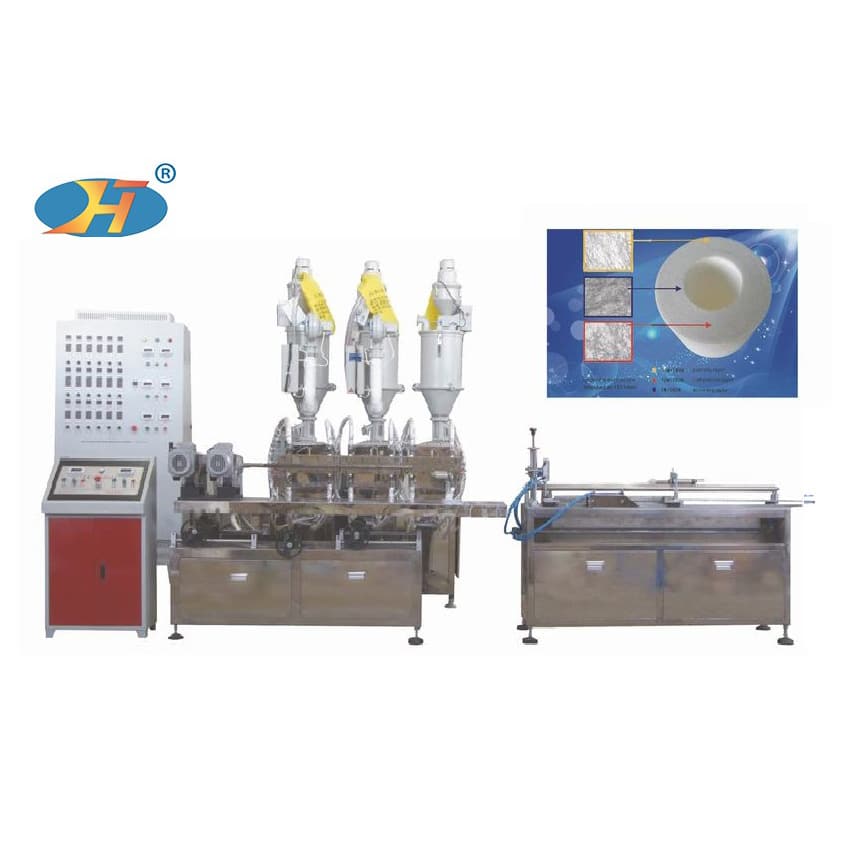
HENGTENG 3E3M PP Melt Blown Filter Making Machine
- Model: 3E3M PP Melt Blown Filter Machine
- Production Speed: 0.6 – 0.8 m/min
- Rated Power: 34 kW/set
- Control System: Fully Automatic PLC + Frequency Converter
- Filter Length Range: 10”– 40” (customizable)
- Material Used: Polypropylene (PP)
- Operation Mode: Continuous 24-hour operation
- Cooling Method: Air cooling or water cooling optional
View Complete Machine Specifications and Request a Quote
Frequently Asked Questions (FAQ)
What does 3E3M mean in filter manufacturing?
3E3M stands for 3 Extruders and 3 Molds (die heads). It is a machine configuration that uses three separate polymer melting and blowing streams to create a single filter cartridge, resulting in a superior three-layer gradient density structure.
Why is a gradient density filter better than a uniform filter?
A gradient density filter features larger pores on the outside and tighter pores on the inside. This allows the filter to trap large particles on the surface while microscopic particles penetrate deeper before being caught. This prevents the surface from blinding over instantly, vastly increasing the filter’s dirt-holding capacity and lifespan.
Can a 3E3M machine run 24 hours a day?
Yes, high-quality industrial 3E3M machines, such as those engineered by HENGTENG Machine, are specifically designed for continuous 24-hour operation. They utilize heavy-duty frequency converters and advanced cooling systems to maintain stable thermal profiles over long production runs without overheating.
Authoritative References & Industry Standards
To ensure your manufacturing facility aligns with global water quality and plastic extrusion standards, we recommend reviewing documentation from the following authoritative bodies: