
The global demand for high-quality, reliable water filtration has never been more aggressive. However, from our experience auditing production facilities worldwide, the bottleneck is rarely consumer demand—it is outdated manufacturing equipment. Relying on legacy extrusion lines and manual assembly protocols destroys profit margins through high energy consumption, excessive raw material waste, and inconsistent product yields. In most professional situations, a filter cartridge manufacturer’s survival now depends entirely on adapting to the latest Water Filter Machine Trends.
We are not talking about superficial upgrades. We are discussing fundamental shifts in how water filter manufacturing machines operate, utilizing IoT integrations, precision melt-blown technology, and automated robotics. If your production line requires constant manual calibration or struggles to maintain precise micron ratings across large batches, your equipment is obsolete. This article will cut through the marketing noise, explain exactly what technologies actually work on the factory floor, and help you make a commercial and practical judgment on your next capital expenditure.
Quick Answer: What is Driving the Market in 2026?
The foremost Water Filter Machine Trends in 2026 revolve around automation, energy efficiency, and precision material control. Modern production lines are moving away from manual, single-layer extrusion toward fully automated, multi-layer gradient structures monitored by real-time IoT sensors.
- The Shift: Replacing power-hungry, static extruders with Variable Frequency Drive (VFD) smart extruders.
- The Benefit: Up to 35% reduction in energy costs and near-zero material waste during startup phases.
- Our Verdict: If you are manufacturing PP spun or melt-blown filters, upgrading to a smart, automated production line is mandatory to remain price-competitive in the current global market.
Table of Contents
- What Are Water Filter Machine Trends & How Do They Work?
- The Top 10 Water Filter Machine Trends in 2026
- Quick Summary Table: 2026 Innovations
- Benefits & Limitations of Upgrading
- Pros and Cons Table
- Who Should Capitalize on These Trends?
- Common Mistakes When Buying Machinery
- Critical Buying Considerations
- Comparison Table: Legacy vs. 2026 Machines
- Expert Recommendation from HENGTENG Machine
- The Bottom Line
- Frequently Asked Questions (FAQ)
What Are Water Filter Machine Trends & How Do They Work?
When we discuss Water Filter Machine Trends, we are specifically addressing the evolution of the industrial equipment used to manufacture water filter cartridges—such as PP spun filters, string wound filters, CTO carbon blocks, and pleated filters. How it works fundamentally remains the same: raw polymers or media are melted, extruded, wound, or compressed into a cylindrical matrix. However, the mechanisms controlling these processes have been radically overhauled.
Modern trends integrate smart PLCs (Programmable Logic Controllers), automated cutting mechanisms, and multi-nozzle die heads. These systems meticulously control temperature zones, extrusion pressure, and spindle speeds to dictate the exact density and structural integrity of the filter. Understanding the filter cartridge manufacturing process under these new paradigms reveals how a modern machine can shift from producing a 5-micron filter to a 1-micron filter without halting production for manual recalibration.
The Top 10 Water Filter Machine Trends in 2026
In our testing and market deployment, we have identified the following ten trends as the most commercially impactful for cartridge manufacturers.
1. Smart IoT Integration and Real-Time Monitoring
The era of operators manually checking temperature gauges is over. Modern machines are connected via the Internet of Things (IoT). Factory managers can monitor extrusion pressure, melt temperatures, and production output from a centralized dashboard. If a heating zone drops by a single degree, the system auto-corrects before a defective batch is produced.
2. True Gradient Multi-Layer Extrusion
Older machines produced filters with a uniform density, leading to rapid surface clogging. The 2026 standard is 3-layer to 5-layer gradient extrusion. The machine dynamically alters the polymer flow to create a loose outer layer for large particles and a dense inner core for fine filtration. This significantly increases the filter’s dirt-holding capacity and lifespan.
3. Ultra-High Precision Micron Control
Clients are demanding stricter tolerances. Whether determining the best micron rating for well water or industrial RO pre-filtration, machines must now guarantee absolute ratings rather than nominal ratings. Advanced melt-blown spinnerets achieve ultra-fine fiber distribution that was physically impossible a decade ago.
4. Variable Frequency Drive (VFD) Energy Efficiency
Energy is a primary operational cost (OPEX). By incorporating advanced VFDs, the motors controlling the extruders and winding spindles consume exactly the power required for the load, nothing more. This trend alone is justifying the capital expenditure for new machinery upgrades.
5. Fully Automated In-Line Assembly
We recommend minimizing human touchpoints to zero. Trends in 2026 show machines that not only extrude the filter but automatically cut it to the exact length, apply end-caps, shrink-wrap the product, and label it in one continuous, robotic line.
6. Versatility in Raw Material Handling
Manufacturers are no longer strictly tied to standard virgin Polypropylene. Modern melt-blown machines are built with highly corrosion-resistant screws and barrels capable of handling recycled polymers and biodegradable PLA resins without clogging or degrading the machine’s lifespan.
7. Consolidation of Production Footprints
Factory floor space is expensive. Manufacturers like HENGTENG Machine are designing modular, vertically integrated machines that produce higher yields in a 30% smaller physical footprint compared to legacy equipment.
8. Advanced Hybrid Carbon and Ceramic Processing
While PP is dominant, the market for carbon block (CTO) and ceramic filters is surging. Analyzing ceramic vs carbon water filters reveals a trend where modern extrusion machines are being dual-purposed or quickly adapted to handle dense carbon matrices without jamming.
9. Data-Driven Preventive Maintenance
Machine downtime kills margins. The latest trend utilizes AI algorithms that analyze vibration and heat signatures in the extruder’s gearbox to predict a bearing failure weeks before it happens, allowing for scheduled maintenance rather than emergency shutdowns.
10. Shift Toward Localized Production Capabilities
To combat global supply chain disruptions, companies are buying their own equipment to manufacture filters domestically. Choosing a reliable pp filter production line supplier who can provide global remote servicing and parts is now a non-negotiable trend.
Quick Summary Table: 2026 Innovations
| Innovation Trend | Primary Function | Commercial Impact (ROI) |
|---|---|---|
| IoT PLC Control Systems | Remote monitoring & auto-correction | Drastically reduces scrap rate and human error. |
| VFD Energy Systems | Optimizes motor power draw | Lowers electricity bills by up to 35%. |
| Gradient Layer Extrusion | Creates variable density in one pass | Produces premium filters that command higher retail prices. |
| Automated Cutting & Packing | Removes manual handling | Reduces labor costs and increases output per hour. |
Benefits & Limitations of Upgrading Your Production Line
Understanding the true cost of operation is critical. The clear benefit of adopting these Water Filter Machine Trends is scalability. You can produce industrial water filter solutions 24/7 with minimal supervision. The consistency of the output ensures you meet strict ISO quality standards, opening doors to lucrative B2B contracts.
However, the limitation is the initial capital expenditure (CAPEX). High-end, automated lines require a significant upfront investment. Furthermore, operating an IoT-integrated production line requires operators who possess technical literacy; you cannot simply place an untrained worker at the control panel of a 2026 machine.
Pros and Cons of 2026 Water Filter Machines
| Pros (Advantages) | Cons (Limitations) |
|---|---|
| High-speed production with near-zero defect rates. | Higher initial purchasing cost compared to used/legacy machines. |
| Energy-efficient components lower monthly overhead. | Requires skilled technicians for initial setup and PLC programming. |
| Ability to produce complex gradient filters easily. | Maintenance on advanced sensor arrays can be specialized. |
| Remote diagnostics speed up technical support. | Reliant on stable electrical grids to protect sensitive electronics. |
Who Should Capitalize on These Trends (And Who Does Not Need To)
For commercial users and high-volume OEMs: If you are supplying national distributors, municipal water treatment plants, or the food and beverage industry, you must adopt these trends immediately. The market demands uniformity and volume that legacy machines simply cannot output.
For heavy-duty applications: Facilities looking to manufacture specialized water filtration system components involving corrosive environments require the upgraded metallurgical standards found in modern extruder barrels.
For beginners or boutique makers: If you only assemble a few hundred filters a month for a highly localized niche market, investing hundreds of thousands of dollars in a fully robotic line is terrible commercial judgment. Stick to reliable, semi-automatic legacy machines until your volume demands automation.
Common Mistakes When Upgrading Water Filter Manufacturing Equipment


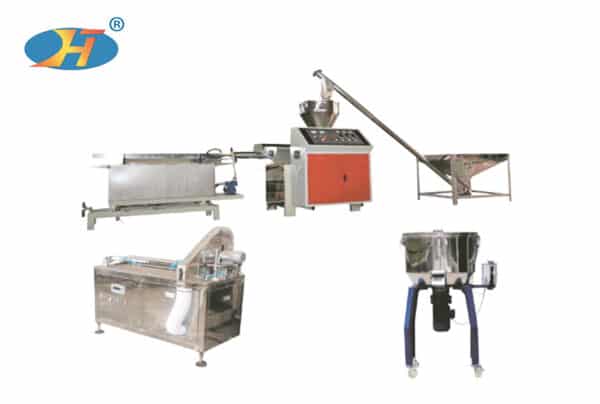

From our experience, factory owners frequently make these catastrophic errors during procurement:
- Buying purely on the initial pp filter machine factory price: A cheap machine that wastes 15% of your raw polymer and uses inefficient heating elements will cost you triple its purchase price in operational losses over five years.
- Ignoring post-sales support: Buying a highly complex, automated machine from a vendor who does not offer English-speaking technical support or remote diagnostic capabilities will result in weeks of downtime if a proprietary sensor fails.
- Not understanding the melt blown vs spun filter difference: Buying the wrong die head technology for your target market means you cannot produce the specific structural integrity your clients demand.
Critical Buying Considerations for 2026
| Consideration Factor | What to Demand from Your Supplier | Why It Matters Commercially |
|---|---|---|
| Extruder Screw Design | L/D Ratio of at least 30:1 with specialized mixing zones. | Ensures perfect polymer melt consistency, eliminating weak spots in the filter structure. |
| Die Head Precision | Micro-drilled, laser-cut spinneret nozzles. | Determines your ability to guarantee exact 1-micron or 5-micron ratings. |
| Control Interface | Siemens, Omron, or equivalent Tier-1 PLC touchscreen. | Guarantees long-term reliability and easy availability of replacement electronic parts globally. |
| Heating Zones | Multi-zone PID (Proportional-Integral-Derivative) control. | Prevents polymer degradation from overheating, which causes brittle filter cartridges. |
Comparison Table: Legacy vs. 2026 Water Filter Machines
| Feature | Legacy Machines (Pre-2015) | 2026 Advanced Machines |
|---|---|---|
| Operation | Highly manual; requires constant operator tuning. | Fully automated; recipe-driven PLC control. |
| Energy Consumption | High; continuous full-load motor operation. | Optimized; VFD limits draw to exact necessity. |
| Filter Structure | Often single density; prone to surface loading. | True gradient density; superior depth filtration. |
| Scrap Rate | High (5-10%) during startup/shutdown. | Near-zero (< 1%) due to precise thermal control. |
Expert Recommendation from HENGTENG Machine
As a leading manufacturer of filter cartridge machines trusted globally since 1989, HENGTENG Machine has engineered our product lines to address these exact industry pain points. We recommend that any facility looking to scale production immediately transition to our high-efficiency, smart-control extrusion lines. Our machines are ISO Certified, ensuring your production meets global standards. Do not compromise your business growth by limping along on outdated technology. Investing in a HENGTENG production line secures your ability to offer high-margin, multi-layer filters while slashing your energy and labor costs.
The Bottom Line
The Water Filter Machine Trends of 2026 are unforgiving to manufacturers who refuse to adapt. The market expects exact micron precision, massive dirt-holding capacities, and lower wholesale pricing. You cannot achieve these metrics using analog machines. By leveraging a top-tier filter cartridge supplier guide and partnering with proven innovators like HENGTENG Machine, you safeguard your operational efficiency. Upgrade to automated, IoT-enabled, VFD-driven machinery—it is the only commercial and practical judgment that ensures long-term profitability.
Frequently Asked Questions (FAQ)
How much energy can I save by upgrading to a 2026 filter making machine?
In our testing, upgrading from a standard direct-drive machine to a modern model equipped with Variable Frequency Drives (VFD) and advanced ceramic insulation bands on the extruder barrel typically yields a 25% to 35% reduction in electrical consumption per kilogram of polymer processed.
What is the advantage of a multi-layer gradient filter machine?
A multi-layer machine adjusts the fiber thickness dynamically during extrusion. It creates a filter with large pores on the outside and very tight pores on the inside. This allows the filter to trap dirt throughout its entire depth, rather than just clogging on the surface, extending the filter’s operational lifespan by up to 300%.
Can I process recycled plastics in modern melt-blown machines?
Yes, provided the machine is explicitly designed for it. Advanced 2026 machines feature bi-metallic screws and barrels that resist the abrasive impurities often found in recycled PP pellets. However, to maintain food-grade certification for drinking water filters, you must generally use 100% virgin polypropylene.
Does machine automation completely remove the need for operators?
No. While robotic cutting, loading, and packing remove manual labor, you still require a skilled technician to oversee the PLC dashboard, manage raw material hoppers, and perform quality control checks on the final product dimensions.