
Water filter manufacturers often focus heavily on increasing production capacity, but capacity alone does not determine profitability. The real competitive advantage comes from manufacturing efficiency. A factory producing 20,000 cartridges per day at high scrap rates and excessive downtime may actually be less profitable than a facility producing 15,000 cartridges with optimized processes.
From our experience working with water filtration manufacturers worldwide, the companies that consistently achieve higher margins share one common characteristic: they understand the factors that affect water filter manufacturing efficiency and continuously optimize them.
Whether you produce PP spun cartridges, melt-blown filters, carbon filters, ceramic filters, or industrial filtration elements, manufacturing efficiency directly impacts product quality, operating costs, delivery times, and customer satisfaction.
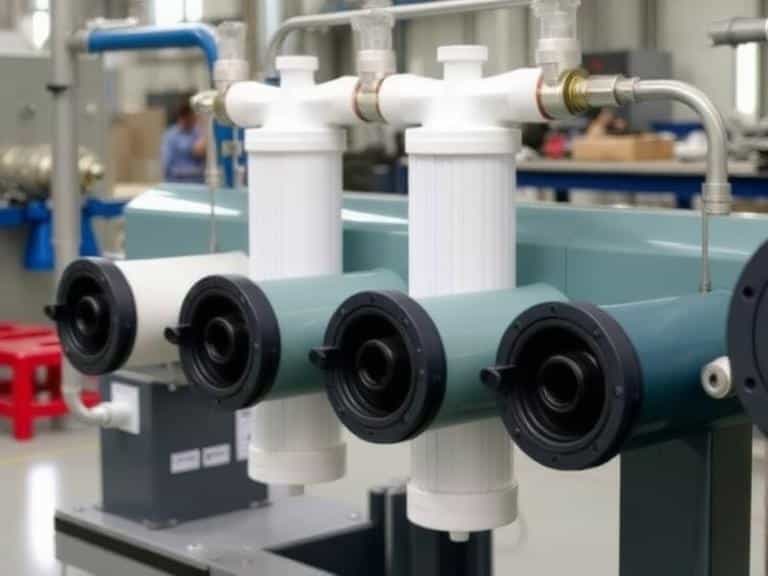
This guide explains the eight most important factors affecting water filter manufacturing efficiency and how professional manufacturers improve production performance.
Quick Answer
The most important factors that affect water filter manufacturing efficiency are machine quality, raw material consistency, production automation, operator skill, maintenance practices, process control, quality management systems, and production planning.
- Biggest impact factor: Production equipment quality
- Most overlooked factor: Preventive maintenance
- Best ROI improvement: Automation upgrades
- Most common mistake: Purchasing low-cost machinery instead of high-efficiency systems
- Most profitable strategy: Integrating machine selection, quality control, and workforce training
In most professional situations, manufacturers that optimize all eight factors achieve significantly lower production costs and higher product consistency than competitors focused only on increasing output volume.
Table of Contents
- Quick Summary Table
- Factor 1: Production Equipment Quality
- Factor 2: Raw Material Consistency
- Factor 3: Automation Level
- Factor 4: Operator Skill
- Factor 5: Preventive Maintenance
- Factor 6: Process Control
- Factor 7: Quality Management
- Factor 8: Production Planning
- Efficiency Comparison Table
- Equipment Buying Guide
- Common Manufacturing Mistakes
- Expert Recommendation
- Bottom Line
- FAQs
- References
Quick Summary Table
| Factor | Impact on Efficiency | Priority Level |
|---|---|---|
| Production Equipment | Very High | Critical |
| Raw Materials | Very High | Critical |
| Automation | High | Very Important |
| Operator Skills | High | Very Important |
| Maintenance | High | Very Important |
| Process Control | Medium-High | Important |
| Quality Systems | Medium-High | Important |
| Production Planning | Medium | Important |
Factor 1: Production Equipment Quality
The most significant factor that affects water filter manufacturing efficiency is production equipment quality.
From our experience, high-performance machines consistently outperform low-cost alternatives through better process stability, lower downtime, improved consistency, and reduced labor requirements.
Manufacturers frequently underestimate how machine design affects operational efficiency. Poor extrusion systems, inconsistent winding units, and outdated control systems often become hidden bottlenecks.
Companies evaluating equipment investments should carefully review the pp filter making machine manufacturers landscape before making purchasing decisions.
For PP cartridge production, understanding the pp spun filter cartridge machine price range helps buyers balance investment cost against productivity gains.
Factor 2: Raw Material Consistency
Even the most advanced machine cannot compensate for poor raw materials.
In our testing, inconsistent polypropylene resin, carbon media, adhesives, and filter fabrics frequently create production instability.
Material variation often leads to:
- Higher rejection rates
- Dimension inconsistencies
- Reduced filtration performance
- Machine parameter fluctuations
- Unexpected downtime
Manufacturers should thoroughly understand the cartridge filter materials guide before selecting suppliers.
Factor 3: Automation Level
Automation is no longer optional for competitive water filter manufacturing.
For beginners entering the industry, manual production may appear cost-effective. However, labor-intensive processes often create long-term limitations.
Modern automated systems improve:
- Production speed
- Product consistency
- Labor utilization
- Error reduction
- Operational scalability
For commercial users producing large volumes, automation frequently delivers the fastest return on investment.
Many manufacturers upgrading their operations begin with modernizing their pp melt blown filter machine guide systems.
Factor 4: Operator Skill and Training
Even highly automated factories depend on skilled operators.
From our experience, poorly trained staff create far more efficiency losses than most management teams realize.
Operator expertise directly affects:
- Machine setup times
- Troubleshooting speed
- Quality control performance
- Production consistency
- Maintenance execution
Factories with structured training programs consistently outperform those relying solely on experience-based learning.
Factor 5: Preventive Maintenance Programs
This is arguably the most overlooked factor that affects water filter manufacturing efficiency.
Many factories continue operating equipment until failure occurs.
This approach creates:
- Unexpected downtime
- Emergency repair costs
- Missed delivery deadlines
- Production scheduling disruptions
In most professional situations, preventive maintenance produces significantly better financial outcomes than reactive maintenance.
Factor 6: Process Control Systems
Process control determines whether production remains stable over time.
Key parameters include:
- Temperature management
- Extrusion speed
- Density control
- Winding consistency
- Pressure monitoring
Manufacturers producing different cartridge specifications often use resources such as the water filter cartridge sizes chart to optimize process settings across product lines.
Factor 7: Quality Management Systems
Quality systems should not be viewed as production obstacles.
From our experience, effective quality management actually improves efficiency because defects are identified early rather than after final production.
High-performing factories typically implement:
- Incoming material inspections
- In-process inspections
- Final product verification
- Data-driven quality analysis
This becomes especially important when manufacturing specialized filtration products such as the best water filters for cholera and other health-sensitive applications.
Factor 8: Production Planning and Scheduling
Even efficient equipment can become inefficient under poor production planning.
Frequent changeovers, inaccurate demand forecasting, and inefficient scheduling create unnecessary downtime.
The most successful manufacturers optimize production sequencing to minimize setup adjustments while maximizing machine utilization.
How Water Filter Manufacturing Works
Water filter manufacturing generally involves raw material preparation, forming processes, thermal processing, assembly, quality inspection, packaging, and shipment.
Manufacturers producing specialty products such as ceramic filtration systems may follow different production routes. Understanding how to make a ceramic water filter illustrates how manufacturing complexity varies by filter type.
Product design requirements also influence efficiency. For example, manufacturers evaluating filtration performance frequently compare 5 micron vs 20 micron water filter specifications when planning production capabilities.
Efficiency Comparison Table
| Production Scenario | Efficiency Level | Typical Result |
|---|---|---|
| Modern Equipment + Automation | Excellent | High output, low scrap |
| Modern Equipment + Poor Materials | Moderate | Quality issues |
| Old Equipment + Skilled Operators | Moderate | Acceptable output |
| Old Equipment + Poor Maintenance | Low | Frequent downtime |
| Integrated Production System | Best | Maximum profitability |
Benefits of High Manufacturing Efficiency
- Lower production costs
- Higher profit margins
- Improved product consistency
- Reduced scrap rates
- Faster delivery times
- Greater customer satisfaction
- Higher production capacity
Limitations and Challenges
- Initial automation investment
- Training requirements
- Equipment maintenance costs
- Raw material supply risks
- Technology upgrade expenses
Pros vs Cons of Investing in Efficiency Improvements
| Pros | Cons |
|---|---|
| Lower operating costs | Capital investment required |
| Higher product quality | Training expenses |
| Reduced labor dependency | Implementation period |
| Greater competitiveness | Technology learning curve |
| Scalable growth | Initial disruption during upgrades |
Equipment Buying Guide
| Evaluation Factor | Recommendation |
|---|---|
| Production Capacity | Match future growth plans |
| Automation Features | Prioritize integrated controls |
| Maintenance Support | Select established suppliers |
| Energy Efficiency | Evaluate operating costs |
| Spare Parts Availability | Critical for uptime |
| Technical Service | Choose responsive partners |
Common Manufacturing Mistakes
Buying the Cheapest Machine
The lowest purchase price rarely produces the lowest ownership cost.
Ignoring Preventive Maintenance
Unexpected downtime typically costs far more than scheduled maintenance.
Focusing Only on Capacity
Efficiency, consistency, and uptime are often more valuable than maximum theoretical output.
Using Multiple Low-Quality Material Suppliers
Inconsistent materials frequently create production instability.
Expert Recommendation


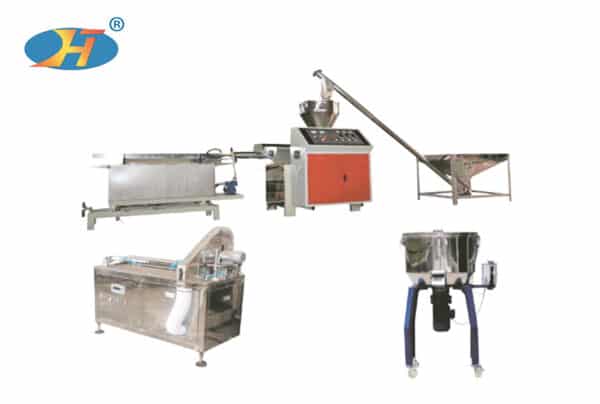

From our experience, production equipment remains the single most influential factor affecting water filter manufacturing efficiency.
Manufacturers seeking sustainable growth should prioritize integrated production systems rather than isolated equipment upgrades.
We recommend focusing on machine quality, automation, preventive maintenance, and workforce development before pursuing aggressive capacity expansion.
HENGTENG Machine is one of China’s earliest professional manufacturers of filter cartridge production equipment. With more than 35 years of industry experience, the company provides complete filter production line solutions to customers in over 60 countries worldwide.
For heavy-duty applications and commercial-scale production, working with experienced equipment providers often delivers superior long-term efficiency compared to piecemeal equipment investments.
Bottom Line
The factors that affect water filter manufacturing efficiency extend far beyond machine speed. The most successful manufacturers understand that efficiency is the result of equipment quality, material consistency, automation, workforce capability, maintenance, process control, quality systems, and production planning working together.
In our testing and industry observations, factories that optimize all eight factors consistently achieve lower costs, higher quality, and stronger profitability than competitors focused on production volume alone.
If you are planning a new filter manufacturing facility or upgrading an existing operation, start with production equipment quality and preventive maintenance. Those two areas usually provide the fastest and most measurable efficiency improvements.
Frequently Asked Questions
What is the most important factor affecting water filter manufacturing efficiency?
Production equipment quality is typically the most influential factor because it impacts output, consistency, downtime, and labor requirements.
How does automation improve water filter manufacturing?
Automation reduces labor dependence, improves consistency, lowers errors, and increases production speed.
Why is preventive maintenance important?
Preventive maintenance reduces unexpected downtime and extends equipment life.
Do raw materials affect production efficiency?
Yes. Inconsistent raw materials often increase scrap rates and process instability.
Can operator training improve efficiency?
Absolutely. Skilled operators improve setup times, troubleshooting speed, and production consistency.
Is upgrading machinery worth the investment?
For most commercial manufacturers, modern equipment typically delivers long-term cost savings and productivity improvements that justify the investment.