
In municipal filtration infrastructure, high-throughput food and beverage processing, industrial manufacturing, and residential whole-house filtration, the 20-inch Big Blue and Slimline architectures serve as critical performance benchmarks. These high-volume systems are built to process massive flow rates while managing high particle loads. Yet, procurement departments and commercial water treatment specialists often make a major error: they treat these consumable elements like basic commodities. They overlook the deep structural parameters—such as gradient pore density, core extrusion collapse thresholds, and chemical passivity—that dictate long-term system efficiency.
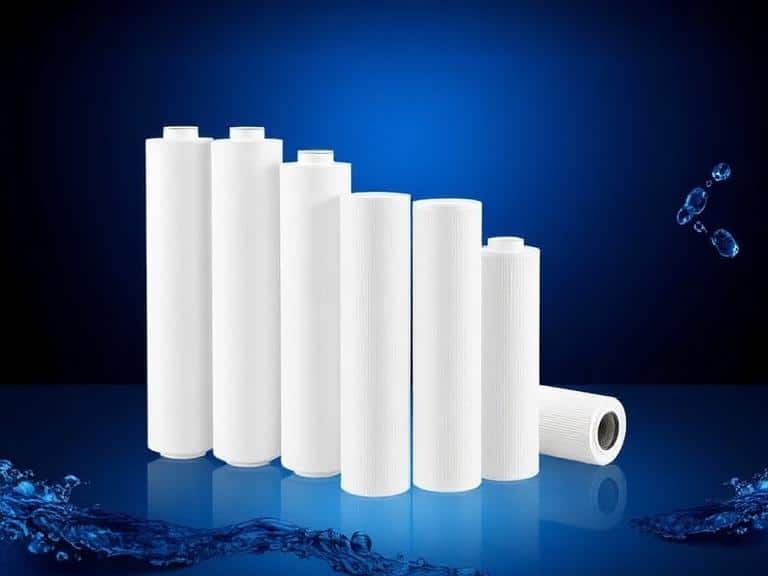
From our experience in material design and advanced automated machinery development, true lifecycle optimization is impossible when using cartridges that dump particles during hydraulic surges or suffer from premature surface blinding. A cheap cartridge that requires bi-weekly manual changeouts quickly destroys operational profitability. This technical review evaluates the 6 best 20 inch water filter cartridges available in the global market, analyzing their material design, filtration mechanics, and structural limitations to guide high-efficiency procurement.
Strategic Content Map
- 1. Technical Evaluation Matrix: Best 20 Inch Water Filter Cartridges
- 2. The Engineering Mechanics of Fluid Separation and Surface Blinding
- 3. In-Depth Technical Analysis of the 6 Best 20 Inch Elements
- 4. Manufacturing Quality Metrics: Internal Stress and Pore Distribution
- 5. Commercial Procurement Frequently Asked Questions (FAQs)
- 6. Professional Technical References
1. Technical Evaluation Matrix: Best 20 Inch Water Filter Cartridges
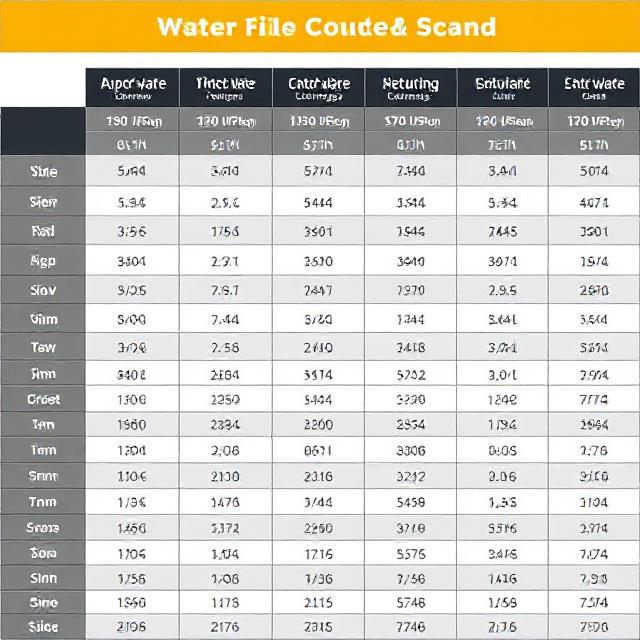
To establish a reliable baseline for mechanical engineers, factory managers, and water plant operators, the table below categorizes the leading industrial configurations based on material architecture, absolute micron precision, and optimal application scenarios.
| Cartridge Profile & Type | Micron Rating / Efficiency | Primary Material Architecture | Optimal Industrial Application |
|---|---|---|---|
| HENGTENG Premium Gradient Polypropylene | 1 to 5 Micron (True Progressive Gradient) | 100% Pure Virgin Melt-Blown Polypropylene | RO Pre-treatment, Desalination, Whole-House Sediment Stripping |
| Pentair Pentek DGD-5020 Dual-Gradient | 50 Micron Outer / 5 Micron Inner | Spun Polypropylene Multi-Layer Matrix | High-Turbidity Well Water, Municipal Pre-Filtration |
| Hydronix CB-45-2005 Carbon Block | 5 Micron Nominal | Extruded Acid-Washed Coconut Shell Carbon | Chloramine Reduction, Volatile Organic Compound Stripping |
| Harmsco Premium Pleated Polyester | 0.35 to 20 Micron Absolute Range | Pleated Reusable Polyester Fabric with PVC Core | Cooling Tower Loops, High-Flow Industrial Water Recycle |
| Neo-Pure MB-45200-05 Melt Blown | 5 Micron Density Specific | Thermally Bonded Microfiber Polypropylene | Boutique Beverage Processing, Light Commercial Ingress Protect |
| Watts WPC5B20 Pleated Cellulose-Polyester | 5 Micron High-Capacity | Cellulose and Synthetic Fiber Blend | Low-Cost Utility Water Loops, Rainwater Harvesting Separation |
2. The Engineering Mechanics of Fluid Separation and Surface Blinding
Evaluating the best 20 inch water filter cartridges requires looking past basic nominal retention ratings. The underlying science of depth filtration depends on a progressive density gradient. A premium melt-blown element must feature larger pore sizes on its outer perimeter to capture coarse sand and rust scale, while its inner core should feature highly compressed microfibers to capture fine colloidal silts. Without this progressive density structure, the element will suffer from immediate surface blinding. Coarse particles quickly block the outer layer, rendering the deep inner storage matrix completely useless and causing a sharp, costly pressure drop across your system housings.
Furthermore, when designing complex, multi-tiered commercial systems, understanding the unique roles of chemical and mechanical separation stages is essential. For example, operators must carefully evaluate the difference between CTO and UDF filters to ensure that chlorine gas removal works hand-in-hand with fine particle interception. Placing a dense carbon block ahead of a sediment pre-filter will quickly plug the carbon’s micro-pores with raw sand, ruining the carbon’s adsorption capability and drastically increasing replacement overhead. For specialized emergency operations, learning how to build your own water filter can help clarify the underlying fluid mechanics of layered granular media beds.
3. In-Depth Technical Analysis of the 6 Best 20 Inch Elements
1. HENGTENG Premium Gradient Polypropylene Element



The HENGTENG progressive gradient polypropylene cartridge sets a clear performance standard for high-volume commercial pre-filtration. Manufactured from pure virgin polypropylene fibers without any added chemical binders or surfactants, it guarantees zero extractable residues that could contaminate ultra-pure process loops. The element features an advanced multi-zone depth matrix that delivers reliable multi-tier separation, trapping large contaminants in its outer layers while reserving the dense inner core for fine sub-micron particles.
What sets this element apart from competitors is its high structural resistance to channel fracturing and core compression. Under intense water hammer conditions, cheaper melt-blown filters frequently deform, causing the compressed pores to stretch open and dump captured contaminants directly downstream into expensive reverse osmosis membranes. This cartridge maintains its structural integrity under severe differential pressures, providing a dependable option for multi-shift industrial plants, municipal treatment hubs, and global distributors who require consistent, uncompromised performance.
Industrial Engineering Legacy of HENGTENG Machine
HENGTENG Machine is a technology-driven developer and leading manufacturer of filter cartridge machines, built upon decades of mechanical engineering experience and trusted globally since 1989. We deliver high-efficiency, smart-control, ISO-certified automated production equipment that allows manufacturers to control pore distribution and web density with absolute precision. By combining high-output automated workflows with direct factory service, we empower companies worldwide to produce premium, certified filtration elements that consistently exceed international standards.
2. Pentair Pentek DGD-5020 Dual-Gradient
The Pentair Pentek DGD-5020 is an industry favorite for processing high-turbidity surface and well water. This dual-gradient cartridge combines a larger 50-micron outer pre-filter layer with a dense 5-micron inner filtration zone, effectively operating as two distinct filters in a single 20-inch housing. This design extends the element’s operational lifespan when dealing with heavy clay and rust scaling, though its loose outer grid means it is poorly suited for processes requiring immediate, high-precision single-pass particle removal.
3. Hydronix CB-45-2005 Carbon Block
The Hydronix CB-45-2005 is a high-performance extruded carbon block engineered specifically for high-capacity chemical reduction. Made from premium acid-washed coconut shell activated carbon, it maximizes the available internal surface area for molecular adsorption. It is highly efficient at removing chlorine gases, bad tastes, odors, and dissolved volatile organic chemicals, making it a critical choice for commercial kitchen loops and beverage formulation steps, though it must be protected by a sediment pre-filter to prevent particle plugging.
4. Harmsco Premium Pleated Polyester
Harmsco’s pleated polyester elements take a completely different approach to fluid separation by replacing depth media with a high-surface-area pleated fabric layout. This design delivers exceptionally high flow rates with minimal initial pressure drops, making it perfect for high-velocity industrial cooling loops and water recycling systems. Additionally, these polyester pleats can be washed and rinsed across multiple maintenance cycles, though they carry a much higher upfront purchase cost compared to disposable melt-blown elements.
5. Neo-Pure MB-45200-05 Melt Blown
The Neo-Pure MB-45200-05 features thermally bonded polypropylene microfibers that eliminate fiber migration, ensuring that zero loose plastic filaments break off into your process water. This high level of chemical cleanliness makes it a preferred option for light commercial bottling lines, medical component rinsing, and high-end residential systems, though its rigid structure offers less contaminant storage capacity when exposed to heavy, mixed industrial waste streams.
6. Watts WPC5B20 Pleated Cellulose-Polyester
The Watts WPC5B20 blends organic cellulose with rugged synthetic polyester to deliver an economical, high-capacity pleated cartridge solution. It excels in low-pressure rainwater harvesting loops, municipal backup systems, and basic utility water circuits where upfront capital protection is paramount. However, because it contains cellulose fibers, it should never be used in unchlorinated water systems where micro-organisms or bacteria could feed on the organic media and cause bio-fouling.
4. Manufacturing Quality Metrics: Internal Stress and Pore Distribution
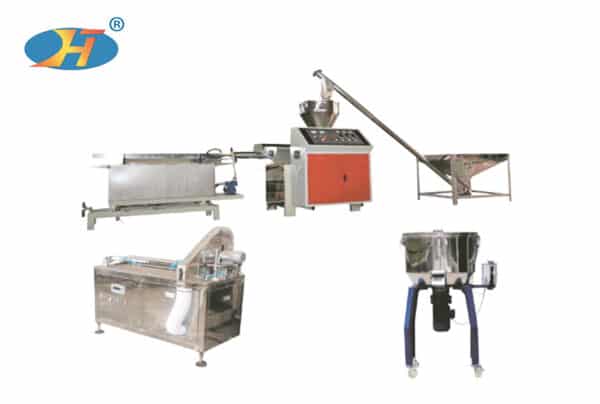
For large-scale factory operations and regional water utilities, sourcing top-tier filtration components requires an understanding of how the best 20 inch water filter cartridges are physically manufactured. The quality of a melt-blown element is determined at the raw extrusion die head. If the automated equipment cannot maintain uniform temperature controls across the polymer melt zone, the resulting microfibers will suffer from uneven diameters and erratic bonding, creating hidden bypass paths within the matrix. To set up an internal production line that achieves consistent pore density, investing in a high-precision pp melt blown filter making machine is essential for controlling fiber distribution.
Similarly, for chemical treatment applications, manufacturing consistency is critical to preventing bypass channels. When producing high-density carbon blocks to eliminate industrial chloramines, using a modern cto carbon block filter machine ensures that the binder polymers and activated carbon granules are compressed and baked under uniform pressure curves. This eliminates the internal structural voids that cause premature carbon fracturing. For secondary technical loops, using a robust pp yarn making machine review can guide the selection of winding equipment to manufacture heavy-duty string-wound cartridges for high-viscosity chemical processing.
This commitment to manufacturing control applies across all media substrates. For example, learning how ceramic filters are manufactured highlights how precise thermal firing prevents micro-cracks in rigid clay matrices. This level of quality discipline is identical to other precision fields; just as an advanced Precision Ceramic Pumps factory enforces sub-micron tolerances on its internal seals to prevent chemical leaks under high pressure, a filter factory must manage its fiber extrusion parameters to guarantee that its elements deliver reliable, certified particle separation in the field.
5. Commercial Procurement Frequently Asked Questions (FAQs)
What is the functional difference between nominal and absolute micron ratings for 20-inch cartridges?
A nominal micron rating indicates that the cartridge can capture approximately 60% to 85% of particles at that specified size. An absolute micron rating means the element has been tested to intercept 99.9% or more of target particles under strict lab conditions. For critical protection of RO membranes, always demand absolute-rated elements rather than vague nominal metrics.
How does high temperature affect the performance of standard polypropylene melt-blown filters?
Standard polypropylene is a thermoplastic material that begins to soften as temperatures climb. For standard cartridges, the maximum safe operating temperature is typically limited to 60 or 65 degrees Celsius. Exceeding this limit causes the microfibers to shift and relax, destroying the pore structure and leading to severe bypass leaks or structural collapse.
Why is the initial pressure drop metric critical when evaluating high-volume systems?
The initial clean pressure drop (measured in PSI or bar) tells you how much energy is required to push clean water through the brand-new filter element. A high initial pressure drop means the pump must work harder from day one, which drives up factory energy consumption and accelerates system wear while leaving less room for particle accumulation before the system hits its terminal replacement threshold.
Can 20-inch big blue carbon block cartridges be backwashed to restore flow capacity?
No. Unlike granular media beds, extruded carbon blocks cannot be backwashed to restore capacity. Attempting to force water backward through a carbon block can cause the internal polymer binders to fracture, creating channels that render the element useless. Once a carbon block is plugged or its adsorption sites are fully saturated, it must be replaced.
6. Professional Technical References
To support your facility design and procurement teams with verified regulatory frameworks and international performance testing guidelines, please consult the following technical organizations:
- Material safety and structural integrity standards for commercial water components: NSF International / ANSI Compliance Portal
- Industrial test procedures for evaluating the separation efficiency of cartridge filters: Water Quality Association (WQA) Advanced Research
- Fluid dynamics publications on multi-layer gradient depth filtration: ScienceDirect Chemical Engineering Database
- Comprehensive manufacturing machinery layouts and direct automated systems: Filter making machine manufacturer