
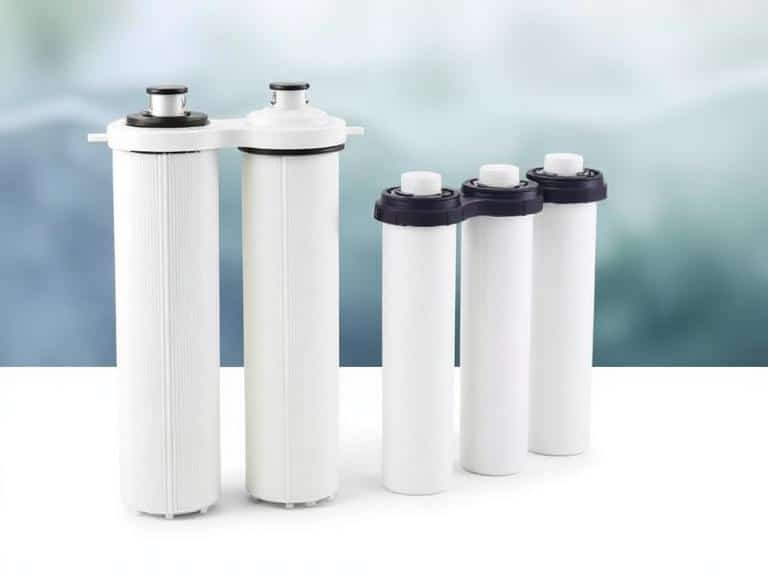
The purification of municipal and well water relies heavily on the physical and chemical adsorption capabilities of activated carbon. Whether utilized in residential under-sink reverse osmosis systems or massive municipal treatment plants, the core component responsible for removing volatile organic compounds, chlorine, and microscopic contaminants is the solid carbon cartridge. For procurement specialists, facility engineers, and filtration brand owners, understanding the precise mechanics of how are carbon block filters made in water purification systems is essential for ensuring product efficacy, regulatory compliance, and manufacturing profitability.
From our experience designing industrial extrusion equipment, the quality of the final filtration cartridge is entirely dependent on the strict control of temperature, pressure, and material blending. The process is a highly calibrated thermodynamic operation. In this comprehensive technical guide, we will dissect the manufacturing methodologies, explore the exact materials required, and detail the advanced machinery used to ensure the highest quality carbon block filters made in water filtration factories worldwide. We recommend paying close attention to the extrusion mechanics, as they dictate the porosity, flow rate, and lifespan of the filter.
Table of Contents
- 1. The Raw Materials: Activated Carbon and Polyethylene Resin
- 2. Step-by-Step: How Are Carbon Block Filters Made in Water Systems?
- 3. HENGTENG Machine: Redefining Filter Production
- 4. Quality Control and Performance Stability
- 5. Summary Table: CTO Carbon Block Filter Machine Specifications
- 6. Frequently Asked Questions (FAQs)
- 7. Industry References
1. The Raw Materials: Activated Carbon and Polyethylene Resin
To fully grasp how are carbon block filters made in water industry settings, one must first analyze the input materials. A high-performance CTO filter is not merely compacted carbon; it is a meticulously engineered composite material.
The primary ingredient is activated carbon, typically sourced from coconut shells, bituminous coal, or wood. Coconut shell carbon is the industry standard due to its exceptionally high microporosity, which is perfectly suited for trapping volatile organic compounds (VOCs) and chloramines. The carbon must be ground to a specific mesh size—usually between 50 and 200 mesh. If the particles are too large, the filter will have channeling issues, allowing water to bypass the carbon. If the particles are too fine, the water pressure drop across the filter will be unacceptably high.
The secondary, yet equally critical, ingredient is the thermoplastic binder. From our experience, Ultra-High Molecular Weight Polyethylene (UHMWPE) or standard High-Density Polyethylene (PE) resin is the optimal choice. The polyethylene resin acts as the structural glue. When we observe the high-grade carbon block filters made in water filter plants, the ratio of carbon to binder is meticulously controlled, typically hovering around 80 percent carbon to 20 percent binder. This ratio ensures maximum carbon surface area remains exposed while providing sufficient structural integrity to withstand high hydrostatic pressure.
2. Step-by-Step: How Are Carbon Block Filters Made in Water Systems?
The exact methodology of how are carbon block filters made in water purification processes is divided into three distinct phases: blending, extrusion (or molding), and finishing. We advocate strongly for continuous extrusion over batch molding due to its superior efficiency and consistency.
Blending and Homogenization
The production cycle begins in an industrial mixer. The activated carbon powder and the polyethylene resin powder are combined. We recommend utilizing a high-shear mixer to ensure absolute homogenization. If the binder is not distributed perfectly throughout the carbon dust, the resulting filter will have structural weak points and uneven density. It is during this phase that specific additives, such as lead-reduction media or antimicrobial silver complexes, can be introduced to the blend.
The One-Step Forming Extrusion Process
This phase represents the core technology behind how are carbon block filters made in water processing. The homogenized powder mixture is fed via a hopper into the barrel of the CTO Carbon Block Filter Machine. Inside the barrel, an auger screw drives the material forward through precisely controlled heating zones.
The temperature must be calibrated exactly to the melting point of the polyethylene resin—usually between 130 and 180 degrees Celsius. The heat causes the PE resin to become tacky, binding the carbon particles together without completely coating them or blocking their microscopic pores. As the heated mixture reaches the end of the barrel, it is forced through a specialized cylindrical die under immense pressure. This One-Step Forming Process blends, heats, and extrudes the material into a continuous, solid carbon cylinder.
Cooling, Cutting, and Finishing
As the continuous carbon cylinder exits the extrusion die, it is extremely hot and somewhat pliable. To lock the structural geometry, it must be cooled immediately. Depending on the machine configuration, this is achieved through either an air cooling or water cooling system. Once cooled, the continuous block passes through an automated cutting mechanism. When evaluating how are carbon block filters made in water filter manufacturing, the precision of this cut is vital for ensuring the filters fit perfectly into standard 10-inch or 20-inch housing sumps.
Finally, the cut blocks are often wrapped in a protective polypropylene netting and fitted with silicone or Santoprene end caps, preventing bypass and ensuring all water is forced radially through the carbon wall.
3. HENGTENG Machine: Redefining Filter Production
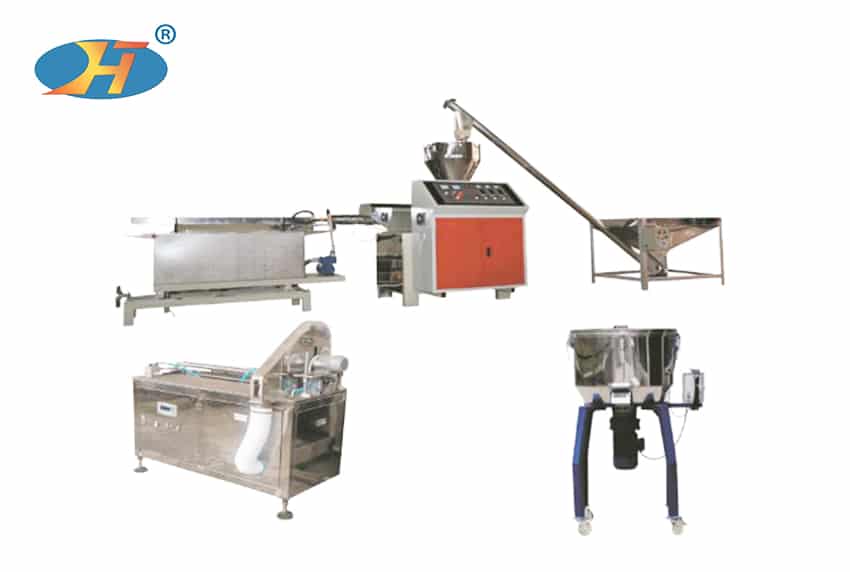
The efficiency and profitability of carbon block filters made in water applications depend heavily on the reliability of the manufacturing equipment. At HENGTENG Machine, we have engineered our CTO Carbon Block Filter Making Machine to resolve the traditional pain points of filter production: inconsistent density, frequent machine jamming, and excessive energy consumption.
Our machinery features an Automatic Control System powered by an advanced PLC and a touch-screen interface. This allows operators to easily adjust and precisely control the thermodynamic parameters of the extrusion barrel. By maintaining tight temperature tolerances, we ensure that the polyethylene resin binds the carbon without occluding the active adsorption sites, guaranteeing stable performance and consistent filtration accuracy.
Furthermore, our One-Step Forming Process ensures a continuous production line, yielding high output efficiency and uniform filter quality. Built with high-quality stainless steel and precision electric heating components, the HENGTENG Machine offers a durable and reliable design intended for continuous 24-hour operation. We provide customizable options, allowing our clients to produce different filter lengths, diameters, and micron densities according to specific customer needs and market demands.
4. Quality Control and Performance Stability
When establishing the standard for how are carbon block filters made in water industries globally, quality assurance cannot be an afterthought. The primary metrics we recommend monitoring are the iodine number of the raw carbon (which indicates microporosity), the pressure drop across the finished filter, and the structural density.
Inconsistent heating during the extrusion process leads to soft spots or excessively brittle filters. With the HENGTENG CTO machine’s advanced temperature and pressure control systems, manufacturers can eliminate these variables. By automating the feed rate and the auger speed, the machine guarantees that every centimeter of the extruded block maintains an identical micron rating—whether you are producing a coarse 10-micron pre-filter or a sub-micron cyst-reduction block. This level of precision is what defines the highest quality carbon block filters made in water treatment today.
5. Summary Table: CTO Carbon Block Filter Machine Specifications
To assist plant managers and procurement officers, we have detailed the technical capabilities of our flagship manufacturing equipment below.
| Item | Specification |
|---|---|
| Model | CTO Carbon Block Filter Machine |
| Production Process | Heating, Extrusion, Molding (One-Step Forming) |
| Control System | Fully Automatic PLC Control via Touch Screen |
| Production Speed | Customizable (Depending on filter size and density requirements) |
| Material Used | Activated Carbon Powder + Polyethylene (PE) Resin Binder |
| Filter Length Capabilities | 10 inches to 20 inches (Fully Customizable) |
| Heating Method | Electric Heating with Multi-Zone Temperature Control |
| Power Requirement | Approximately 30 to 40 kW/set |
| Operation Mode | Designed for Continuous 24-hour operation |
| Cooling System | Air Cooling or Water Cooling (Optional based on facility setup) |