
In municipal, agricultural, and industrial fluid processing, suspended solids represent a constant threat to system stability and downstream filtration components. Unmanaged particulate matter causes mechanical abrasion in control valves, ruins reverse osmosis membranes, and clogs high-precision dosing instrumentation. Managing these particulates efficiently relies on establishing an optimized multi-tier mechanical screening sequence, starting with an accurate primary stage. To construct a reliable pre-filtration loop, engineering teams must evaluate exactly what specific sediment does a 20-micron filter remove from a fluid stream.

From our experience at HENGTENG Machine, system failures in large-scale filtration loops are rarely caused by an unpredictable chemical reaction. Instead, they trace back to poor micron rating choices that overlook fluid dynamics and particulate size distribution. Selecting a 20-micron element provides a highly efficient balance, capturing heavy physical contamination while maintaining minimal pressure drops across the intake lines. This expert analysis explores the seven primary classifications of suspended matter captured by this rating, outlining how modern media geometry protects subsequent purification stages.
Table of Contents
- 1. Understanding the Physical Scale of a 20-Micron Threshold
- 2. 7 Key Types of Suspended Solids Captured by a 20-Micron Rating
- 3. Technical Sediment Classification and Capture Summary Matrix
- 4. Media Architecture: Melt-Blown Gradient Density vs. Surface Screening
- 5. Strategic Manufacturing Sourcing: The HENGTENG Machine Framework
- 6. Frequently Asked Questions (FAQs)
- 7. Academic and Fluid Engineering References
1. Understanding the Physical Scale of a 20-Micron Threshold
To properly evaluate what specific sediment does a 20-micron filter remove, it is useful to visualize this metric relative to familiar objects. One micron represents one-millionth of a meter. A standard human hair averages between 70 and 90 microns in cross-section, while table salt grains generally measure around 100 to 150 microns. A 20-micron rating represents an ultra-fine mechanical barrier that intercepts particles invisible to the human eye, yet large enough to cause rapid fouling in sensitive downstream membrane systems.
We recommend establishing a clear baseline of your source fluid’s turbidity profile before deploying a full-scale filtration layout. If an intake stream contains high concentrations of sub-micron colloidal matter, relying solely on a 20-micron element can cause these fine particles to pass straight through. However, as a primary pre-filtration component, this specific rating handles high particle loads effectively, preventing larger particles from blinding fine absolute-rated polishing cartridges down the line.
2. 7 Key Types of Suspended Solids Captured by a 20-Micron Rating
The following detailed technical breakdown identifies the seven primary types of physical suspended matter intercepted by a 20-micron mechanical filtration matrix.
1. Medium-to-Fine Silica Sand
Silica sand is a common particulate found in well water and open agricultural irrigation streams. While coarse beach sand measures over 250 microns, fine sand grains fall between 20 and 60 microns. When processing these angular particles, a 20-micron element serves as a highly reliable mechanical shield.
From our experience, allowing fine silica to pass deep into downstream systems introduces severe abrasion risks for high-pressure pump impellers and control seals. Intercepting these hard grains early in the pre-filtration phase eliminates mechanical wear, preserving the functional tolerances of your entire plumbing network.
2. Coarse Silt and Alluvial Deposits
Silt comprises mineral fragments suspended by flowing water bodies or heavy rainfall events. Coarse silt particles cluster between 20 and 50 microns in size, making them easy targets for a well-designed pre-filter. A 20-micron rating excels at removing these earthy deposits from water paths.
We recommend using high-void-volume depth media when dealing with heavy silt loads. This material architecture allows silt particles to penetrate into the outer layers of the filter matrix without forming a dense surface cake immediately, maintaining optimal flow rates during high-turbidity cycles.
3. Pipe Scale and Oxidized Iron Flakes
In aging industrial loops or municipal iron piping networks, internal corrosion naturally throws off oxidized flakes and mineral scale. These debris pieces vary in size, but a significant portion of suspended rust chips ranges between 20 and 100 microns. A 20-micron mechanical barrier effectively blocks this metallic particulate.
Removing pipe scale is vital for preventing downstream clogging. If these metallic flakes are permitted to reach subsequent stages, they can wedge into automatic solenoid valves, causing mechanical jams and dangerous fluid bypass failures.
4. Coal Dust and Carbon Fine Remnants
Industrial processing zones, mining run-offs, and pre-treatment loops utilizing granulated activated carbon beds frequently shed carbon micro-fines. These fines typically measure between 15 and 45 microns. A 20-micron element handles this carbon dust load efficiently.
Capturing carbon fines prevents black water staining and blocks particulates from settling into downstream storage tanks. It also keeps carbon debris from blinding fine polishing filters, optimizing the service life of high-end purification components.
5. Large Algae Chains and Macro-Organisms
Surface water reservoirs and open cooling towers often face seasonal biological blooms. While individual microscopic bacteria slip through coarse barriers, large filamentous algae chains, biological spores, and organic debris measure well over 20 microns. A 20-micron pre-filter easily captures these organic matrices.
We recommend tracking pressure drops across your pre-filtration elements during seasonal algae blooms. Capturing these biological clusters early prevents organic matter from blanketing carbon blocks or fouling sensitive reverse osmosis elements, which can cause severe bio-filming issues.
6. Pre-Coagulated Floc and Polymer Clusters
In advanced wastewater plants, chemical coagulants or polymers are added to bind fine colloidal particles together into larger clumps called floc. Efficient flocculation structures these particles into sizes ranging from 20 to over 100 microns. A 20-micron cartridge serves as an excellent recovery mechanism for these bound clusters.
By capturing these polymer-bound aggregates, a 20-micron depth filter clarifies the liquid stream efficiently. This setup reduces turbidity values down to predictable baselines before the fluid enters the final chemical adjustment or ultra-filtration loops.
7. Precipitated Calcium Carbonate Scale Chips
Hard water systems experience mineral precipitation when shifts in temperature or pressure cause dissolved calcium and magnesium to fall out of solution. These crystallized scale particles form brittle chips that range in size from 20 to 80 microns, making them easy to catch with a 20-micron sediment rating.
From our experience, intercepting these scale flakes prevents mineral debris from coating downstream heating elements or fouling high-precision spray nozzles. This protective step preserves heat-transfer efficiency and minimizes maintenance labor across commercial boiler systems.
3. Technical Sediment Classification and Capture Summary Matrix
To help system designers and procurement managers evaluate what sediment does a 20-micron filter remove, the following responsive matrix summarizes the target particulate types and their corresponding operational impacts.
| Sediment Classification | Typical Particle Size Range | Differentiating Sourcing Origin | Primary Downstream Protective Value |
|---|---|---|---|
| Medium-to-Fine Silica Sand | 20 – 62 Microns | Groundwater wells, alluvial river intakes | Prevents pump impeller erosion & seal wear |
| Coarse Silt Deposits | 20 – 50 Microns | Surface agricultural runoff, rainwater streams | Lowers bulk fluid turbidity parameters |
| Oxidized Iron & Pipe Scale | 20 – 100+ Microns | Corroded municipal pipes, industrial loops | Eliminates particulate jams in automatic valves |
| Carbon Dust & Micro-Fines | 15 – 45 Microns | Activated carbon bed abrasion, mining zones | Blocks black-water tracking & tank settling |
| Filamentous Algae Chains | 20 – 150+ Microns | Open cooling towers, surface water pools | Minimizes bio-fouling on fine RO membranes |
| Pre-Coagulated Floc Clumps | 20 – 100 Microns | Wastewater clarifiers, chemical treat lines | Recovers chemical aggregates efficiently |
| Calcium Carbonate Scale Chips | 20 – 80 Microns | Hard water lines, temperature-shift zones | Protects spray nozzles & boiler heat elements |
4. Media Architecture: Melt-Blown Gradient Density vs. Surface Screening
Understanding what sediment does a 20-micron filter remove requires a close examination of the underlying media architecture. Pleated or mesh surface filters trap particles exclusively on their exterior face, which works well for uniform, non-deformable materials like sand. However, when handling soft silt or organic algae, surface meshes can blind rapidly, causing sharp pressure spikes and restricting fluid throughput.
For complex particulate profiles, we recommend specifying true multi-layer gradient-density melt-blown filter cartridges. These elements feature a porous outer zone that captures large chunks of scale and sand, paired with a progressively denser inner core calibrated to stop fine 20-micron particles. This graded structure distributes the sediment load evenly throughout the depth of the media, maximizing dirt-holding capacity and extending the intervals between element replacements.
5. Strategic Manufacturing Sourcing: The HENGTENG Machine Framework


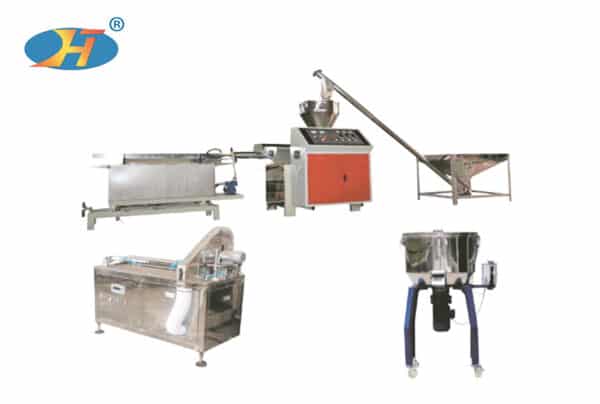

While selecting the correct micron parameters is essential for system design, securing reliable filtration performance relies on finding equipment that outputs consistent, high-precision media. HENGTENG Machine is one of China’s earliest professional manufacturers of filter cartridge production equipment. With over 35 years of experience, we provide complete filter production line solutions to global clients in more than 60 countries. This extensive machinery background enables us to design production systems that output filter media with exceptional structural uniformity and accurate pore size distribution.
By controlling extrusion speeds, air-flow temperatures, and polymer fiber attenuation, our production machinery allows manufacturers to create stable gradient-density patterns that perform reliably under high-pressure industrial cycles. For procurement teams aiming to audit high-volume supply chains or construct an in-house fabrication plant, we recommend exploring our detailed guide on the complete filter cartridge manufacturing process. Sourcing directors can also review common materials used across different industries by exploring our report on water filtration system components.
Furthermore, managing complex fluid streams often requires selecting specific cartridge types. For a detailed engineering look at how different media designs perform under pressure, manufacturing managers can read our technical brief comparing the melt blown vs spun filter difference. To gain a deeper understanding of regional groundwater pre-treatment designs, engineers can explore our dedicated study titled best micron rating for well water.
Ultimately, long-term plant efficiency depends on your equipment manufacturer’s technological track record. To ensure your procurement team partners with a machinery supplier capable of supporting global expansion plans, we suggest reviewing our market evaluations of top industrial water filter solutions, along with our corporate profile of leading pp filter production line supplier options to streamline your industrial equipment supply chain.
6. Frequently Asked Questions (FAQs)
What specific sediment does a 20-micron filter remove from a fluid stream?
A 20-micron filter removes medium-to-fine silica sand, coarse silt, pipe rust flakes, carbon dust, biological algae chains, precipitated scale chips, and pre-coagulated chemical floc clusters from fluid paths.
Will a 20-micron sediment filter remove bacteria or viruses from water?
No. Individual pathogenic bacteria range from 0.2 to 2 microns, and viruses are smaller than 0.1 microns. These micro-organisms will slip straight through a 20-micron pore. Disinfection requires absolute sub-micron membrane systems or ultra-violet sterilization units.
What is the functional difference between a nominal and an absolute 20-micron rating?
A nominal rating indicates the filter captures a high percentage (typically 60% to 85%) of 20-micron particles, making it ideal for primary pre-filtration. An absolute rating signifies a high efficiency threshold (typically 99.9%), capturing virtually all particles of that size for critical final polishing stages.
Why choose a 20-micron pre-filter over a tighter 5-micron element for intake lines?
Starting with a 20-micron filter captures heavy, large-scale sediment without introducing a severe pressure drop or causing rapid clogging. This primary stage protects subsequent 5-micron or sub-micron filters from blinding prematurely, lowering overall element costs and system maintenance labor.
7. Academic and Fluid Engineering References
1. International Organization for Standardization. (2020). Cleanrooms and associated controlled environments — Part 14: Assessment of suitability for use of equipment by airborne particle concentration (ISO Standard No. 14644-14:2020). Available via https://www.iso.org/)
2. American Water Works Association (AWWA). (2023). Standard Guidelines for Micro-Filtration and Depth Media Pre-Filtration Pre-Treatment Designs. Water Supply Engineering Manual Portfolio.
3. National Science Foundation. (2025). Evaluation of Particulate Size Distribution and Mechanical Capture Efficiency Profiles across Gradient Polypropylene Materials. NSF/ANSI Reference Database.