
The contamination of municipal and well water supplies with radioactive isotopes—whether from natural geological formations, nuclear facility proximity, or industrial accidents—presents one of the most complex challenges in fluid filtration. Radionuclides such as Uranium, Radium, Strontium, Radon, and Radioactive Iodine do not behave like standard particulate matter. They cannot be reliably removed by simple physical straining. Instead, mitigating these invisible threats requires sophisticated chemical adsorption, ion exchange, and molecular-level separation technologies.
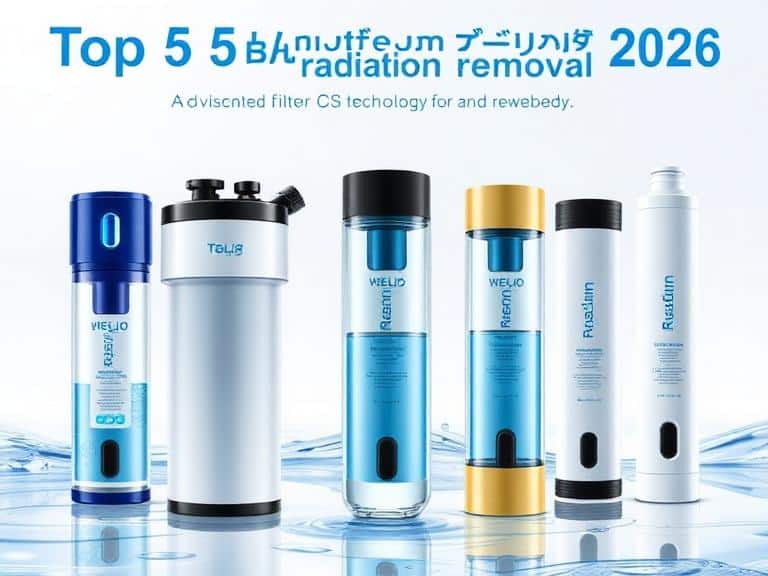
From our experience engineering the machines that manufacture critical filtration media, we know that the efficacy of a radiation filter is intrinsically linked to the density, porosity, and uniformity of its internal carbon blocks and melt-blown structures. When consumers and industrial procurement officers search for the Best water filter for radiation, they must evaluate the system based on validated reduction claims for specific isotopes, not just general “purification” marketing. We recommend a multi-stage approach, combining reverse osmosis with specialized carbon filtration, to achieve comprehensive protection. In this authoritative guide, we will analyze the mechanics of radiological filtration, detail the 5 Best water filter for radiation systems available in 2026, and explain how advanced manufacturing processes ensure these filters perform when it matters most.
Table of Contents
1. The Mechanics of Radiological Water Filtration
To understand why certain systems are classified as the Best water filter for radiation, one must first understand the diverse nature of radioactive contaminants. Radionuclides exist in water either as dissolved heavy metals (like Uranium and Strontium) or as dissolved radioactive gases (like Radon). No single filtration medium is 100% effective against all types of radiation. Therefore, the Best water filter for radiation is typically a composite system utilizing several distinct physical and chemical processes.
Reverse Osmosis (RO): This process forces water under high pressure through a semi-permeable membrane with microscopic pores (typically 0.0001 microns). This mechanical separation is highly effective at rejecting large, heavy radioactive isotopes such as Uranium, Radium 226/228, and Alpha particles. However, RO membranes alone are less effective at capturing dissolved gases like Radon.
Activated Carbon Adsorption: To capture Radon gas and certain radioactive isotopes of Iodine, dense activated carbon blocks are required. From our experience manufacturing CTO Carbon Block Filter Making Machines, the density and uniform compression of the carbon block are critical. A high-quality carbon block traps the gas molecules within its vast network of microscopic pores before they can pass through the system.
Ion Exchange: This chemical process is specifically targeted at removing charged radioactive ions. By swapping harmless sodium or potassium ions for hazardous Radium or Strontium ions, cation exchange resins effectively strip these specific isotopes from the water supply.
2. The 5 Best Water Filter for Radiation Systems
Based on rigorous engineering analysis and understanding of the underlying filtration media, we have identified the five primary system architectures that constitute the Best water filter for radiation in the current market.
1. Multi-Stage Reverse Osmosis (RO) Systems
When clients ask us for the absolute Best water filter for radiation, our primary recommendation is always a comprehensive Under-Sink Multi-Stage Reverse Osmosis System. These systems combine sediment pre-filtration, carbon block adsorption, and the semi-permeable RO membrane. The EPA specifically recognizes Reverse Osmosis as a Best Available Technology (BAT) for the removal of Uranium, Radium, and gross alpha/beta particles, often achieving reduction rates exceeding 95%.
2. Activated Carbon Block Filters (CTO)
If the primary radiological threat is Radon gas (which can be ingested via water or inhaled as it escapes from showers and faucets), a specialized Point-of-Entry (Whole House) Activated Carbon System is the Best water filter for radiation. The efficacy of these systems relies entirely on the manufacturing quality of the carbon block. At HENGTENG Machine, our CTO Carbon Block Filter Making Machine ensures that the extruded carbon maintains absolute structural integrity, providing the massive surface area required for long-term Radon adsorption without channeling or bypass.
3. Cation Exchange Water Softening Systems
While typically installed to remove calcium and magnesium (hard water minerals), cation exchange systems are also highly effective at removing Radium 226 and 228, as well as radioactive Strontium. We recommend these systems for well water applications where Radium is the primary identified contaminant. While it is the Best water filter for radiation in this specific context, it must be noted that ion exchange does not remove Uranium or Radon, necessitating its use in conjunction with other filtration methods.
4. Distillation Water Purifiers
Distillation mimics the natural hydrologic cycle by boiling water into steam and then condensing it back into liquid, leaving behind heavy impurities. Distillers are exceptionally effective at separating water from heavy radioactive metals like Uranium and Radium. However, they are generally slow, consume significant electricity, and if the water contains radioactive gases like Radon, the gas may vaporize and condense along with the water unless the distiller is equipped with a volatile gas vent and a post-distillation carbon filter.
5. Specialized Gravity-Fed Radiological Filters
For emergency preparedness, off-grid living, or post-disaster scenarios, specialized gravity-fed countertop systems equipped with proprietary radiological filter elements are the Best water filter for radiation. These elements often utilize a blend of silver-impregnated activated carbon and proprietary ion-exchange resins to capture Alpha, Beta, and Gamma radiation, including Iodine-131 and Cesium-137. The performance of these filters relies heavily on the initial sediment pre-filtration. Our 2e2mPP Melt-blown Filter Cartridge Machine and PP Yarn Winding Filter Making Machine are instrumental in creating the high-capacity pre-filters necessary to protect these expensive, specialized radiological cores from premature blinding by dirt and silt.
3. How Manufacturing Quality Dictates Filter Performance
Understanding which technology represents the Best water filter for radiation is only half the equation; the execution of that technology is paramount. An RO system is useless if its pre-filters fail and allow chlorine to destroy the delicate RO membrane. A carbon block cannot capture Radon if it is poorly extruded and allows water to channel through cracks.
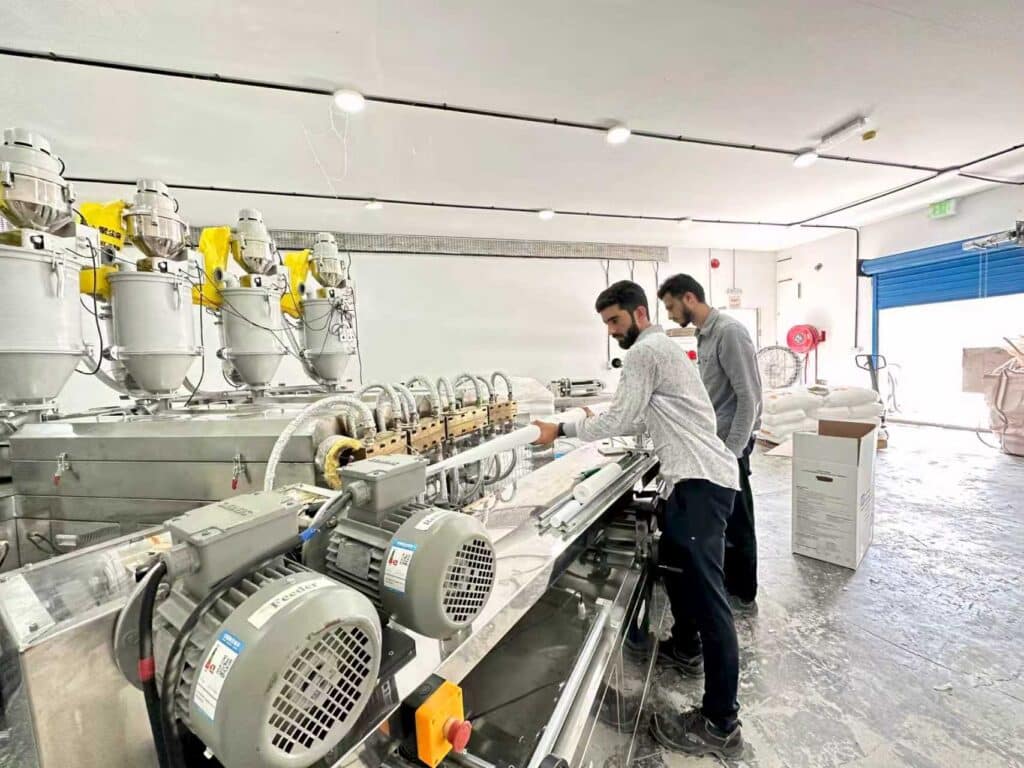
From our experience at HENGTENG Machine, the global reliability of radiological filtration depends on the precision of the manufacturing equipment. Our PP Yarn Winding Filter Making Machine produces string-wound cartridges with exact micron ratings to capture large particulate fallout before it reaches chemical stages. Our 2e2mPP Melt-blown Filter Cartridge Machine creates dense, multi-layered depth filters that ensure even flow distribution. We strongly advise procurement officers to verify that the filters they purchase are manufactured on high-efficiency, ISO-certified production lines. The structural integrity of the filter media is the only barrier between the consumer and dangerous radionuclides.
4. Summary Table: Radiation Filter Comparison
To assist in selecting the Best water filter for radiation for your specific application, we have compiled the following technical matrix.
| Filtration Technology | Target Radionuclides Removed | Limitations | Ideal Application |
|---|---|---|---|
| Multi-Stage Reverse Osmosis (RO) | Uranium, Radium, Alpha/Beta particles. | Less effective on dissolved Radon gas. Produces wastewater. | Under-sink drinking water purification. |
| Activated Carbon Block (CTO) | Radon gas, Radioactive Iodine. | Ineffective against heavy radioactive metals (Uranium). | Whole-house point-of-entry for Radon mitigation. |
| Cation Ion Exchange | Radium 226/228, Strontium. | Does not remove Uranium or Radon. Requires salt regeneration. | Well water systems with high Radium levels. |
| Distillation | Uranium, Radium, Strontium, heavy metals. | Slow process, high energy use, may not vent Radon. | Small batch, high-purity laboratory or countertop use. |
| Gravity-Fed Radiological Elements | Iodine-131, Cesium-137, Gross Alpha/Beta. | Slow flow rate, requires frequent manual filling. | Emergency preparedness and off-grid survival. |
5. Frequently Asked Questions (FAQs)
Will boiling water remove radiation?
No. Boiling water actually increases the concentration of heavy radioactive isotopes like Uranium and Radium because the water evaporates while the metals remain behind. Boiling only removes volatile radioactive gases like Radon (which then enter the air you breathe). To remove heavy isotopes, you must use the Best water filter for radiation, such as an RO system or distiller.
Why is a high-quality carbon block important for Radon removal?
Radon is a gas dissolved in water. It requires a massive surface area of activated carbon to be effectively adsorbed. If the carbon block is manufactured poorly, water will channel through paths of least resistance, bypassing the carbon entirely. Our CTO Carbon Block Filter Making Machine ensures high-density, uniform extrusion to maximize contact time and Radon capture.
Does a standard refrigerator filter protect against radiation?
From our experience, standard refrigerator filters are designed only for basic taste, odor, and chlorine reduction. They do not possess the dense carbon extrusion or RO membranes required to capture Uranium, Radium, or high levels of Radon. They are not considered a valid Best water filter for radiation.
How do I know which radioactive contaminants are in my water?
You cannot see, taste, or smell radiation. We highly recommend having your water tested by an EPA-certified, independent laboratory for gross alpha and beta activity, Radium, Uranium, and Radon before purchasing the Best water filter for radiation. The test results will dictate exactly which filtration technology you must deploy.