
In the highly technical realm of industrial water treatment and liquid filtration manufacturing, precision is not just a preference; it is an absolute operational requirement. From our experience at HENGTENG Machine, we frequently encounter production managers and facility engineers who struggle to identify the correct filtration media for their specific applications. The most common point of confusion we address involves the technical differences between PP melt-blown and spun cartridge filter elements.
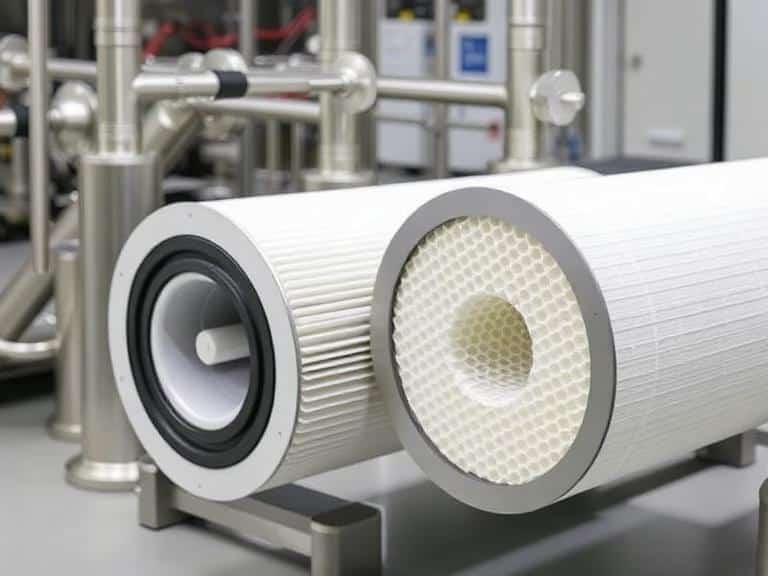
We adamantly believe that using the wrong filter architecture will not only cripple your flow rates but will ultimately lead to catastrophic downstream contamination. While both of these filters are primarily constructed from polypropylene (PP) and serve as vital sediment pre-filters, their manufacturing processes, structural integrities, and fluid dynamics are entirely distinct. We recommend that before you finalize your procurement for your next filter cartridge manufacturing process upgrade, you thoroughly understand these distinctions. Making an informed decision here dictates the success of your entire water purification array.
Table of Contents
- Summary Comparison Table
- 1. Manufacturing Technology and Machinery
- 2. Structural Integrity and Core Requirements
- 3. Filtration Precision and Micron Ratings
- 4. Dirt-Holding Capacity and Depth Filtration Dynamics
- 5. Pressure Drop (Delta P) and Flow Rates
- 6. Ideal Industrial and Residential Applications
- The HENGTENG Solution: PP Yarn Winding Filter Making Machine
- Frequently Asked Questions (FAQs)
- Authoritative References
Summary Comparison Table
To provide immediate clarity, we have compiled a definitive summary of the primary differences between PP melt-blown and spun cartridge filter units. This table serves as a rapid reference guide for engineering teams evaluating baseline specifications.
| Specification / Feature | PP Melt-Blown Cartridge Filter | PP Spun (Yarn-Wound) Cartridge Filter |
|---|---|---|
| Manufacturing Method | Thermal extrusion of melted polypropylene resin | Mechanical winding of spun PP yarn around a core |
| Structural Core | Typically coreless (self-supporting thermal bond) | Requires a central core (PP or Stainless Steel) |
| Filtration Precision | Very high (excellent for 1 to 5-micron absolute filtration) | Moderate to high (excellent for 10 to 100+ microns) |
| Porosity Structure | Gradient density (tighter pores near the center) | Diamond-shaped geometric winding patterns |
| Primary Strength | Fine particulate capture and chemical compatibility | Massive dirt-holding capacity for heavy sediment |
| Pressure Drop | Higher pressure drop as it loads with fine silt | Lower pressure drop, maintains flow longer |
Let us dive deeply into the six fundamental differences between PP melt-blown and spun cartridge filter technologies to ensure you deploy the correct media in your field operations.
1. Manufacturing Technology and Machinery
The most defining of the differences between PP melt-blown and spun cartridge filter elements originates on the factory floor. The manufacturing methods are entirely distinct and require vastly different capital equipment.
PP melt-blown filters are created through a highly complex thermal extrusion process. Raw polypropylene pellets are fed into an extruder, melted at extremely high temperatures, and forced through microscopic nozzles. High-velocity hot air “blows” these molten polymers onto a continuously rotating spindle. As the fibers cool, they thermally bond to one another, creating a rigid, highly intricate web of filtration media without the use of chemical binders. This process demands precise temperature control to ensure the gradient density is maintained.
Conversely, a spun cartridge filter—often referred to in the industry as a string-wound filter—relies on mechanical precision rather than thermal bonding. The manufacturing process involves feeding pre-manufactured polypropylene yarn into a specialized winding machine. The yarn is meticulously wrapped around a central core in a crisscross, diamond-shaped pattern. The tightness of the wind and the thickness of the yarn determine the micron rating. For manufacturers looking to dominate this segment, investing in a high-quality machine is critical, which is why we suggest reading our pp yarn making machine review to understand the servo-motor requirements for optimal yarn tension.
2. Structural Integrity and Core Requirements
From our experience, understanding the structural differences between PP melt-blown and spun cartridge filter systems is vital when dealing with high-pressure fluid environments or aggressive chemical solvents.
Melt-blown filters are generally coreless. Because the polypropylene fibers are thermally welded together during the cooling phase of the extrusion process, the filter cartridge is entirely self-supporting. This monolithic structure is highly resistant to chemical degradation because there are no secondary materials introduced. However, under extreme pressure surges, a poorly manufactured coreless melt-blown filter can compress, which chokes off fluid flow and causes a premature system failure.
Spun yarn-wound filters, on the other hand, absolutely require a central structural core to hold the yarn in place. This core is typically made from rigid polypropylene for standard water applications, or tinned steel/stainless steel for high-temperature and aggressive chemical applications. The mechanical tension of the wound yarn over this rigid core allows the spun filter to withstand significantly higher differential pressures without collapsing. When analyzing water filtration system components, the inclusion of a robust core makes spun filters the undisputed choice for heavy-duty industrial fluid transfer.
3. Filtration Precision and Micron Ratings
If you are engineering a reverse osmosis (RO) pre-filtration array, the filtration precision is your paramount concern. Here, the differences between PP melt-blown and spun cartridge filter capabilities become highly polarized.
We recommend melt-blown filters when absolute precision is required in the 1-micron to 5-micron range. The thermal blowing process creates a tortuous path of micro-fibers that excel at capturing fine silt, colloidal clay, and microscopic organic matter. Because the pore sizes are so consistently small, melt-blown filters ensure that sensitive downstream equipment—like expensive RO membranes—are fiercely protected from fouling.
Spun wound filters are fundamentally designed for heavier lifting. While they can be manufactured to filter down to 1 micron, their true strength lies in the 10-micron to 100-micron range. The geometric diamond patterns created by the winding process are brilliant at trapping larger particulate matter like rust flakes, heavy sand, and industrial scale. If you try to use a 1-micron melt-blown filter in an environment heavily laden with large rust particles, it will blind (clog) almost instantly. A spun filter will trap the large rust on its outer layers while continuing to filter finer particles closer to its core.
4. Dirt-Holding Capacity and Depth Filtration Dynamics
Both filters utilize the principles of “depth filtration,” meaning they trap particles throughout the entire wall thickness of the filter, not just on the surface. However, the execution of this concept highlights major differences between PP melt-blown and spun cartridge filter mechanics.
Melt-blown filters rely on a “gradient density” structure. During manufacturing, the machine is programmed to make the outer layers looser (larger pores) and the inner layers tighter (smaller pores). This allows larger particles to be trapped on the outside while finer particles penetrate deeper before being caught. It is a highly efficient design, but the total void volume (empty space for dirt to collect) is relatively low compared to wound filters.
Spun wound cartridge filters are the absolute kings of dirt-holding capacity. The crisscross winding pattern naturally creates a massive amount of void volume within the diamond-shaped chambers. This allows the filter to hold incredible amounts of heavy sludge, mud, and metallic shavings before the pressure differential becomes critical. From our experience, in environments with highly unpredictable sediment loads, the spun wound filter will drastically outlast a melt-blown equivalent.
5. Pressure Drop (Delta P) and Flow Rates
Industrial facility managers monitor Pressure Drop (Delta P) religiously. An increase in Delta P means the pumps have to work harder, consuming more electricity and increasing operational costs. The fluid dynamic differences between PP melt-blown and spun cartridge filter media directly impact this metric.
Because melt-blown filters are dense and thermally bonded, they naturally present a higher initial resistance to water flow. As they capture fine particulates, this resistance increases rapidly. If your application demands a highly consistent, high-volume flow rate, a melt-blown filter might require you to upsize your filter housing to accommodate more cartridges in parallel.
Spun wound filters offer far superior flow dynamics. The open geometric structure of the yarn allows liquids to pass through with minimal initial resistance. Even as the filter loads heavily with dirt, the fluid can find alternative paths through the yarn matrix, maintaining a stable flow rate for a much longer operational period. We recommend spun wound filters for high-viscosity fluids (like syrups, oils, and paints) precisely because their low pressure drop prevents the pumps from cavitating.
6. Ideal Industrial and Residential Applications
Ultimately, the differences between PP melt-blown and spun cartridge filter technologies dictate where they belong in the field. Using them interchangeably is an engineering mistake we strongly advise against.
When to use PP Melt-Blown Filters:
- Reverse Osmosis (RO) pre-filtration in municipal and residential water purifiers.
- Food and beverage processing where strict FDA compliance and zero media migration (fiber shedding) are required.
- Protecting sensitive downstream carbon block filters. If you are operating a cto carbon block filter machine, you know that chlorine-removing carbon blocks will fail rapidly if coated in fine silt. Melt-blown filters prevent this.
When to use PP Spun (Yarn-Wound) Filters:
- Agricultural bore-well water extraction where heavy sand and mud are prevalent.
- Electroplating and chemical processing industries (especially when wound on a stainless steel core).
- Initial roughing filtration stages in multi-stage municipal treatment plants. To understand how these roughing filters complement later stages, we suggest reviewing the difference between CTO and UDF filters, which handle the subsequent chemical purification.
The Ultimate Manufacturing Solution: HENGTENG Machine PP Yarn Winding Filter Making Machine
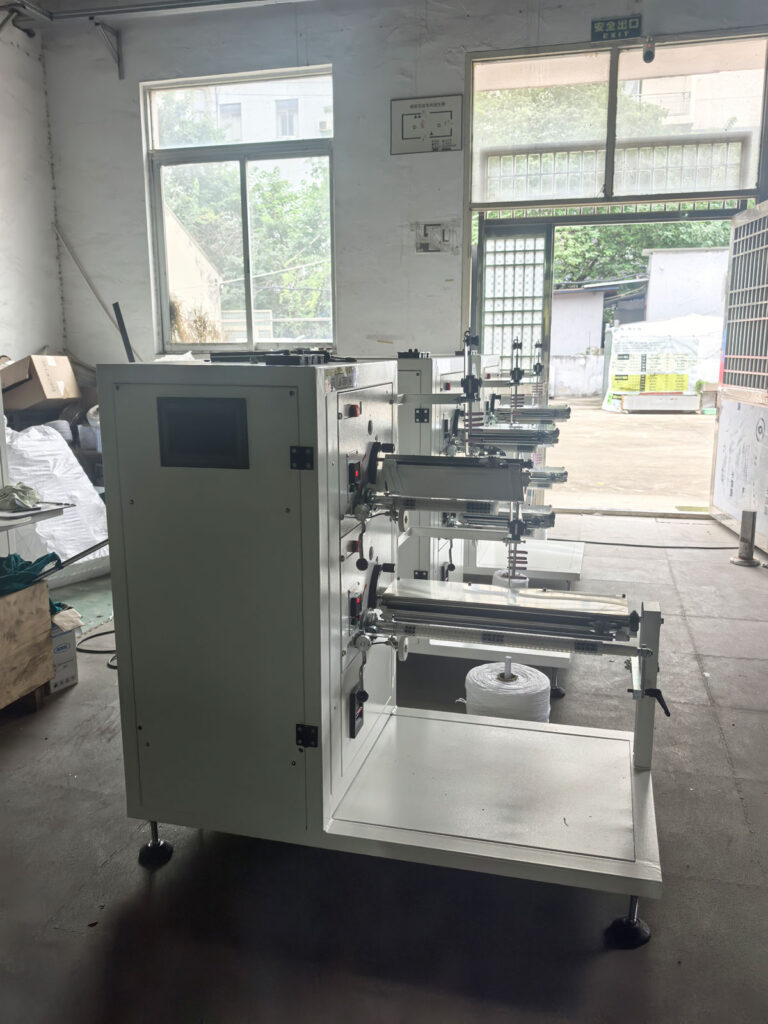
If you are looking to dominate the industrial filtration market by producing the highest quality spun wound cartridges, you require machinery that eliminates human error and maximizes production velocity. At HENGTENG Machine, we engineer exactly that.
Key Features:
- ✅ High-Speed Operation – Advanced servo motor control achieves stable, high-speed winding with excellent precision, far surpassing legacy mechanical-cam machines.
- ✅ Excellent Yarn Forming – Consistent tension control ensures smooth, tightly wound filter cartridges with accurate and repeatable filtration levels.
- ✅ Automatic Stop Function – Automatically stops when the yarn line is full or in case of malfunction, ensuring safe operation and drastically reducing material waste.
- ✅ Fast Wire Changing – Easy spool replacement and automatic reset minimize downtime and increase your factory’s daily productivity.
- ✅ Energy Efficient Design – Engineered for low energy consumption while maintaining high output efficiency, protecting your operational margins.
- ✅ Easy to Operate – User-friendly interface with touch screen control allows for instant parameter adjustment and real-time monitoring.
Technical Specifications:
| Model | HT Single-Head Wound Wire Filter Machine |
| Filter Type | PP Yarn Wound Filter Cartridge |
| Filter Length | 10”–40” (Fully customizable via PLC) |
| Filter Core Material | Polypropylene (PP) or Stainless Steel |
| Control System | Advanced PLC Touch Screen |
| Production Speed | Adjustable (high-speed continuous winding) |
| Power Supply | Approx. 3–5 kW/set |
| Operation Mode | Fully Automatic / Continuous 24h Operation |
Frequently Asked Questions (FAQs)
Which filter is more cost-effective to manufacture?
From an equipment standpoint, evaluating the differences between PP melt-blown and spun cartridge filter production reveals that spun yarn-winding machines are generally less capital-intensive to acquire and operate than massive thermal extrusion melt-blown lines. The lower energy consumption of winding machines makes spun filters highly cost-effective to produce at scale.
Can I wash and reuse a PP melt-blown or spun filter?
We highly recommend against washing and reusing either of these filters. Because they are depth filters, microscopic particles become permanently lodged deep within the media matrix. Attempting to wash them will only push the dirt deeper or compromise the structural integrity of the fibers, leading to complete filtration failure upon reinstallation. They are designed as consumable items.
Does a spun wound filter shed fibers into the water?
Historically, low-quality string-wound filters were prone to “media migration” or shedding tiny fibers into the downstream fluid. However, modern manufacturing—like that achieved using HENGTENG machines—utilizes precise tensioning and high-quality continuous polypropylene yarn to virtually eliminate fiber shedding. In contrast, thermally bonded melt-blown filters have zero risk of media migration.
Authoritative References
To ensure our clients have access to peer-reviewed and globally recognized standards regarding industrial filtration and water safety, we encourage consulting the following authorities:
- United States Environmental Protection Agency (EPA) – Drinking Water Requirements: The definitive governmental authority on safe drinking water parameters and particulate reduction requirements.
- World Health Organization (WHO) – Water, Sanitation and Health: Global standards on acceptable water quality levels and the necessity of effective pre-filtration in municipal systems.
- Water Quality Association (WQA): An industry-leading organization providing rigorous certification standards and technical education for residential and commercial water treatment professionals.
- Water Conditioning & Purification International (WC&P): The premier niche publication covering advanced technological developments in reverse osmosis, depth filtration, and fluid dynamics.
- Journal of Membrane Science (ScienceDirect): An authoritative academic journal detailing peer-reviewed research on membrane fouling, tortuous path filtration, and polymer extrusion sciences.