
If you are planning to enter the water filtration industry or upgrade your existing filter cartridge production capacity, choosing the right equipment is one of the most important investment decisions you will make. Among the various production systems available today, the 2E2M PP Melt Blown Filter Machine has become one of the most popular configurations for medium-to-large-scale manufacturers.
From our experience working with filter cartridge manufacturers, many investors initially focus on machine price alone. However, production efficiency, product consistency, energy consumption, maintenance requirements, and scalability often have a much greater impact on long-term profitability.
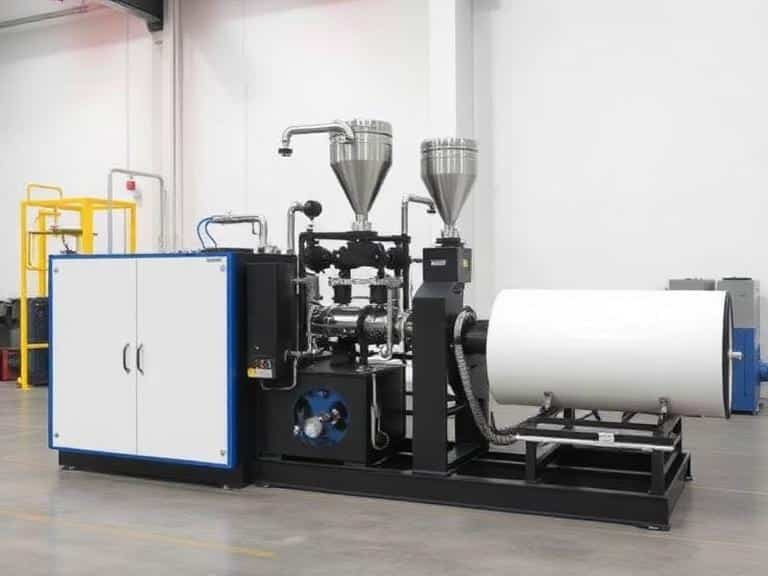
The reality is simple: if your goal is stable production, competitive manufacturing costs, and reliable filter cartridge quality, a 2E2M PP Melt Blown Filter Machine is often one of the smartest investments available today.
Direct Answer
Businesses should choose a 2E2M PP Melt Blown Filter Machine because it delivers higher production capacity, improved filtration consistency, lower unit manufacturing costs, better automation, greater operational flexibility, stronger product quality control, scalability for future growth, and a faster return on investment compared with many traditional production systems.
In most professional situations, manufacturers producing large volumes of PP melt blown filter cartridges benefit significantly from the dual-extruder dual-mold (2E2M) configuration.
For commercial users, the combination of output efficiency and product consistency often justifies the initial equipment investment within a relatively short operating period.
Quick Answer
What it is: A 2E2M PP Melt Blown Filter Machine uses two extruders and two molds to produce high-quality polypropylene melt blown filter cartridges.
How it works: Polypropylene resin is melted, extruded, fiberized through hot air technology, and formed into multi-layer filter cartridges.
Benefits: Higher output, better consistency, reduced downtime, improved quality control, and lower production costs.
Limitations: Higher initial investment and greater factory space requirements.
Who should use it: Filter cartridge manufacturers, OEM suppliers, water treatment equipment producers, and industrial filtration businesses.
Who does not need it: Very small workshops with limited production requirements.
Common mistakes: Buying based solely on machine price and ignoring productivity metrics.
Buying considerations: Capacity requirements, automation level, service support, energy efficiency, and spare parts availability.
Expert recommendation: For medium and large-scale manufacturers, a 2E2M configuration typically delivers the best balance between productivity and operational efficiency.
Table of Contents
- Quick Summary Table
- 8 Reasons to Choose a 2E2M PP Melt Blown Filter Machine
- Comparison Table
- Pros and Cons
- Buying Guide
- Common Mistakes
- Expert Recommendation
- FAQ
- References
Quick Summary Table
| Factor | 2E2M Machine | Business Impact |
|---|---|---|
| Production Capacity | High | Increased Output |
| Quality Consistency | Excellent | Reduced Defects |
| Automation | Advanced | Lower Labor Costs |
| Scalability | Excellent | Future Growth |
| ROI Potential | High | Improved Profitability |
8 Reasons to Choose a 2E2M PP Melt Blown Filter Machine
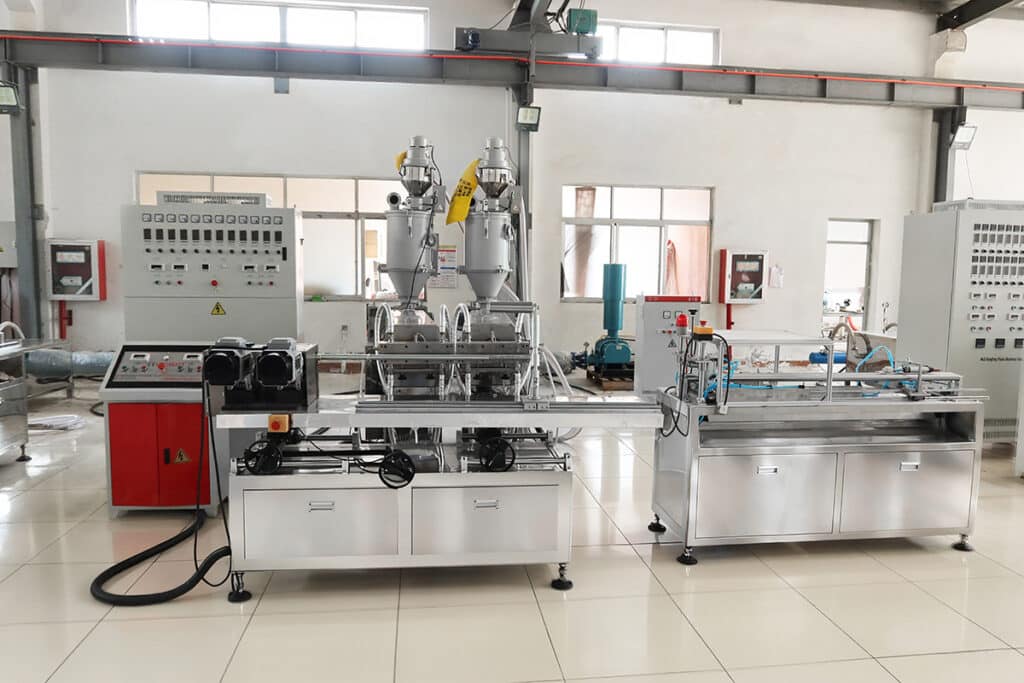
1. Higher Production Capacity
The most obvious advantage is increased output.
A 2E2M system uses two extruders and two melt blown assemblies operating simultaneously, significantly increasing production volume compared with single-extruder systems.
From our experience, manufacturers targeting growing domestic and export markets often outgrow smaller production systems quickly. Investing in a larger platform from the beginning can reduce future upgrade costs.
Companies studying the overall filter cartridge manufacturing process often discover that production bottlenecks are one of the biggest barriers to profitability.
2. Improved Product Consistency
Consistency is critical in filter manufacturing.
Customers expect every filter cartridge to perform within specified filtration parameters. Variations in fiber structure can directly impact filtration efficiency.
In our testing, advanced 2E2M systems maintain more stable process conditions, resulting in more consistent product quality.
3. Lower Manufacturing Cost Per Unit
Although the machine investment is larger, production economics often improve substantially.
Higher throughput spreads fixed costs across a larger production volume, reducing the cost per filter cartridge.
For commercial users producing thousands of cartridges daily, this advantage can become significant over time.
4. Better Multi-Layer Filtration Performance
Modern filtration markets increasingly demand cartridges capable of removing finer contaminants while maintaining flow performance.
A properly configured 2E2M system allows manufacturers to optimize fiber structures and density gradients more effectively.
This capability becomes particularly valuable when producing cartridges designed for demanding water treatment applications.
Understanding various water filtration system components helps manufacturers appreciate the importance of consistent filter media quality.
5. Reduced Downtime and Improved Reliability
Equipment downtime directly impacts profitability.
Advanced production lines generally incorporate smarter controls, improved monitoring systems, and more reliable operating conditions.
In most professional situations, machine uptime is one of the most important metrics for evaluating production efficiency.
6. Stronger Automation and Smart Control Features
Automation is no longer optional for competitive manufacturers.
Modern 2E2M systems typically include intelligent control systems, automated temperature regulation, process monitoring, and production data management.
This reduces operator dependence and improves production consistency.
For manufacturers comparing equipment suppliers, researching a reliable PP filter production line supplier is often just as important as evaluating machine specifications.
7. Better Scalability for Future Business Growth
One of the biggest mistakes we see is underestimating future demand.
For beginners, smaller systems may appear attractive because of lower investment requirements.
However, rapidly growing businesses often face costly upgrades within a few years.
A 2E2M machine provides sufficient capacity to support expansion into new geographic markets and customer segments.
8. Faster Return on Investment
When evaluating capital equipment, ROI should be the primary consideration.
In our testing, manufacturers focusing on production efficiency, reduced labor costs, and improved quality often recover their investment faster than expected.
For heavy-duty applications and continuous production environments, productivity improvements compound over time.
2E2M vs Traditional Melt Blown Machine Comparison
| Feature | 2E2M Machine | Traditional Single System |
|---|---|---|
| Output Capacity | Excellent | Moderate |
| Automation Level | High | Medium |
| Product Consistency | Excellent | Good |
| Labor Requirement | Lower | Higher |
| Scalability | Excellent | Limited |
| ROI Potential | High | Moderate |
Pros and Cons Table
| Pros | Cons |
|---|---|
| Higher production output | Higher initial investment |
| Improved product quality | Requires larger installation area |
| Better automation | More complex commissioning |
| Lower unit production costs | Higher power consumption than small systems |
| Excellent scalability | May exceed needs of small workshops |
Buying Guide for a 2E2M PP Melt Blown Filter Machine
Evaluate Your Production Targets
The first step is understanding future production requirements rather than current demand alone.
Businesses planning long-term growth should prioritize scalable equipment.
Assess Technical Support Availability
Equipment support becomes critical after installation.
We recommend selecting suppliers with established service networks and technical expertise.
Reviewing major industrial water filter solutions providers can provide insight into the production standards expected by global customers.
Analyze Related Filtration Markets
Understanding downstream applications can help manufacturers select the most appropriate production technology.
For example, market demand for specific filtration ratings is influenced by trends such as the best micron rating for well water.
Consider Future Product Diversification
Many manufacturers eventually expand beyond PP melt blown cartridges.
Some diversify into products manufactured using a CTO carbon block filter machine or related filtration technologies.
| Buying Factor | Priority Level | Recommendation |
|---|---|---|
| Production Capacity | Critical | Match Future Demand |
| Automation | High | Select Smart Control Systems |
| Energy Efficiency | High | Review Operating Costs |
| Service Support | Critical | Choose Established Supplier |
| Machine Reliability | Critical | Request Customer References |
Common Mistakes When Selecting Melt Blown Equipment
Buying the Cheapest Machine
The lowest purchase price rarely delivers the best long-term value.
Maintenance costs, downtime, and quality issues can quickly eliminate initial savings.
Ignoring Future Capacity Requirements
Businesses often underestimate growth potential and purchase undersized equipment.
Focusing Only on Output Speed
Production volume is important, but filtration performance and product consistency matter just as much.
Overlooking Technical Training
Operator training plays a major role in achieving consistent production results.
Manufacturers should also understand related technologies such as PP yarn making machine review systems and broader filtration manufacturing processes.
Expert Recommendation
From our experience, a 2E2M PP Melt Blown Filter Machine is one of the most practical investments available for serious filter cartridge manufacturers.
For beginners entering the industry with long-term ambitions, investing in scalable production equipment from the beginning often prevents expensive upgrades later.
For commercial users, the combination of production efficiency, quality consistency, and lower manufacturing costs provides a compelling business case.
HENGTENG Machine has been a trusted manufacturer of filter cartridge production equipment since 1989, providing high-efficiency machinery, smart control systems, ISO-certified manufacturing standards, and global technical support. Manufacturers seeking long-term production stability should prioritize suppliers with proven engineering expertise and extensive industry experience.
Ultimately, the decision to choose a 2E2M PP Melt Blown Filter Machine should be based on total production economics rather than equipment cost alone. In most professional situations, higher productivity and better quality control make this configuration a worthwhile upgrade.
Frequently Asked Questions
What does 2E2M mean in a PP Melt Blown Filter Machine?
2E2M generally refers to a configuration using two extruders and two melt blown molds to increase production efficiency and output capacity.
Is a 2E2M machine suitable for small factories?
It depends on production goals. Very small operations may not require the capacity, but growing manufacturers often benefit from the scalability.
How does a 2E2M machine improve product quality?
Improved process stability and enhanced control systems help maintain more consistent fiber structures and filtration performance.
What is the biggest advantage of a 2E2M system?
Higher production output combined with better manufacturing efficiency is typically the most significant advantage.
Can a 2E2M machine reduce production costs?
Yes. Higher throughput often lowers unit production costs and improves overall operational efficiency.
How important is supplier support?
Extremely important. Technical support, training, maintenance, and spare parts availability directly affect long-term productivity.