
The Expert Guide: What Does a CTO Carbon Filter Do in Modern Water Purification?
In the highly technical realm of fluid purification, residential and industrial water treatment systems rely heavily on multi-stage filtration to ensure safety, clarity, and palatability. Among the most critical components in these systems is the CTO carbon filter. However, outside of water treatment engineering circles, there is often confusion regarding its precise function and manufacturing methodology. Understanding what a CTO carbon filter does, how it is constructed, and why it is indispensable is vital for anyone involved in the production, procurement, or installation of water filtration equipment.
At HENGTENG Machine, we possess over 35 years of dedicated experience as one of China’s earliest professional manufacturers of filter cartridge production equipment. We provide complete, turnkey filter production line solutions to global clients in more than 60 countries. From our experience designing and commissioning advanced extrusion machinery, we know that the efficacy of a CTO carbon filte depends entirely on the precision of its manufacturing process. In this comprehensive technical analysis, we will deconstruct the mechanisms of CTO carbon block filtration, detail the exact contaminants it removes, and explore the advanced machinery required to produce these vital components at scale.
Table of Contents
- 1. Understanding the Acronym: What Does CTO Mean?
- 2. The Core Functions: What Does a CTO Carbon Filter Do?
- 3. Granular Activated Carbon (GAC) vs. CTO Carbon Block
- 4. The Science of Manufacturing a CTO Carbon Filter
- 5. HENGTENG Machine CTO Carbon Block Filter Making Machine
- 6. Technical Specifications of High-Quality CTO Production
- 7. Summary Table: CTO Carbon Filter Capabilities
- 8. Frequently Asked Questions (FAQs)
- 9. References
1. Understanding the Acronym: What Does CTO Mean?
To fundamentally answer the question of what a CTO carbon filter does, one must first decode the acronym. In the water treatment industry, CTO stands for Chlorine, Taste, and Odor. This designation indicates that the filter is specifically engineered to address the aesthetic and chemical impurities that render municipal or well water unpalatable or unsafe for specific applications.
A CTO carbon filter is typically utilized as the second or third stage in a reverse osmosis (RO) system or as a standalone point-of-use (POU) drinking water filter. It acts as a chemical barrier. While sediment filters (often made of melt-blown polypropylene) remove physical dirt, rust, and sand, the CTO carbon filter targets dissolved gases, volatile organic compounds, and chemical disinfectants that pass through standard mechanical barriers.
2. The Core Functions: What Does a CTO Carbon Filter Do?
The operational mechanism of a CTO carbon filte relies on the principle of adsorption (not absorption). Activated carbon possesses an incredibly vast network of microscopic pores. As water flows through the carbon block, chemical contaminants are attracted to the surface of the carbon and trapped within these microscopic pores via Van der Waals forces. We recommend analyzing the filter’s performance across four distinct vectors.
2.1 Catalytic Chlorine Reduction
Municipal water treatment facilities universally use chlorine or chloramines as primary disinfectants to kill bacteria and viruses in the water supply. While necessary for public health, residual chlorine causes water to smell akin to a swimming pool and can be highly detrimental to the delicate thin-film composite (TFC) membranes used in reverse osmosis systems. A high-quality CTO carbon filter facilitates a catalytic reduction reaction, converting active chlorine into benign, non-oxidizing chloride ions. From our experience, a properly extruded CTO carbon block can remove over 99% of free chlorine from a water stream.
2.2 Taste and Odor Improvement
The secondary function defined by the CTO acronym is the removal of unpleasant tastes and odors. These aesthetic issues are often caused by decaying organic matter, algae blooms in source water, or the reaction of chlorine with organic compounds (producing disinfection byproducts like trihalomethanes). The immense surface area of the activated carbon within the CTO carbon filter acts as a molecular sponge, trapping the organic molecules responsible for earthy, metallic, or chemical tastes, resulting in crisp, clean-tasting water.
2.3 VOCs and Organic Chemical Adsorption
Beyond chlorine, a CTO carbon filte is highly effective at reducing Volatile Organic Compounds (VOCs). These include a broad spectrum of synthetic chemicals such as herbicides, pesticides, industrial solvents (like benzene and trichloroethylene), and petroleum byproducts that may leach into groundwater. Because these organic molecules are non-polar, they have a strong affinity for the non-polar surface of the activated carbon matrix.
2.4 Mechanical Particulate Trapping
While a CTO carbon filter is primarily a chemical filter, its dense block structure inherently provides mechanical filtration. Unlike loose granular carbon, an extruded CTO block typically boasts a micron rating of 5 to 10 microns. This allows it to act as a secondary physical barrier, trapping fine carbon dust, microscopic cysts (such as Giardia and Cryptosporidium), and fine sediment that may have bypassed the initial pre-filtration stages.
3. Granular Activated Carbon (GAC) vs. CTO Carbon Block
It is essential to distinguish between a Granular Activated Carbon (GAC) filter and a CTO Carbon Block filter. A GAC filter contains loose carbon granules packed into a plastic housing. While effective, GAC filters are highly susceptible to “channeling.” This occurs when water pressure forces the loose granules apart, creating a path of least resistance. Water flows through these channels rapidly, bypassing the carbon and drastically reducing contact time and filtration efficiency.
Conversely, a CTO carbon filter is a solid, sintered block. The activated carbon particles are permanently bound together. This solid structure prevents channeling entirely, ensuring that every drop of water is forced through the tortuous, microscopic pathways of the carbon matrix. This results in significantly higher contaminant removal rates and a much more consistent flow profile. To manufacture these solid blocks efficiently, highly specialized extrusion equipment is required.
4. The Science of Manufacturing a CTO Carbon Filter
The superiority of a CTO carbon filter is entirely dependent on its manufacturing process. At HENGTENG Machine, we understand that creating a high-performance carbon block is a delicate balance of thermodynamics and material science. The process involves blending finely ground activated carbon (often derived from coconut shells or bituminous coal) with a thermoplastic binder, typically a high-molecular-weight Polyethylene (PE) resin.
This dry mixture must be heated to the precise melting point of the PE resin. If the temperature is too low, the block will not bind and will crumble under water pressure. If the temperature is too high, the melted resin will completely coat the activated carbon, blinding the microscopic pores and destroying the filter’s adsorption capacity. From our experience, achieving this perfect temperature window requires advanced, continuous extrusion machinery equipped with intelligent, multi-zone thermal controls.
5. HENGTENG Machine CTO Carbon Block Filter Making Machine
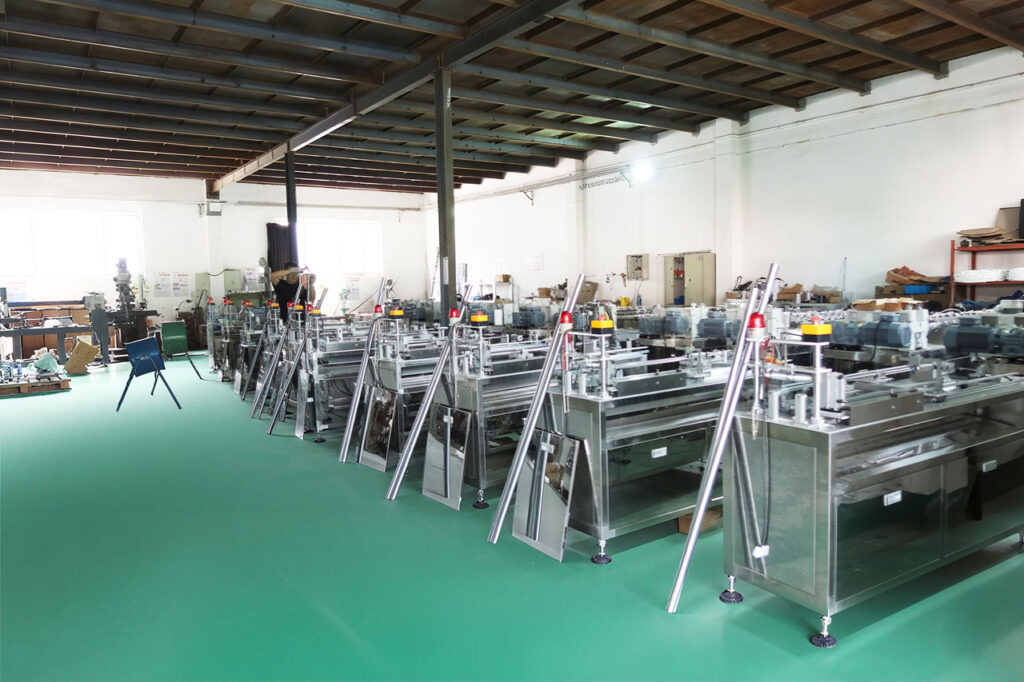
To meet the global demand for flawless filtration media, HENGTENG Environmental Technology Co., Ltd. has engineered the industry-leading CTO Carbon Block Filter Making Machine. This equipment is designed to transform raw carbon and binder into market-ready, high-performance CTO carbon filters with unparalleled consistency.
We recommend our equipment to manufacturers aiming to scale their production without sacrificing filter accuracy. The key features of our machinery include:
- Automatic Control System: Our machines feature an advanced PLC (Programmable Logic Controller) and an intuitive touch-screen interface. This allows for intelligent operation, easy adjustment, and precise, real-time control of extrusion parameters, minimizing human error and material waste.
- One-Step Forming Process: The activated carbon and polyethylene resin are continuously blended, heated, and extruded into dense carbon block filters in a single, seamless step, maximizing operational efficiency.
- Stable Performance: Consistent carbon density and strict filtration accuracy are guaranteed due to our advanced temperature and pressure control systems, ensuring that the PE resin binds the carbon without occluding the critical adsorption pores.
- High Output Efficiency: The continuous production line architecture ensures massive productivity yields and uniform filter quality from the first block to the ten-thousandth.
- Durable and Reliable Design: Built with high-quality, corrosion-resistant stainless steel and precision electric heating components, our machines are engineered for decades of reliable service life on the factory floor.
- Customizable Options: We understand that different markets require different form factors. Our machines offer adjustable dies for different filter lengths (such as standard 10-inch or 20-inch), various diameters, and specific micron densities according to client requirements.
6. Technical Specifications of High-Quality CTO Production
When evaluating a production line for a CTO carbon filte, procurement engineers must scrutinize the technical capabilities of the hardware. Below are the definitive technical specifications of the HENGTENG Machine CTO Carbon Block Filter Making Machine.
| Item | Specification |
|---|---|
| Model | CTO Carbon Block Filter Machine |
| Production Process | Heating, Extrusion, Molding (One-Step Forming) |
| Control System | Fully Automatic PLC Control |
| Production Speed | Customizable (depending on filter size and density) |
| Material Used | Activated Carbon + Polyethylene (PE) Resin |
| Filter Length | 10”–20” (customizable extrusion cuts) |
| Heating Method | Electric Heating / Temperature Controlled Zones |
| Power Requirement | Approx. 30–40 kW/set |
| Operation Mode | Continuous 24-hour operation capable |
| Cooling System | Air Cooling / Water Cooling Optional |
7. Summary Table: CTO Carbon Filter Capabilities
To summarize the operational benefits of utilizing a high-quality CTO carbon filter manufactured on HENGTENG machinery, we have compiled the following rapid-reference table detailing its filtration capabilities.
| Contaminant Category | Filtration Mechanism | Removal Efficiency | Impact on Water Quality |
|---|---|---|---|
| Free Chlorine | Catalytic Reduction | > 99% | Eliminates pool smell, protects RO membranes. |
| Organic Compounds (VOCs) | Physical Adsorption | High (Depends on flow rate) | Removes pesticides, herbicides, and solvents. |
| Taste and Odor | Physical Adsorption | Excellent | Creates crisp, fresh, and palatable drinking water. |
| Fine Sediment / Particulates | Mechanical Trapping | Effective down to 5 microns | Removes carbon fines, rust, and microscopic cysts. |