
Let us confront a harsh reality immediately: most entrepreneurs who enter the water purification sector fail because they treat it like a standard retail arbitrage hustle. They buy cheap, imported residential units, mark them up slightly, and pray for high-volume sales. That strategy is dead. If you are seriously asking, is the water filtration business profitable in 2026, the answer is an absolute yes—but only if you fundamentally restructure your operational model. You must transition away from one-off product sales and embrace recurring maintenance revenue, industrial B2B contracts, and in-house consumable manufacturing. Without these pillars, your profit margins will be systematically crushed by rising logistics costs and aggressive online price wars.
In 2026, the global water filtration market was estimated at USD 50.5 billion, and it is actively scaling toward a projected USD 97.9 billion by 2035 at a Compound Annual Growth Rate (CAGR) of 7.6%. This is not a luxury market driven by discretionary spending. It is a critical infrastructure market driven by decaying municipal water grids, stringent governmental regulations regarding microplastics, and urgent global health mandates. From our experience, when an industry is tied directly to fundamental human survival and strict environmental compliance, making a water filtration business profitable becomes a highly predictable mathematical formula.
In this uncompromising technical and financial audit, we will break down the exact unit economics, service margins, and manufacturing levers you must pull to secure your long-term success. We will demonstrate exactly how the most successful operators ensure their water filtration business profitable architecture remains utterly bulletproof against economic downturns.
About Hengteng Machine: Hengteng Machine is one of China’s earliest professional manufacturers of filter cartridge production equipment. With over 35 years of experience, we provide complete filter production line solutions to global clients in more than 60 countries. We empower businesses to localize their supply chains, slash Cost of Goods Sold (COGS), and dramatically increase their gross profit margins through world-class manufacturing automation.
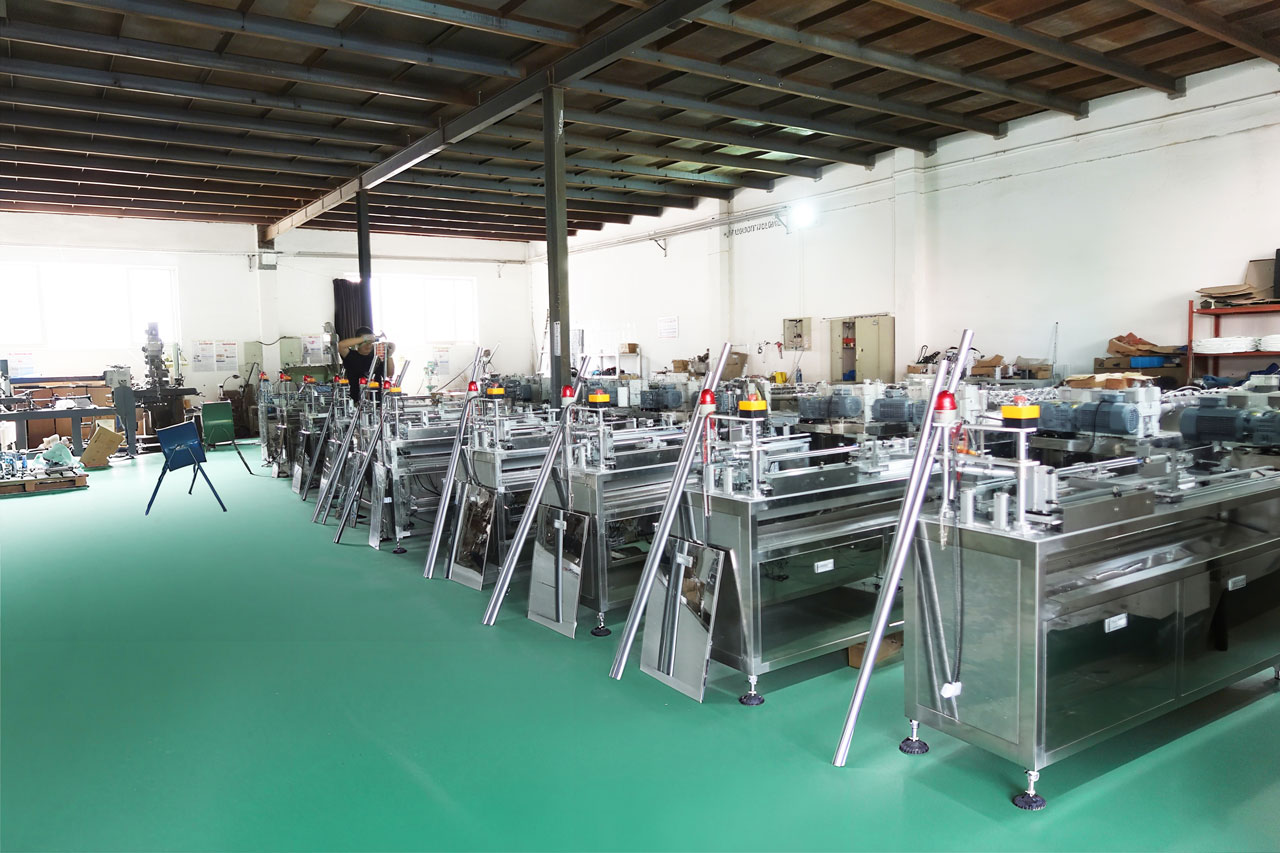
Table of Contents
- 1. The 2026 Market Forces Driving Sector Growth
- 2. Decoding Unit Economics: Installation vs. Hardware
- 3. The Secret to Cash Flow: Consumables and AMCs
- 4. Controlling COGS: The Case for In-House Manufacturing
- 5. Selecting the Right Production Technology for Scale
- 6. Commercial and Industrial Sectors: Where the Heavy Capital Resides
- 7. Summary Matrix: Financial Performance Benchmarks
- 8. Frequently Asked Questions (FAQs)
- 9. Authoritative References
1. The 2026 Market Forces Driving Sector Growth
Before deploying capital, an operator must understand the macroeconomic drivers. The foundation for a water filtration business profitable strategy relies on identifying inescapable consumer and commercial pain points. Urbanization is putting unprecedented pressure on aging municipal treatment facilities. Across North America and Europe, consumers are deeply concerned about heavy metal contamination, forever chemicals (PFAS), and pharmaceutical residues bypassing standard city filtration.
Furthermore, in developing regions and disaster zones, point-of-use systems are literally the difference between life and death. Governments and NGOs are constantly sourcing the best water filters for cholera and other waterborne pathogen outbreaks. When demand is legally mandated or medically required, pricing elasticity works entirely in the distributor’s favor. If you position your company as an essential health and compliance utility rather than a simple appliance vendor, the water filtration business profitable dynamic works effortlessly.
2. Decoding Unit Economics: Installation vs. Hardware
To understand how to keep a water filtration business profitable, you must ruthlessly dissect your gross margins. Beginners obsess over the hardware markup. Veterans obsess over the service and installation margins. For high-end whole-house systems (Point-of-Entry or POE), the hardware itself may only carry a 40% margin. However, the installation labor and customized plumbing integration often yield gross margins approaching 85% to 90%.
Consider an Average Selling Price (ASP) of $4,500 for a customized residential reverse osmosis and UV sanitation setup. If your Cost of Goods Sold (COGS) for the hardware is kept under $1,000, your gross profit on that single day’s labor is tremendous. But to ensure your water filtration business profitable status remains secure, your Customer Acquisition Cost (CAC) must be strictly managed. We recommend keeping your CAC below 10% of your total ASP. If you spend $1,000 on Google Ads to acquire a $4,500 installation, your net cash flow will suffocate your operational growth.
3. The Secret to Cash Flow: Consumables and AMCs
The initial installation profit covers your fixed overhead and marketing. However, the true mechanism that makes the water filtration business profitable long-term is recurring revenue. Systems require maintenance, and filters inevitably clog. The single most important Key Performance Indicator (KPI) for any dealership is the Annual Maintenance Contract (AMC) attachment rate. We recommend aiming for an AMC attachment rate of greater than 65% on all new installations.
Consumable filter cartridges represent massive gross margins, frequently exceeding 60% to 70%. Whether your technicians are servicing complex multi-stage industrial racks or you are simply publishing guides outlining the keurig water filter replacement steps for standard consumers to buy your branded replacements online, these recurring purchases are the lifeblood of the enterprise. If you are bleeding capital, auditing your consumable renewal rate is the fastest way to return a water filtration business profitable framework back to the green.
4. Controlling COGS: The Case for In-House Manufacturing
Here is where we pivot from standard business advice to aggressive scaling strategy. If you rely entirely on importing finished filter cartridges from overseas brokers, you are vulnerable. Container freight fluctuations, import tariffs, and arbitrary supplier price hikes will eventually erode your margins. To ensure your water filtration business profitable metrics dominate your local competitors, you must take control of your supply chain by manufacturing your own consumables.
By investing in localized production, you instantly collapse your COGS. When business owners evaluate the pp spun filter cartridge machine price, they often realize the return on investment can be achieved in less than ten months. Producing your own polypropylene melt-blown filters allows you to dictate exact quality standards, customize micron ratings for specific regional water issues, and entirely bypass the middleman markup that cripples standard retail operators.
5. Selecting the Right Production Technology for Scale
Not all filtration media are created equal, and capital misallocation on the factory floor is deadly. Engineers frequently debate: are pleated sediment filters better than standard spun cartridges? While pleated filters offer a higher surface area and are excellent for specific high-flow industrial applications, standard melt-blown PP filters remain the absolute volume king due to their incredibly low raw material cost and universal demand.
To capture this massive volume effectively, we highly recommend integrating a fully automated pp melt blown filter cartridge machine. If your technical team lacks experience with extrusion parameters, consulting a detailed pp melt blown filter machine guide is mandatory. Machine reliability directly dictates your factory’s uptime and, consequently, your profitability. Sourcing your capital equipment exclusively from the pp filter making machine manufacturers guarantees that you avoid catastrophic mechanical downtime and excessive scrap material waste.
6. Commercial and Industrial Sectors: Where the Heavy Capital Resides
While the residential consumer market provides steady volume, the commercial and industrial B2B sector is where generational wealth is generated. Food and beverage processing plants, pharmaceutical cleanrooms, and large-scale agricultural hydroponic operations require tens of thousands of gallons of ultra-pure water daily. Can we consider the industrial water filtration business profitable during an economic recession? Yes, because industrial water quality is fundamentally tied to a corporation’s operational compliance and product integrity. It cannot be compromised.
A single industrial service contract can yield more net operating profit than fifty residential installations combined. If you want to make a commercial water filtration business profitable, you must shift your sales focus toward these B2B accounts. These clients demand immediate uptime and will gladly pay premium monthly retainer fees for automated telemetry monitoring and guaranteed rapid-response filter replacements.
7. Summary Matrix: Financial Performance Benchmarks
To assist operations managers and investors in calibrating their financial models, we have compiled the core target metrics required to establish a water filtration business profitable baseline.
| Operational Metric | Industry Average | Target Benchmark for High Profitability | Impact on the Business Model |
|---|---|---|---|
| Gross Margin (Hardware Sales) | 35% – 45% | > 50% (via localized manufacturing) | Directly reduces COGS and eliminates freight reliance. |
| Gross Margin (Install & Service) | 60% – 75% | 85% – 90% | Covers fixed overhead rapidly; high cash flow velocity. |
| AMC Attachment Rate | 30% – 40% | > 65% | Ensures long-term recurring revenue and high customer lifetime value (LTV). |
| Customer Acquisition Cost (CAC) | 15% – 20% of ASP | < 10% of ASP | Prevents marketing spend from eroding initial installation profits. |
| Consumable Margin (In-House) | 40% (Imported) | 70% – 80% (Self-Manufactured) | The ultimate lever for making a water filtration business profitable at scale. |
8. Frequently Asked Questions (FAQs)
Is a residential water filtration business profitable compared to B2B?
From our experience, residential businesses can be highly profitable, but they require a massive volume of customers to achieve the same EBITDA as a B2B model. Residential relies on marketing efficiency and quick, low-friction installations. B2B models require longer sales cycles but offer astronomically higher ticket sizes, stronger contractual loyalty, and massive recurring consumable orders.
What is the biggest hidden cost in running a water purification dealership?
The largest hidden cost is technician inefficiency (windshield time) and high customer acquisition costs. If your technicians spend three hours driving between jobs, your effective hourly labor margin collapses. A highly structured water filtration business profitable ecosystem depends on strict geographical routing software and dense territory management to maximize the number of billable installations per day.
Does building a water filtration business profitable model mandate manufacturing your own filters immediately?
We recommend starting with imported or wholesale products to prove your local sales velocity and build an initial customer base. However, once you hit a consistent volume of 5,000+ replacement cartridges per year, the math clearly dictates that purchasing your own PP melt-blown filter machinery is the only logical step to stop leaking margin to overseas suppliers.
9. Authoritative References
To further validate the public health drivers and macroeconomic financial projections discussed in this audit, we strictly advise consulting the following definitive resources:
- Centers for Disease Control and Prevention (CDC) – Public Water Systems: This primary governmental resource details the severe health impacts of aging municipal water infrastructure and waterborne pathogens, highlighting the non-negotiable demand for point-of-use purification systems.
- Global Market Insights – Water Filtration Industry Report (2026-2035): A comprehensive financial research publication detailing the projected $50.5 billion market size in 2026 and identifying the massive 7.6% CAGR driving global commercial and residential sector expansions.