
Let us confront a brutal reality in the fluid filtration industry: most facility operators, municipal plant managers, and residential homeowners have absolutely no idea what the true lifespan of a PP filter actually is. They rely on arbitrary calendar dates provided by generic marketing brochures—swapping out their polypropylene sediment filters every three or six months simply because a label told them to. This unscientific approach to maintenance guarantees one of two catastrophic outcomes: you are either prematurely discarding perfectly viable polymeric media and hemorrhaging capital, or you are allowing a fully saturated filter to operate in bypass mode, actively destroying the expensive downstream reverse osmosis (RO) membranes and carbon blocks you intended to protect.
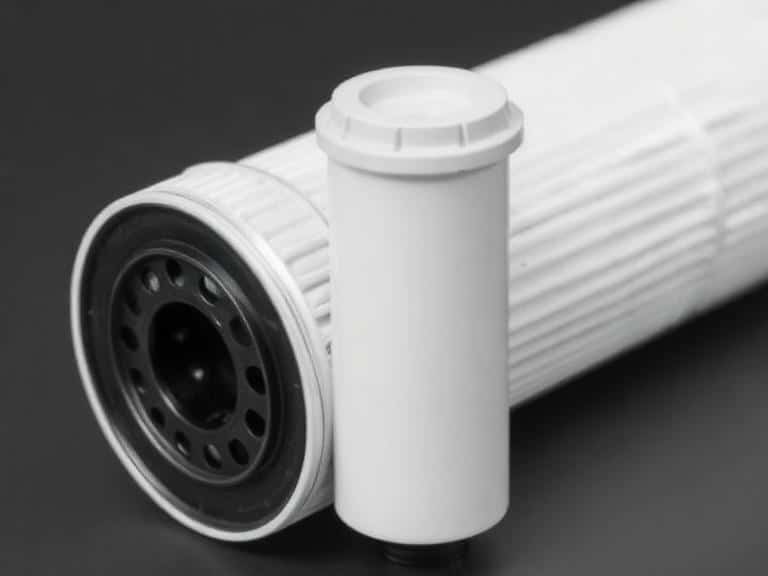
Polypropylene (PP) filters—whether melt-blown or string-wound—serve as the indispensable vanguard of any fluid treatment system. They are designed to absorb the brutal impact of total suspended solids (TSS), rust, silt, and organic debris. However, the lifespan of a PP filter is not a static chronological measurement; it is a highly dynamic variable governed by fluid mechanics, source water turbidity, micron density, and, critically, the manufacturing integrity of the cartridge itself. If you attempt to operate an industrial water treatment plant based on guesswork rather than empirical differential pressure metrics, your operational expenses will rapidly spiral out of control.
Hengteng Environmental Technology Co., Ltd. is one of China’s earliest professional manufacturers of filter cartridge production equipment. With over 35 years of experience, we provide complete filter production line solutions to global clients in more than 60 countries.
From our experience engineering the heavy machinery that produces these very filtration media, we know exactly how structural depth and polymer extrusion dictate performance. Hengteng Machine refuses to accept the industry standard of ambiguity. In this aggressively detailed, expert-led analysis, we will deconstruct the exact mechanical and environmental variables that determine the lifespan of a PP filter, expose the engineering flaws in cheap imported cartridges, and provide you with a definitive protocol for optimizing your filtration change-out cycles.
Table of Contents
- 1. The Structural Mechanics Dictating the Lifespan of a PP Filter
- 2. Source Water Turbidity and Flow Rates
- 3. The Manufacturing Factor: Extrusion vs. Winding
- 4. Protecting Downstream Assets: CTO and RO Membranes
- 5. The Only Accurate Way to Monitor Filter Life (Differential Pressure)
- 6. Summary Matrix: Estimated Lifespan by Application
- 7. Frequently Asked Questions (FAQs)
- 8. Authoritative References
1. The Structural Mechanics Dictating the Lifespan of a PP Filter
To accurately calculate the lifespan of a PP filter, you must first understand its physical architecture. A premium polypropylene filter is not merely a dense sponge; it is a gradient-density depth filter. This means the outer layers of the filter matrix are engineered with larger microscopic pores designed to capture coarse particulate matter (like large sand grains and heavy rust), while the inner core near the central spindle possesses an ultra-tight micron rating to trap fine silt and microscopic debris.
If a manufacturer fails to execute this gradient density correctly, the filter will suffer from “surface blinding.” Surface blinding occurs when all the pores on the immediate exterior of the cartridge clog simultaneously, forming an impenetrable cake of mud. When this happens, the lifespan of a PP filter drops from months to mere days, because the entire internal depth of the polymer remains completely unused and pristine while the outer wall suffocates the water flow. We recommend operators rigorously cross-examine their suppliers to ensure they are procuring true depth-gradient media rather than cheap, uniform-density extrusions that fail under heavy particulate loading.
2. Source Water Turbidity and Flow Rates
The single greatest environmental factor determining the lifespan of a PP filter is the Total Suspended Solids (TSS) and turbidity of the influent water. You cannot expect a filter processing heavily sedimented well water drawn from an agricultural basin to last as long as the same filter processing pre-treated municipal tap water. A 5-micron PP filter installed in a residential under-sink system fed by city water will easily last 6 to 12 months. Take that exact same filter and subject it to raw borehole water, and its lifespan will plummet to 30 days or less.
Furthermore, fluid velocity plays a critical role. Pushing water through a filter at a high volumetric flow rate forcibly drives the particulate matter deeper into the polymer matrix at high kinetic energy. If you exceed the maximum rated flow capacity of the cartridge, the differential pressure will skyrocket exponentially, prematurely compressing the polypropylene fibers and crushing the pore structure. This structural compression drastically shortens the lifespan of a PP filter, rendering it incapable of holding additional dirt.
3. The Manufacturing Factor: Extrusion vs. Winding
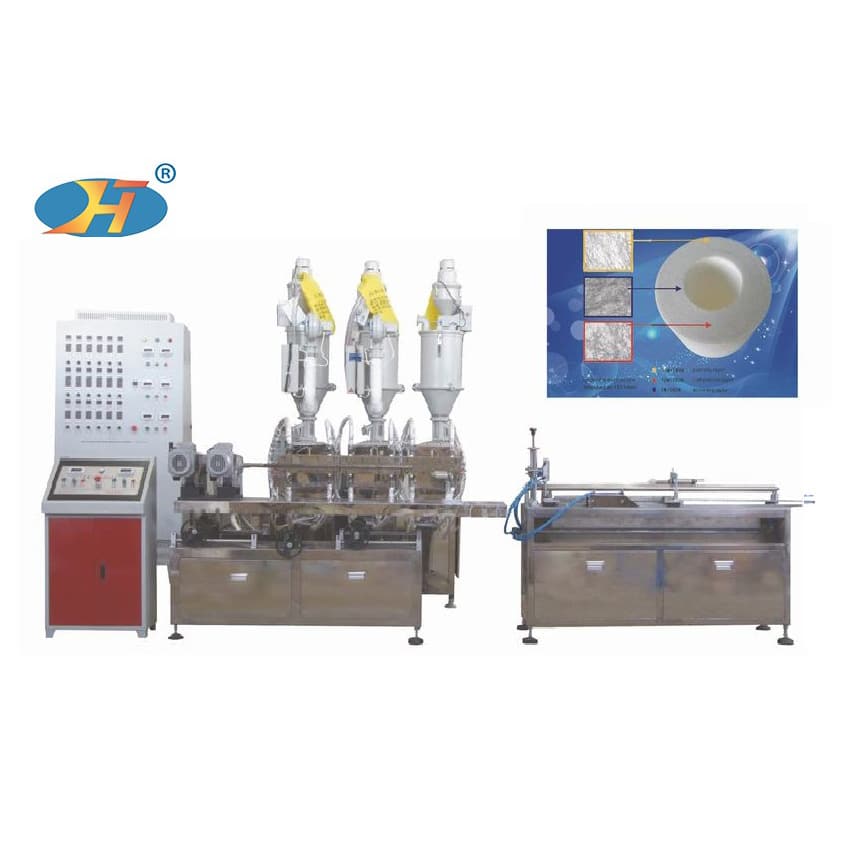
The durability of your filtration media is inextricably linked to the heavy machinery utilized on the factory floor. The global market is saturated with severely underperforming cartridges produced on archaic, uncalibrated equipment. The lifespan of a PP filter is directly proportional to the consistency of the micro-fibers generated during production. At Hengteng Machine, we engineer the elite pp melt blown filter making machine lines that the world’s leading industrial filter cartridge manufacturers rely upon. Our equipment guarantees precise thermal extrusion, creating a flawless gradient structure that maximizes dirt-holding capacity and prevents catastrophic surface blinding.
Alternatively, many high-temperature or highly specialized industrial applications prefer string-wound polypropylene cartridges over solid melt-blown blocks. String-wound filters provide exceptional depth filtration through a diamond-patterned winding matrix. However, if the yarn is manufactured with weak tensile strength or inconsistent roving, the filter will shed fibers into the clean water stream. Operators who produce these filters understand that the underlying yarn quality dictates the final product, which is why sourcing decisions often begin with a rigorous pp yarn making machine review to ensure the raw filament can withstand severe hydraulic stress.
4. Protecting Downstream Assets: CTO and RO Membranes
You must view the lifespan of a PP filter not in isolation, but as the critical sacrificial barrier protecting your most expensive equipment. In a standard multi-stage reverse osmosis system, the PP sediment filter is positioned as Stage 1. Its sole purpose is to capture dirt so that the subsequent carbon blocks and the delicate RO membrane are not instantly destroyed by abrasive grit.
If you push a PP filter past its viable lifespan, the internal matrix will tear, causing “channeling.” The water will bypass the clogged polymer and blast raw sediment directly into your carbon filters. This leads to immediate fouling of your CTO (Chlorine, Taste, and Odor) blocks. Understanding the difference between CTO and UDF filters is crucial here; while a UDF (granular carbon) might absorb some minor sediment shock, a dense CTO block extruded from a high-pressure cto carbon block filter machine will blind instantly if hit with raw sediment, ruining a highly expensive component. Always sacrifice the cheap PP filter to save the premium downstream assets.
5. The Only Accurate Way to Monitor Filter Life (Differential Pressure)
We absolutely reject the amateur practice of changing industrial filters based on the calendar. To scientifically determine the exact lifespan of a PP filter in your specific application, you must install pressure gauges immediately upstream and downstream of the filter housing. As the filter captures dirt, it restricts the flow of water, causing the upstream pressure to rise and the downstream pressure to drop. This variance is called Differential Pressure (Delta P or ΔP).
From our experience engineering high-volume filtration plants, a brand new PP filter will exhibit a pressure drop of roughly 1 to 2 PSI. We recommend scheduling a filter replacement the moment your Delta P reaches 10 to 15 PSI. Allowing the differential pressure to climb beyond 20 PSI is incredibly dangerous; the immense hydraulic force will physically crush the polypropylene core, warp the housing, and force concentrated dirt directly through the remaining barrier, destroying your entire purification circuit.
This strict adherence to operational metrics is universal across all advanced filtration media. Whether you are running polymer cartridges, analyzing how ceramic filters are manufactured for high-temperature chemical processing, or studying off-grid purification techniques on how to build your own water filter, the laws of fluid resistance and media saturation remain absolute.
6. Summary Matrix: Estimated Lifespan by Application
To assist procurement and maintenance teams in establishing realistic baseline expectations, we have synthesized the average lifespan of a PP filter based on application environments. Note that these are approximations; true replacement must always be dictated by Delta P.
| Application Environment | Water Source & Quality | Average Estimated Lifespan | Primary Failure Mode |
|---|---|---|---|
| Residential RO Pre-Filter | Municipal Tap Water (Low TSS) | 6 to 12 Months | Gradual organic fouling and minor silt buildup. |
| Whole-House Point of Entry | Well Water (High Iron/Silt) | 1 to 3 Months | Surface blinding from heavy sediment loads. |
| Commercial Food & Beverage | Filtered Municipal (High Volume) | 3 to 6 Months | Exceeding total volumetric capacity. |
| Industrial Process Water | River/Lake Intake (Extreme TSS) | 1 to 3 Weeks | Rapid differential pressure spike (Delta P > 15 PSI). |
| Desalination Pre-Treatment | Seawater (High Salinity & Sand) | 2 to 4 Weeks | Core compression due to aggressive flow rates. |
7. Frequently Asked Questions (FAQs)
Can I wash and reuse a PP sediment filter to extend its lifespan?
From our uncompromising engineering perspective, absolutely not. The lifespan of a PP filter cannot be artificially extended by washing. Polypropylene is a depth filter; the microscopic dirt particles are permanently trapped deep within the polymer web. Washing the exterior only removes surface cake. Rinsing it with high-pressure water will physically tear the delicate micron-rated fibers, creating massive bypass channels. Once a PP filter is saturated, it is dead. Discard it immediately.
Why does my 1-micron PP filter die so much faster than my 5-micron filter?
This is basic fluid dynamics. A 1-micron filter possesses a significantly tighter retention matrix than a 5-micron filter. Because the pores are smaller, it captures drastically more particulate matter, including ultra-fine silt that would otherwise pass right through a 5-micron barrier. Consequently, the 1-micron filter fills its available dirt-holding capacity much faster, resulting in a steeper rise in differential pressure and a shorter overall operational lifespan.
Does the physical weight of the filter cartridge matter?
Yes. The weight of the cartridge directly indicates the density and volume of the polypropylene resin extruded during manufacturing. Cheap, lightweight filters lack the structural integrity and the deep gradient matrix required to hold heavy sediment loads. They will crush under hydraulic pressure. A heavier, denser filter manufactured on premium equipment will fundamentally provide a longer, more reliable lifespan of a PP filter.
8. Authoritative References
To ensure your facility’s maintenance protocols align with rigorous international safety and engineering standards, we strongly advise consulting the following verified resources:
- U.S. Environmental Protection Agency (EPA) – Ground Water and Drinking Water: Authoritative federal guidelines detailing the necessity of primary sediment filtration, acceptable turbidity limits, and the protection of municipal reverse osmosis infrastructures.
- Water Quality Association (WQA): The premier international trade association providing stringent certification standards, peer-reviewed engineering data, and operational guidelines for residential, commercial, and industrial fluid filtration media.