
In the realm of industrial fluid purification and residential water treatment, there is an alarming amount of misinformation regarding filter media. We constantly see procurement managers and consumers equating cheap, wound-string filters with advanced polymeric structures. Let us be entirely clear: if you are attempting to remove microscopic particulates, silt, rust, and suspended solids from a high-volume fluid stream, you must understand exactly what a polypropylene melt blown filter cartridge is. Relying on inferior depth filters will destroy downstream membranes, clog industrial machinery, and compromise the safety of potable water systems.
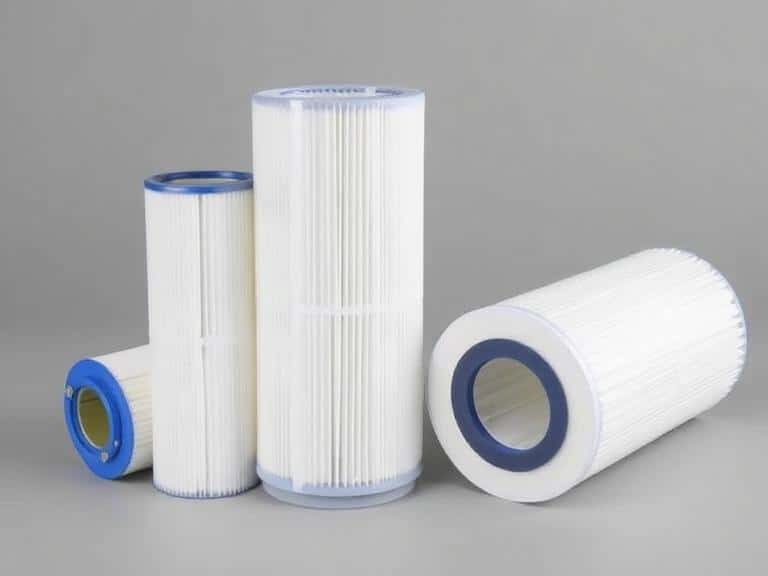
A polypropylene melt blown filter cartridge is not simply woven plastic. It is a highly engineered, three-dimensional micro-porous structure manufactured through a brutal, high-temperature extrusion process. Unlike pleated filters that rely entirely on surface area, melt blown cartridges are true “depth filters.” They capture large particles on their exterior layers and increasingly smaller particles deep within their core matrix. From our experience, the failure to understand this gradient density is the number one reason facilities burn through their filtration budgets prematurely.
In this uncompromising, expert-led guide, HENGTENG Machine will dissect the exact thermo-mechanical processes used to manufacture a polypropylene melt blown filter cartridge. We will explain why structural integrity is non-negotiable, how gradient density dictates efficiency, and why the machinery used to produce these filters is just as critical as the polymer resin itself.
Table of Contents
- Defining the Polypropylene Melt Blown Filter Cartridge
- The Science of Depth Filtration and Gradient Density
- The Manufacturing Process: Extrusion and Attenuation
- Critical Industrial and Residential Applications
- The HENGTENG Manufacturing Advantage
- Summary Table: Filter Media Comparison
- Frequently Asked Questions (FAQs)
- Technical References
Defining the Polypropylene Melt Blown Filter Cartridge
To accurately answer the question of what a polypropylene melt blown filter cartridge is, we must look at the raw material. Polypropylene (PP) is a thermoplastic polymer highly prized for its exceptional chemical resistance. It does not degrade in the presence of strong acids, alkalis, or organic solvents, making it the undisputed champion of industrial fluid handling. Furthermore, it is biologically inert, meaning it will not leach toxic chemicals into drinking water, which is why it forms the backbone of reverse osmosis pre-filtration.
The “melt blown” designation refers entirely to its manufacturing architecture. If you cut a premium polypropylene melt blown filter cartridge in half, you will not see a uniform block of plastic. You will see a web of microscopic, continuous filaments fused together without the use of chemical binders, glues, or surfactants. We strongly recommend rejecting any filter that utilizes binders, as these chemicals will inevitably wash out into the fluid stream, causing severe contamination. The structural integrity of a true melt blown filter relies solely on the thermal entanglement of the PP fibers.
The Science of Depth Filtration and Gradient Density
Why do we so aggressively champion the polypropylene melt blown filter cartridge over standard pleated paper or string-wound alternatives? The answer lies in the physics of gradient density. When analyzing what is pp spun filter cartridge technology, you must understand how particles are trapped.
A poorly manufactured filter has the same pore size throughout its entire wall. This means that large particles will instantly block the outer surface, “blinding” the filter and causing a massive, catastrophic pressure drop across the housing. A premium polypropylene melt blown filter cartridge is engineered with gradient density. The outer layers of the cylinder consist of thicker, loosely packed fibers (larger pores) designed to catch massive contaminants like sand and rust flakes. As the fluid travels deeper toward the core, the fibers become increasingly microscopic and densely packed, capturing ultrafine silt and colloidal matter. This allows the entire depth of the filter wall to hold contaminants, drastically extending the service life and maintaining stable fluid flow rates.
The Manufacturing Process: Extrusion and Attenuation
You cannot produce a flawless polypropylene melt blown filter cartridge without elite, highly calibrated machinery. The process is a violent symphony of thermodynamics and aerodynamics. Here is exactly how it works on the factory floor:
- Extrusion: Raw polypropylene resin pellets are fed into a single-screw extruder. The barrel is heated to extreme temperatures, melting the polymer into a highly viscous fluid. If the temperature control fluctuates even slightly, the polymer will burn or fail to flow, ruining the batch.
- Melt Blowing (Attenuation): The molten polymer is forced through a die head containing hundreds of microscopic spinneret holes. As the liquid plastic emerges, it is instantly hit by high-velocity, hot air streams. This air violently stretches (attenuates) the polymer into ultra-fine microfibers, often measuring less than a micron in diameter.
- Deposition and Winding: These chaotic microfibers are blown onto a rotating, receiving mandrel. Because the fibers are still in a semi-molten state when they hit the mandrel, they thermally bond to one another at every intersection point. By precisely altering the distance of the die head and the rotation speed of the mandrel, operators dictate the gradient density of the polypropylene melt blown filter cartridge.
This process requires absolute mechanical precision. When evaluating pp melt blown filter machine guide literature, it becomes clear that inferior machines produce filters with “channeling” defects, where fluid simply bypasses the filtration matrix entirely.
Critical Industrial and Residential Applications
The versatility of the polypropylene melt blown filter cartridge makes it the foundational defense line across multiple heavy industries. From our experience, trying to substitute this cartridge with cheaper alternatives inevitably leads to equipment failure.
Reverse Osmosis (RO) Pre-Filtration: RO membranes are incredibly delicate and astronomically expensive. If a single grain of sand or a speck of rust hits an RO membrane, it will tear the surface. A 5-micron or 1-micron polypropylene melt blown filter cartridge is universally deployed directly before the RO membrane to act as a sacrificial shield. If you are learning how to build your own water filter, integrating a melt blown cartridge is step one for particulate removal.
Food and Beverage Manufacturing: Because true melt blown filters use zero chemical binders and do not shed fibers into the fluid stream, they meet strict FDA compliance for clarifying syrups, filtering brewing water, and purifying edible oils.
Petrochemical and Plating Operations: The chemical inertness of polypropylene allows these cartridges to filter highly aggressive industrial acids, caustic plating solutions, and heavy solvents that would dissolve standard cellulose or ceramic filters. While exploring how ceramic filters are manufactured reveals excellent high-temperature resistance, ceramic shatters under pressure spikes; PP melt blown cartridges absorb those hydraulic shocks flawlessly.
The HENGTENG Manufacturing Advantage
At HENGTENG Machine, we do not just understand how a filter works; we engineer the brutal, high-tolerance machinery that makes their production possible. If you want to compete against the industrial filter cartridge manufacturers globally, you cannot rely on outdated extrusion lines.
HENGTENG Machine 3E3M PP Melt Blown Filter Making Machine
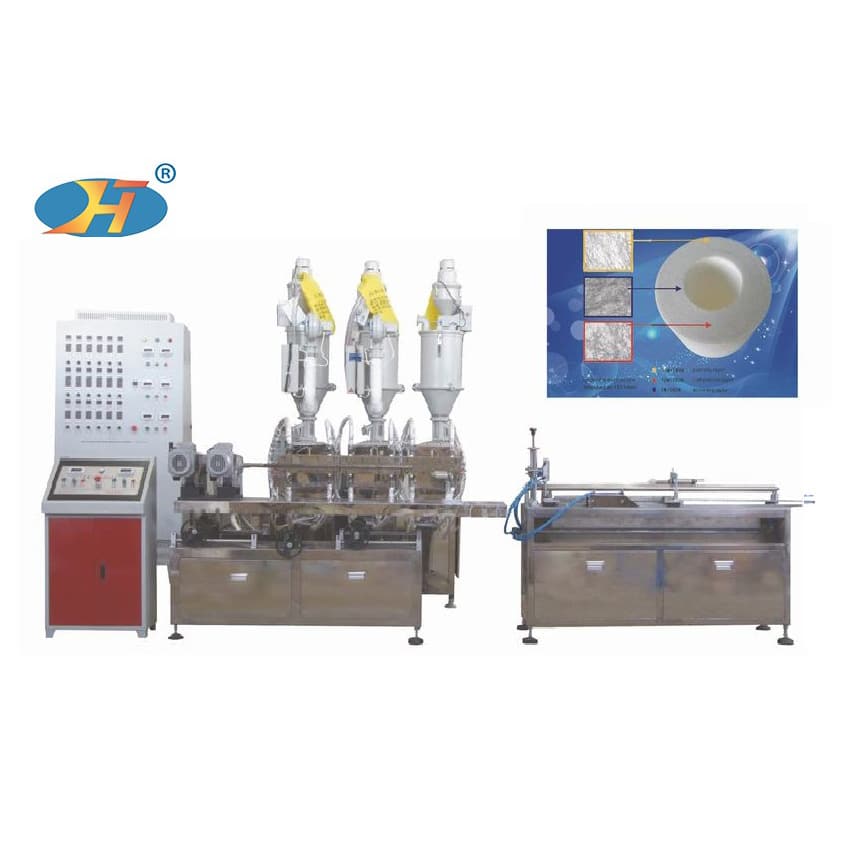
This is the definitive hardware for producing a flawless polypropylene melt blown filter cartridge. We strongly recommend evaluating the technical parameters of our equipment:
- Model: 3E3M PP Melt Blown Filter Machine
- Production Speed: 0.6 – 0.8 m/min (Ensuring high-volume, profitable output).
- Rated Power: 34 kW/set (Highly efficient power utilization).
- Control System: Fully Automatic PLC + Frequency Converter (Guaranteeing absolute consistency in gradient density).
- Filter Length Range: 10”– 40” (Fully customizable for diverse housing requirements).
- Material Used: Polypropylene (PP)
- Operation Mode: Continuous 24-hour operation (Built for relentless industrial demands).
For more detailed specifications, view our pp melt blown filter making machine and the highly versatile pp melt blown filter cartridge machine configurations.
Summary Table: Filter Media Comparison
To crystallize why the polypropylene melt blown filter cartridge dominates the industry, we have compiled this comparative matrix against legacy filtration media.
| Filter Type | Filtration Mechanism | Chemical Resistance | Dirt Holding Capacity |
|---|---|---|---|
| Polypropylene Melt Blown | True Depth (Gradient Density) | Excellent (Inert to most acids/bases) | Very High (Utilizes entire wall thickness) |
| String-Wound Cartridge | Surface / Shallow Depth | Moderate (Depends on string material) | Moderate (Prone to “blinding” quickly) |
| Pleated Cellulose | Strictly Surface Area | Poor (Degrades in water over time) | Low (Surface fills and blocks flow) |
| Ceramic Filter | Absolute Surface | Excellent (High heat tolerance) | Low (Requires frequent manual scrubbing) |
Frequently Asked Questions (FAQs)
1. Can I wash and reuse a polypropylene melt blown filter cartridge?
Absolutely not. From our experience, attempting to wash a depth filter is physically impossible. The microscopic contaminants (silt, rust, bacteria) are deeply embedded and thermally locked into the core matrix of the polymer fibers. Backwashing will not dislodge them. You must replace the cartridge when the pressure drop across the housing reaches the manufacturer’s specified limit.
2. Does a PP melt blown cartridge remove chlorine or bad tastes from water?
No. A polypropylene melt blown filter cartridge is strictly a mechanical particulate filter. It removes physical dirt, rust, and suspended solids. It does not perform chemical adsorption. To remove chlorine, volatile organic compounds (VOCs), or bad odors, you must run the fluid through an activated carbon block filter after the melt blown cartridge has removed the physical dirt.
3. Why does my melt blown filter look fuzzy or shed fibers into the water?
If your filter is shedding fibers, you have purchased a severely substandard product. A true, high-quality polypropylene melt blown filter cartridge utilizes thermal entanglement, meaning the fibers are fused together under immense heat during manufacturing. They do not require chemical binders and should never shed. We recommend immediately upgrading your supplier if you experience fiber migration.
Technical References
To ensure your fluid handling protocols align with global industrial standards, we highly advise consulting the following engineering and regulatory resources:
- American Water Works Association (AWWA). “Standards for Particulate Removal and Pre-Filtration in Municipal Systems.” (Technical guidelines dictating micron ratings for reverse osmosis protection).
- Food and Drug Administration (FDA). “Code of Federal Regulations Title 21 (CFR 21).” (Regulatory compliance detailing the requirement for chemically inert, binder-free polymers in food and beverage fluid processing).