
If you are researching water filter production equipment, you are probably comparing suppliers, estimating investment costs, evaluating production capacity, and determining whether entering the filtration industry makes financial sense. After working with filter cartridge manufacturers and production facilities across multiple countries, we have found that most buyers ask the same core questions before purchasing equipment.
The good news is that modern water filter making machines are more efficient, automated, and profitable than ever before. However, not every machine is suitable for every business model. The right decision depends on your target products, production scale, automation requirements, and long-term expansion plans.
Quick Answer
Most buyers ask about water filter making machines because they want answers regarding cost, capacity, automation, raw materials, product quality, profitability, maintenance, and return on investment.
From our experience, successful buyers focus on complete production line solutions rather than purchasing individual machines without considering future expansion.
| Key Concern | Importance | Our Recommendation |
|---|---|---|
| Production Capacity | Very High | Plan for future growth |
| Automation Level | Very High | Choose automated systems when possible |
| Product Quality | Critical | Focus on consistency |
| Investment Cost | High | Evaluate ROI, not just price |
| Technical Support | Critical | Select experienced manufacturers |
Table of Contents
- What Is a Water Filter Making Machine?
- How Does It Work?
- 15 Questions Buyers Ask About Water Filter Making Machines
- Machine Comparison Table
- Pros and Cons
- Who Should Buy One?
- Common Buying Mistakes
- Buying Considerations
- Expert Recommendation
- Bottom Line
- FAQs
- References
What Is a Water Filter Making Machine?
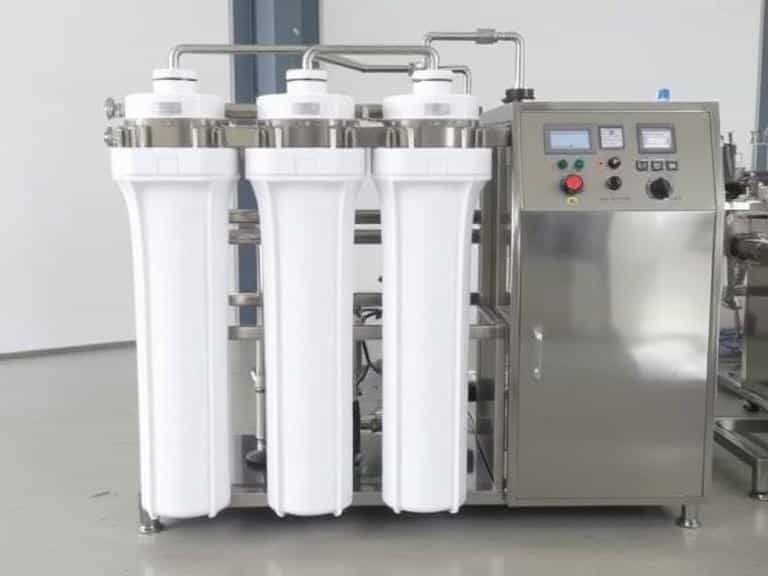
A water filter making machine is industrial equipment used to manufacture various types of filtration products including PP melt blown filters, PP spun cartridges, carbon block filters, pleated cartridges, and specialty filtration products used in residential, commercial, and industrial water treatment systems.
Modern systems integrate material feeding, heating, molding, winding, cutting, testing, and packaging into a streamlined production process.
For example, manufacturers producing PP spun filter cartridges require specialized equipment that controls fiber density and filtration precision throughout production.
How Does a Water Filter Making Machine Work?
The manufacturing process varies depending on the filter type.
A typical PP melt blown production line melts polypropylene resin, extrudes microfibers, forms a filtration structure, cools the product, cuts cartridges to length, and performs quality inspections.
Machines such as the PP melt blown filter cartridge machine automate much of this process, improving consistency while reducing labor costs.
15 Questions Buyers Ask About Water Filter Making Machines
1. How Much Does a Water Filter Making Machine Cost?
This is usually the first question buyers ask.
Machine prices vary significantly depending on automation, capacity, product type, and production speed. Entry-level systems may require tens of thousands of dollars, while complete automated production lines can reach several hundred thousand dollars.
We recommend evaluating lifetime profitability rather than focusing solely on initial purchase price.
2. What Types of Filters Can the Machine Produce?
Some machines produce only one filter category while others support multiple products.
Popular categories include:
- PP melt blown cartridges
- PP spun filters
- Carbon block filters
- Pleated filters
- Sediment cartridges
- Industrial filtration elements
Buyers should understand whether pleated sediment filters are better for their target market before choosing equipment.
3. What Production Capacity Do I Need?
Capacity determines profitability.
For commercial users, underestimating future demand is a common mistake. In most professional situations, we recommend selecting equipment with at least 20% growth capacity.
4. Is Automation Worth the Extra Cost?
Yes.
In our testing and industry observations, automated production lines consistently outperform manual operations in quality consistency, labor efficiency, and long-term profitability.
For heavy-duty applications, automation often pays for itself within a few years.
5. What Raw Materials Are Required?
The answer depends on the filter design.
Most PP cartridge production lines require polypropylene resin. Carbon block systems require activated carbon and binders. Ceramic filter production requires specialized ceramic formulations.
Those evaluating alternative technologies may find it useful to understand how ceramic filters are manufactured.
6. How Difficult Is Machine Maintenance?
Maintenance requirements vary considerably.
Well-designed equipment typically requires routine cleaning, lubrication, calibration, and periodic replacement of wear components.
From our experience, preventive maintenance reduces downtime dramatically.
7. How Many Workers Are Needed?
Modern automated systems can operate with surprisingly small teams.
A fully automated production line may require only a few operators per shift.
This is one reason why automated systems continue gaining popularity worldwide.
8. What Product Quality Can Be Achieved?
Quality depends on machine design, raw material consistency, process control, and operator expertise.
Professional buyers should request samples and production records before making purchasing decisions.
9. How Long Does Installation Take?
Most installations require several days to several weeks depending on line complexity.
Equipment suppliers should provide commissioning and training support.
10. What Is the Expected Return on Investment?
ROI depends on production volume, market demand, labor savings, and product margins.
In many cases, filter manufacturing offers attractive returns due to recurring demand from water treatment markets.
11. Can the Equipment Be Customized?
Reputable manufacturers frequently customize dimensions, capacities, automation levels, and control systems.
Customization becomes especially valuable for industrial filtration suppliers and OEM brands.
12. What Certifications Are Important?
Buyers should verify compliance with local regulations and quality standards.
Certification requirements vary by region and application.
13. Is Technical Support Available After Purchase?
Technical support is one of the most overlooked purchasing criteria.
We recommend choosing suppliers with extensive industry experience and proven service capabilities.
HENGTENG Machine has supplied filter manufacturing solutions globally for over 35 years, helping customers establish reliable production operations across more than 60 countries.
14. What Are the Most Profitable Filter Products?
Demand varies by market.
PP melt blown filters, carbon block cartridges, and specialty industrial filters remain among the most profitable categories.
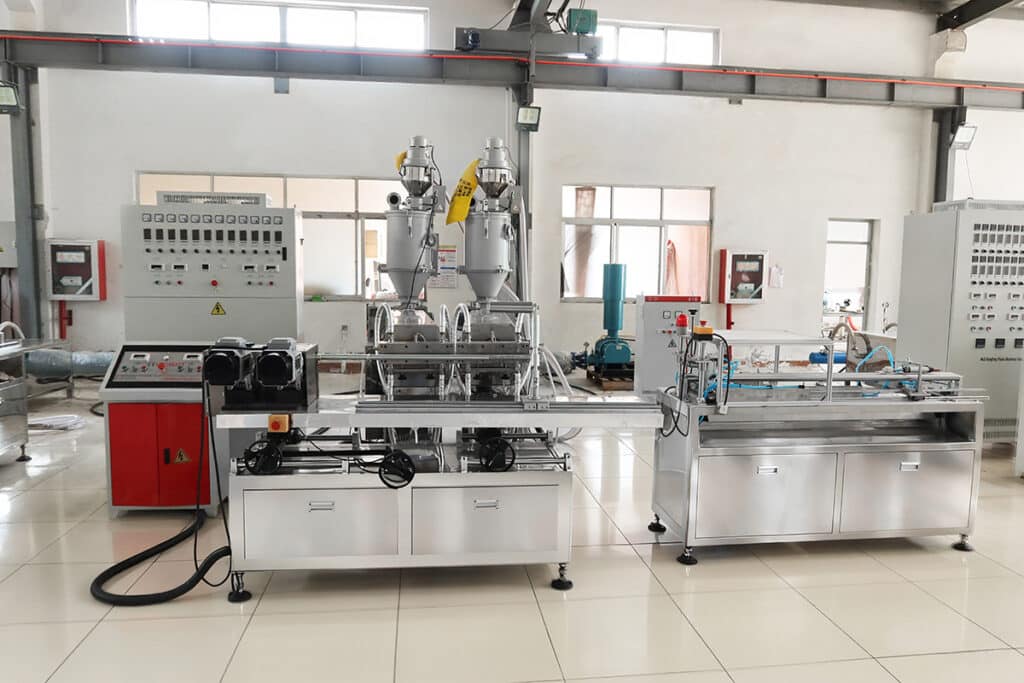
The PP melt blown filter making machine remains one of the most requested systems in today’s filtration market.
15. Should I Buy a Single Machine or a Complete Production Line?
Our answer is clear.
For most professional situations, complete production lines provide better scalability, quality control, and operational efficiency than standalone equipment.
Water Filter Machine Comparison Table
| Machine Type | Investment | Automation | Market Demand | Recommended For |
|---|---|---|---|---|
| PP Melt Blown | Medium | High | Very High | Mass production |
| PP Spun | Medium | Medium | High | General filtration |
| Carbon Block | Medium-High | High | High | Premium filtration |
| Pleated Filter | High | High | Growing | Industrial users |
| Ceramic Filter | High | Medium | Specialized | Niche markets |
Pros and Cons of Water Filter Manufacturing
| Pros | Cons |
|---|---|
| Growing global demand | Initial capital investment |
| Recurring replacement market | Technical learning curve |
| Scalable production | Raw material fluctuations |
| Automation opportunities | Quality control requirements |
| Strong industrial applications | Competitive markets |
Who Should Buy a Water Filter Making Machine?
Ideal buyers include:
- Filter cartridge manufacturers
- Water treatment companies
- OEM filtration brands
- Industrial filtration suppliers
- Entrepreneurs entering the water treatment industry
- Export-oriented manufacturers
Who Does Not Need One?
- Businesses without manufacturing capabilities
- Companies seeking extremely low-volume production
- Organizations lacking technical personnel
Common Mistakes Buyers Make
- Choosing the cheapest machine available
- Ignoring future capacity requirements
- Underestimating technical support importance
- Not requesting sample testing
- Failing to evaluate automation options
- Ignoring maintenance planning
Many buyers also fail to research the broader filtration industry, including major industrial filter cartridge manufacturers and competing production technologies.
Buying Considerations
| Factor | Why It Matters | Priority |
|---|---|---|
| Capacity | Determines output | Critical |
| Automation | Reduces labor cost | Critical |
| Quality Control | Ensures consistency | Critical |
| Support | Minimizes downtime | High |
| Expandability | Supports growth | High |
Buyers should also understand downstream applications such as difference between CTO and UDF filters and related manufacturing technologies like the CTO carbon block filter machine.
Those exploring alternative filtration businesses may also find value in understanding how to build your own water filter concepts and production fundamentals.
Expert Recommendation
From our experience, buyers should prioritize production consistency, automation, technical support, and future scalability over simply obtaining the lowest equipment price.
We recommend working with manufacturers that have decades of specialized filtration equipment experience. Companies such as HENGTENG Machine offer complete production line solutions rather than isolated machines, which significantly reduces startup risk.
Bottom Line
The questions buyers ask about water filter making machines ultimately come down to one objective: building a profitable and sustainable filtration business.
For beginners, investing in reliable, automated equipment with strong technical support is usually the safest path. For commercial users and established manufacturers, complete production lines offer the best long-term return on investment.
The most successful filter producers focus on quality, consistency, scalability, and operational efficiency from day one.
Frequently Asked Questions
How much does a water filter making machine cost?
Costs vary significantly depending on capacity, automation level, and filter type. Complete production lines typically require a larger investment but provide higher productivity.
What is the most profitable filter cartridge to manufacture?
PP melt blown filters and carbon block filters remain among the most profitable due to strong global demand.
How long does installation take?
Most production lines can be installed and commissioned within several days to several weeks depending on complexity.
Can beginners operate water filter making machines?
Yes. Modern automated systems include training and user-friendly controls, making operation easier than many buyers expect.
Is automation worth the investment?
In most professional situations, automation improves consistency, reduces labor costs, and delivers better long-term profitability.
How do I choose the right supplier?
Evaluate experience, technical support, installed base, machine quality, and customer references rather than focusing solely on pricing.